
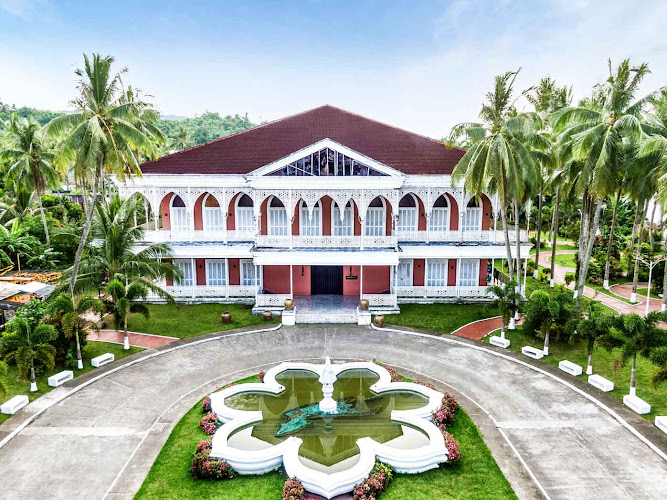
Santo Niño Shrine and Heritage Museum
About Santo Niño Shrine and Heritage Museum
The Santo Niño Shrine and Heritage Museum is a stately museum-shrine in Tacloban City that reads like a local biography laid out in wood, glass and gilt. Housed in what once functioned as a grand family residence and occasional rest house, the building now opens its rooms to guided tours that trace regional history, religious devotion, and the personal tastes of prominent local families. It blends a private-collection feel with an almost museum-of-lives approach — not cold glass cases, but rooms that still feel lived in, if carefully curated.
On arrival, visitors notice immediately that this is not a generic municipal museum. The ground floor presents a chapel dedicated to Santo Niño, the Santo Niño images and related religious artifacts occupying a quiet, reverent corner. The second floor and adjacent rooms display antique furniture, family portraits, period paintings and ornate furnishings that reflect a particular slice of Philippine social and political history. Some pieces are small and intimate — rosaries, devotional paintings, handwritten notes — while others are large and theatrical: carved wooden mantels, chandeliers, and carved stair rails that creak slightly underfoot. It's a tactile kind of history; people tend to touch the railings despite polite notices, because the place invites that closeness. It feels human. And that matters.
Guided tours are the heartbeat of the experience. Guides are often local, and their storytelling style is part fact, part local legend, part affectionate gossip — the kind that makes history feel like a neighborhood conversation. They point out decorative details that most visitors would miss: a hidden cabinet, a family crest carved into a dining chair, a faded inscription on a bedroom wall. The guides also provide context about the shrine’s religious significance and the provenance of many items; several artifacts relate to Filipino religious art and the region's cultural traditions.
The museum’s layout gives it a narrative flow. A visitor moves from the shrine area through formal reception rooms, into private chambers and finally to smaller galleries of art and artifacts. Along the way, interpretive panels and the verbal commentary of guide‑hosts explain how this house came to be, and how it reflects broader threads in Leyte and Tacloban City history. There’s a sense of layered stories: family histories overlapping with political ties and local devotion to the Santo Niño. While some visitors come for the religious draw, many linger for the architecture and the collection itself. It’s not flashy, but careful. The collection includes religious paintings, carved images, furniture, textiles and some objects that hint at connections to national figures, which often piques curiosity and prompts questions about memory, power and heritage.
Accessibility and practical details are surprisingly well-handled for a heritage site of this size. The entrance and parking areas are wheelchair accessible, and there is an accessible restroom on site, which makes longer visits easier for families and older travelers. There’s free parking, which is a nice respite from downtown parking hassles. No restaurant sits within the property, so visitors usually plan for a stop elsewhere afterward; still, there are local snack vendors and small cafes nearby for quick bites. The museum is considered child-friendly: the guided format helps keep youngsters engaged, and many families report that kids enjoy the shrine’s small statues and the friendly way guides include children in the storytelling.
There are quieter corners where the atmosphere changes from tourist circuit to contemplative pause. The chapel, especially, draws locals who come to light candles or offer short prayers. Even on busier days, that small room sustains a calm that contrasts with the more talkative tour zones. And that contrast is part of the charm: this place is both a public museum and an intimate shrine, and it balances both roles in a way that feels honest rather than contrived.
One lesser-known detail that seasoned visitors often mention: several rooms still retain original woodwork and fixtures that survived decades of weather and occasional neglect. After severe storms that affected the region, the site was restored with community input; the repairs are visible if one knows where to look, and they tell another story about resilience and local care. Guides will sometimes point this out and people react — it’s one of those moments where a museum becomes a memory bank for a city.
The interpretive approach leans local rather than academic. That means the narrative sometimes prioritizes oral histories and family anecdotes over footnoted scholarship. For many travelers that’s a win: stories stick better than dates and citations. But those seeking a deep, academic dive into Philippine history might find the presentation light on archival detail. Still, the site often sparks curiosity; visitors leave wanting to read more, to ask more questions while they wander Tacloban City.
In practical terms, tours are offered onsite and are the recommended way to see the museum because they unlock context that signage alone cannot convey. The pace is unhurried; guides will answer questions and, if pressed, point out the less obvious treasures hidden in corners or behind display cases. Photography is generally allowed, though some religious objects and certain rooms may have restrictions; guides clarify those rules early on.
For travelers interested in cultural heritage, religious history, or the personal histories that shape a city, the Santo Niño Shrine and Heritage Museum is a compact, memorable stop. It rewards attention: the more a visitor listens and looks, the more small, fascinating details reveal themselves. And while the place is tied to specific families and moments in history, it ultimately serves as a window into how Tacloban City remembers itself — through objects, through devotion, and through the stories a guide tells while pointing at a faded painting or an odd little trinket in a glass case.
Expect to spend roughly an hour to an hour and a half on a typical visit; longer if one lingers in the chapel or asks many questions. The mood shifts with the seasons and the calendar: local feast days bring a different energy, quieter weekdays offer a reflective visit. Either way, the Santo Niño Shrine and Heritage Museum is that kind of place where memories are collected as much as artifacts are displayed — a small museum with a large sense of place.
Key Features
Santo Niño Shrine and Heritage Museum
You Might Also Like
100 Baloy Long Beach Rd
11th World Scout Jamboree Memorial Rotonda
3 Springs Mountain Park
Tours & Activities
GetYourGuide provides this tour inventory. We may earn a commission if you book through it; verify current availability, prices, and terms with the provider.
Visitor Reviews
There are no reviews yet. Be the first one to write one.
Share Your Experience
Have you visited Santo Niño Shrine and Heritage Museum? Help other travelers by leaving a review.