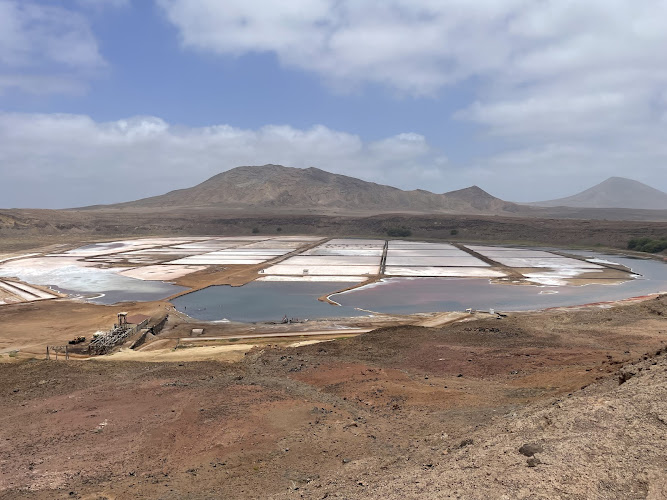
It’s not flashy or overrun with tourists; instead, it feels raw, ancient, and oddly peaceful. The moment you step into the crater, you can almost hear the whisper of centuries gone by – back when salt was the white gold that shaped the island’s destiny. The air carries a faint tang of salt, and the ground beneath your feet glows in shades of white, pink, and orange, depending on how the sunlight hits it. It’s surreal, like walking through a painting that changes color every few minutes.
The salt pans themselves shimmer in a patchwork of hues, reflecting the minerals and microorganisms that thrive in the hypersaline water. And yes, you can actually float here – effortlessly, just like in the Dead Sea. I still remember the first time I dipped in. The water felt silky, almost oily, and I couldn’t stop laughing at how it refused to let me sink. It’s a strange, delightful sensation that stays with you long after you’ve rinsed off.
But Salinas de Pedra de Lume isn’t just about the novelty of floating. It’s a living piece of history. The salt industry here dates back to the late 18th century when Portuguese settlers began extracting salt from the crater. They even built a tunnel to connect the site to the ocean, allowing seawater to flow in naturally. Today, while large-scale salt production has faded, the site remains a symbol of Cape Verde’s resilience and ingenuity. The old wooden structures and rusted rail tracks scattered around the crater are quiet reminders of the people who once worked tirelessly under the harsh sun to harvest the island’s “white gold.”
Visitors often describe the place as otherworldly – and I’d agree. The contrast between the barren volcanic landscape and the shimmering salt lakes is hypnotic. The surrounding crater walls rise like gentle guardians, framing the scene in warm earth tones that change with the light. It’s no wonder photographers and travelers keep coming back here. There’s something deeply grounding about standing in a place that feels untouched by time, where nature and history blend in perfect harmony.
Best Time to Visit
If you ask me, the best time to visit Salinas de Pedra de Lume is during the cooler, drier months – roughly from November to June. The weather is pleasant, the skies are usually clear, and the sunlight makes the salt pans glow like liquid gold. I’ve been there in August once, and while it was still lovely, the heat was pretty intense. The salty air dries quickly on your skin, and the midday sun can be relentless. So, if you’re planning a visit, aim for early morning or late afternoon. That’s when the light is soft, the air is cooler, and the crater feels almost mystical.
During the winter months, the island tends to be breezier, which adds a refreshing touch to the experience. And if you’re into photography, this is your golden window. The reflections on the water are sharper, and the colors pop beautifully against the volcanic backdrop. Just bring sunglasses – the glare from the salt flats can be blindingly bright!
How to Get There
Reaching Salinas de Pedra de Lume is quite straightforward, and honestly, half the fun is the drive itself. The site lies just a short distance from Espargos, the main town on the island of Sal. You can easily rent a car, hop on a taxi, or join one of the local guided tours that often include a stop here along with other island highlights like Shark Bay and Santa Maria Beach.
If you’re driving, the route is well-marked. The road winds through Sal’s arid interior – a landscape that looks almost Martian at times, with its reddish earth and sparse vegetation. Eventually, you’ll spot the crater ahead, a subtle dip in the horizon that hides the shimmering salt pans within. There’s a small parking area near the entrance, and from there, it’s just a short walk to the main viewpoint and bathing area. The site is accessible, though the terrain can be uneven in spots, so comfortable shoes are a must.
Public transportation options are limited, so if you’re not renting a car, a guided excursion is your best bet. Most tours include transportation, entrance fees, and sometimes even a local guide who’ll share fascinating tidbits about the salt trade and the island’s volcanic origins.
Tips for Visiting
Here’s where I get a bit personal – because after a few visits, I’ve learned a thing or two that might make your experience smoother (and saltier, in the best way possible).
- Bring water and a towel. The salt will cling to your skin, and while there are showers onsite, it’s nice to have your own rinse-off plan.
- Don’t shave or wax right before your visit. Trust me, the salt water will make you regret it instantly. It stings like crazy.
- Wear old swimwear. The salt can leave white marks that are tough to wash out.
- Protect your electronics. The fine salt particles in the air can be sneaky. Keep your phone and camera in a sealed bag when not in use.
- Go early or late. Midday can be scorching, and the light isn’t as flattering for photos.
- Try floating. Even if you’re not a strong swimmer, you’ll float effortlessly. It’s a fun, almost meditative experience.
- Stay hydrated. The salty air and sun can dehydrate you faster than you think.
- Explore the surroundings. Don’t just dip and leave. Walk around the crater rim, look at the old mining structures, and take in the view. It’s hauntingly beautiful.
And one more thing – take a moment to just be still. There’s something about standing there, surrounded by silence and salt, that makes you feel small in the best possible way. It’s a reminder of how nature and human history intertwine, leaving behind places that feel both fragile and eternal.
Salinas de Pedra de Lume isn’t a flashy destination. It doesn’t need to be. It’s the kind of place that rewards curiosity and stillness, where every ripple in the water tells a story. Whether you’re a photographer chasing light, a traveler seeking quiet magic, or simply someone who loves to float and forget the world for a while, this spot will leave a mark on you – a salty, sunlit memory that lingers long after you’ve left the crater behind.
 Real Journey Travels