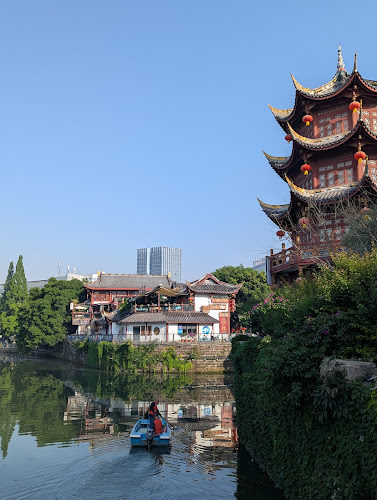
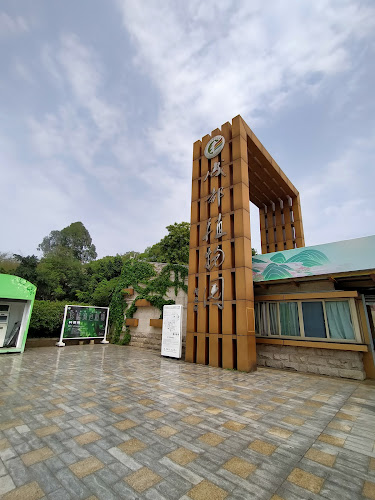
About 宝光寺

## Baoguang Temple (宝光寺), Xindu District, Chengdu — A Practical Visitor Guide Baoguang Temple is a historic Buddhist monastery in Xindu District, about 18–25 km north of central Chengdu. If you’re building a Chengdu itinerary beyond pandas and teahouses, this complex rewards half a day with classic Sichuan temple architecture, a Tang-era brick pagoda, and one of China’s best-known Arhat halls. The site sits near **30.830576, 104.160619** (No. 81 Baoguang Street, Xindu District), making it an easy add-on to a northern-Chengdu day. (https://www.tripadvisor.com/Attraction_Review-g297463-d508949-Reviews-Baoguang_Temple_of_Chengdu-Chengdu_Sichuan.html?utm_source=chatgpt.com) --- ### Why go - **Authentic temple complex, not a theme block.** Baoguang’s layout follows a traditional north–south axis with multiple main halls, side courtyards, bell & drum towers, refectory, and monastic quarters—an intact example of a large Chan (Zen) monastery in southwest China. Several sources describe the classic “five halls, sixteen courtyards” pattern that temple researchers highlight. (https://peacemeditation.ljm.org.tw/page.aspx?id=1599&utm_source=chatgpt.com) - **Historic brick pagoda.** The **Baoguang Pagoda** traces to the **Tang dynasty**, anchoring the complex visually and historically. (https://en.wikipedia.org/wiki/Baoguang_Temple?utm_source=chatgpt.com) - **Scholar-favorite Arhat Hall.** Guides and scholarship consistently note an extensive **Arhat (Luohan) Hall** with **over 500** life-size figures (often cited as **518**). Expect expressive, individualized statues—photogenic but respectful behavior is expected. [ Discovery](https://www.chinadiscovery.com/chengdu-tours/baoguang-temple.html?utm_source=chatgpt.com) - **Buddhist “great monastery” status.** Baoguang has been cited among the renowned Chan monasteries of the **Yangtze River basin** and as a leading temple in southern China—useful context if you’re comparing temple stops in Chengdu, Emei, or Leshan. (https://www.sohu.com/a/255685628_488342?utm_source=chatgpt.com) --- ### Fast facts (check before you go) - **Address:** **No. 81 Baoguang Street (宝光街81号), Xindu District, Chengdu**. (https://www.tripadvisor.com/Attraction_Review-g297463-d508949-Reviews-Baoguang_Temple_of_Chengdu-Chengdu_Sichuan.html?utm_source=chatgpt.com) - **Opening hours (typical):** **08:00–17:00**. [ Discovery](https://www.chinadiscovery.com/chengdu-tours/baoguang-temple.html?utm_source=chatgpt.com) - **Ticket (historical reference):** **~CNY 5** per adult has been widely quoted. **Prices and policies change—verify day-of** via local listings or a ride-hailing app POI page. [ Discovery](https://www.chinadiscovery.com/chengdu-tours/baoguang-temple.html?utm_source=chatgpt.com) - **Distance from downtown Chengdu:** ~18–25 km north (traffic dependent). (https://en.wikipedia.org/wiki/Baoguang_Temple?utm_source=chatgpt.com) > **Accuracy note:** Hours/fees published by travel operators often lag; treat them as guidance and re-check on arrival or via recent map/app reviews. [ Discovery](https://www.chinadiscovery.com/chengdu-tours/baoguang-temple.html?utm_source=chatgpt.com) --- ### Getting there (public transit options that travelers actually use) - **Metro + short transfer:** Many visitors take **Chengdu Metro Line 3** toward Xindu, then **transfer by short taxi or bus** to the temple (look for stops named **“Baoguang Temple/宝光寺”** or **“Clock Tower/钟楼”** in Xindu). Allow **~1–1.5 hours** from central Chengdu. Routes shift as the metro expands; Line 3 remains the backbone to the north. [ Discovery](https://www.chinadiscovery.com/chengdu-tours/baoguang-temple.html?utm_source=chatgpt.com) - **Direct bus from Wukuaishi area:** Long-running advice mentions **Bus 651** between Wukuaishi (north-Chengdu transport hub) and Xindu; confirm on the day. (https://www.sichuantravelguide.com/chengdu/attractions/baoguang-monastery.html?utm_source=chatgpt.com) - **Local Xindu buses:** Once in Xindu, several **district routes** stop at or near **Baoguang Temple** (Moovit lists New-Du routes 1, 3, 4, 5, 8, 10 and inter-district lines 651/661A/666, etc.). Use a live app for current stop names and headways. (https://moovitapp.com/index/en/public_transit-%E5%AE%9D%E5%85%89%E5%AF%BA-Chengdu_%E6%88%90%E9%83%BD-stop_34370009-5079?utm_source=chatgpt.com) **Rideshare sanity check:** Door-to-door rideshare from central Chengdu is often the least friction (and time-predictable) option for small groups; budget 45–70 minutes each way pending traffic. [ Discovery](https://www.chinadiscovery.com/chengdu-tours/baoguang-temple.html?utm_source=chatgpt.com) --- ### What to see on site (smart order) 1. **Mountain Gate → Heavenly Kings Hall** Your orientation pass: the character wall, guardian kings, incense etiquette. Keep photos discreet where signs request it. Background reading emphasizes Baoguang’s intact axial plan—walk the centerline once, then explore side courts. (https://peacemeditation.ljm.org.tw/page.aspx?id=1599&utm_source=chatgpt.com) 2. **Baoguang Pagoda (唐塔)** The Tang-period brick pagoda is the architectural anchor and most dateable object on site. Circumnavigate to study brick patterns and eaves lines; you’ll see later reconstructions harmonized around it. (https://en.wikipedia.org/wiki/Baoguang_Temple?utm_source=chatgpt.com) 3. **Arhat Hall (罗汉堂)** Expect crowded rows of gilded clay figures with distinct gestures and expressions; many travelers rank this the highlight. Scholars note Baoguang’s Arhat hall as among **China’s largest and oldest surviving mud-sculpture Arhat ensembles**. (https://zhuanlan.zhihu.com/p/76502610?utm_source=chatgpt.com) 4. **Main Buddha Halls & Sutra Library (藏经楼)** The axial halls—**Qifo Hall (Seven Buddhas)**, **Mahavira Hall (Daxiong Baodian)**, and the **Sutra Repository**—frame monastic life; details vary by restoration phase, but the ensemble shows a “big monastery” at work. (https://peacemeditation.ljm.org.tw/page.aspx?id=1599&utm_source=chatgpt.com) 5. **Side courtyards (precepts hall, refectory, bell/drum towers)** These are where the scale of the institution becomes clear. If you’ve only seen small urban chapels in Chengdu, Baoguang reads very differently. (https://peacemeditation.ljm.org.tw/page.aspx?id=1599&utm_source=chatgpt.com) --- ### Brief history (for context, not trivia) - **Origins:** The temple’s story threads back to early imperial periods; **Tang-dynasty** evidence is secure (pagoda), with **Eastern Han** or **Sui** origins cited in chronicles and local histories. Expect legend + archaeology rather than a single “founding year.” (https://en.wikipedia.org/wiki/Baoguang_Temple?utm_source=chatgpt.com) - **Name “Baoguang.”** Accounts attribute the name “Precious Light” to imperial associations in the late Tang (a sovereign reportedly witnessed a radiance at the pagoda). Treat as pious legend with staying power. [ Discovery](https://www.chinadiscovery.com/chengdu-tours/baoguang-temple.html?utm_source=chatgpt.com) - **Status through dynasties:** The complex suffered war damage late-Ming/early-Qing and saw major restorations thereafter; by late-Qing/Republican times it stood among the Yangtze basin’s noted Chan monasteries. (https://www.sohu.com/a/255685628_488342?utm_source=chatgpt.com) --- ### Visit planning tips - **Timing:** Mornings are calmer; incense haze, bell tones, and softer light make the pagoda and courtyards photogenic without crowds. (Formal photography may be restricted in specific halls—respect signage.) - **Etiquette:** This is an active monastery. Dress modestly, keep voices down, and follow incense rules. Some halls restrict photos; when in doubt, ask or observe others. - **Crowd patterns:** Weekends and festival days see higher pilgrim traffic. If you’re tight on time, prioritize the **pagoda**, **Arhat Hall**, and the axial **Mahavira Hall**. - **Pairings:** Xindu has **Guihu Park** (桂湖公园) within reach, often combined with Baoguang on local day trips. (Tickets/hours vary by section of the park; recent visitor notes show a mix of free and paid areas.) Verify on arrival. [ Singapore](https://sg.trip.com/moments/theme/poi-xindu-guihu-park-13789653-attraction-993137/?utm_source=chatgpt.com) - **Accessibility:** Grounds are largely level with stone paving; thresholds and stair rises appear at hall entrances. Wheelchair access varies by courtyard—expect some barriers. (No official, centralized accessibility spec is published in English; assess on site.) - **Food & facilities:** Xindu’s commercial streets surround the temple precinct; you’re never far from noodles, liangfen, or a quick milk tea. Bring cash or mobile pay for small temple or incense purchases. --- ### How Baoguang compares (so you can prioritize) - **Versus Wenshu Monastery (downtown Chengdu):** Wenshu is central, lively, and easy to slot between teahouses and Wide/Narrow Alleys. Baoguang is **bigger-feeling and more monastic**, rewarding those who want a quieter, architecturally coherent complex. (If your trip time is short, pick one; if you have a full day, do both.) [ Expat](https://chengdu-expat.com/must-see-attractions-in-chengdu/?utm_source=chatgpt.com) - **Versus Emei/Leshan:** Those are full-day trips with mountain trails or giant statuary. Baoguang is a **half-day urban-edge temple**—lower logistics, more architecture-study, less hiking. --- ### Map & orientation pin - **Primary pin to navigate:** “宝光寺 / Baoguang Temple, No. 81 Baoguang St, Xindu” (address used by TripAdvisor/Wanderlog and Chinese mapping apps). (https://www.tripadvisor.com/Attraction_Review-g297463-d508949-Reviews-Baoguang_Temple_of_Chengdu-Chengdu_Sichuan.html?utm_source=chatgpt.com) --- ### Responsible details & caveats

Key Features

  • Large Qing-era temple complex with preserved Sui–Tang–Song relics
  • Ancient stone pillars and classical Chinese timber architecture
  • Historic pagoda and important Buddhist relics and sutras
  • Quiet monastic atmosphere away from central Chengdu crowds
  • Cultural exhibits and opportunities to observe Buddhist practice

More Details

Updated October 31, 2025

## Baoguang Temple (宝光寺), Xindu District, Chengdu — A Practical Visitor Guide

Baoguang Temple is a historic Buddhist monastery in Xindu District, about 18–25 km north of central Chengdu. If you’re building a Chengdu itinerary beyond pandas and teahouses, this complex rewards half a day with classic Sichuan temple architecture, a Tang-era brick pagoda, and one of China’s best-known Arhat halls. The site sits near **30.830576, 104.160619** (No. 81 Baoguang Street, Xindu District), making it an easy add-on to a northern-Chengdu day. (https://www.tripadvisor.com/Attraction_Review-g297463-d508949-Reviews-Baoguang_Temple_of_Chengdu-Chengdu_Sichuan.html?utm_source=chatgpt.com)

### Why go

– **Authentic temple complex, not a theme block.** Baoguang’s layout follows a traditional north–south axis with multiple main halls, side courtyards, bell & drum towers, refectory, and monastic quarters—an intact example of a large Chan (Zen) monastery in southwest China. Several sources describe the classic “five halls, sixteen courtyards” pattern that temple researchers highlight. (https://peacemeditation.ljm.org.tw/page.aspx?id=1599&utm_source=chatgpt.com)
– **Historic brick pagoda.** The **Baoguang Pagoda** traces to the **Tang dynasty**, anchoring the complex visually and historically. (https://en.wikipedia.org/wiki/Baoguang_Temple?utm_source=chatgpt.com)
– **Scholar-favorite Arhat Hall.** Guides and scholarship consistently note an extensive **Arhat (Luohan) Hall** with **over 500** life-size figures (often cited as **518**). Expect expressive, individualized statues—photogenic but respectful behavior is expected. [ Discovery](https://www.chinadiscovery.com/chengdu-tours/baoguang-temple.html?utm_source=chatgpt.com)
– **Buddhist “great monastery” status.** Baoguang has been cited among the renowned Chan monasteries of the **Yangtze River basin** and as a leading temple in southern China—useful context if you’re comparing temple stops in Chengdu, Emei, or Leshan. (https://www.sohu.com/a/255685628_488342?utm_source=chatgpt.com)

### Fast facts (check before you go)

– **Address:** **No. 81 Baoguang Street (宝光街81号), Xindu District, Chengdu**. (https://www.tripadvisor.com/Attraction_Review-g297463-d508949-Reviews-Baoguang_Temple_of_Chengdu-Chengdu_Sichuan.html?utm_source=chatgpt.com)
– **Opening hours (typical):** **08:00–17:00**. [ Discovery](https://www.chinadiscovery.com/chengdu-tours/baoguang-temple.html?utm_source=chatgpt.com)
– **Ticket (historical reference):** **~CNY 5** per adult has been widely quoted. **Prices and policies change—verify day-of** via local listings or a ride-hailing app POI page. [ Discovery](https://www.chinadiscovery.com/chengdu-tours/baoguang-temple.html?utm_source=chatgpt.com)
– **Distance from downtown Chengdu:** ~18–25 km north (traffic dependent). (https://en.wikipedia.org/wiki/Baoguang_Temple?utm_source=chatgpt.com)

> **Accuracy note:** Hours/fees published by travel operators often lag; treat them as guidance and re-check on arrival or via recent map/app reviews. [ Discovery](https://www.chinadiscovery.com/chengdu-tours/baoguang-temple.html?utm_source=chatgpt.com)

### Getting there (public transit options that travelers actually use)

– **Metro + short transfer:** Many visitors take **Chengdu Metro Line 3** toward Xindu, then **transfer by short taxi or bus** to the temple (look for stops named **“Baoguang Temple/宝光寺”** or **“Clock Tower/钟楼”** in Xindu). Allow **~1–1.5 hours** from central Chengdu. Routes shift as the metro expands; Line 3 remains the backbone to the north. [ Discovery](https://www.chinadiscovery.com/chengdu-tours/baoguang-temple.html?utm_source=chatgpt.com)
– **Direct bus from Wukuaishi area:** Long-running advice mentions **Bus 651** between Wukuaishi (north-Chengdu transport hub) and Xindu; confirm on the day. (https://www.sichuantravelguide.com/chengdu/attractions/baoguang-monastery.html?utm_source=chatgpt.com)
– **Local Xindu buses:** Once in Xindu, several **district routes** stop at or near **Baoguang Temple** (Moovit lists New-Du routes 1, 3, 4, 5, 8, 10 and inter-district lines 651/661A/666, etc.). Use a live app for current stop names and headways. (https://moovitapp.com/index/en/public_transit-%E5%AE%9D%E5%85%89%E5%AF%BA-Chengdu_%E6%88%90%E9%83%BD-stop_34370009-5079?utm_source=chatgpt.com)

**Rideshare sanity check:** Door-to-door rideshare from central Chengdu is often the least friction (and time-predictable) option for small groups; budget 45–70 minutes each way pending traffic. [ Discovery](https://www.chinadiscovery.com/chengdu-tours/baoguang-temple.html?utm_source=chatgpt.com)

### What to see on site (smart order)

1. **Mountain Gate → Heavenly Kings Hall**
Your orientation pass: the character wall, guardian kings, incense etiquette. Keep photos discreet where signs request it. Background reading emphasizes Baoguang’s intact axial plan—walk the centerline once, then explore side courts. (https://peacemeditation.ljm.org.tw/page.aspx?id=1599&utm_source=chatgpt.com)

2. **Baoguang Pagoda (唐塔)**
The Tang-period brick pagoda is the architectural anchor and most dateable object on site. Circumnavigate to study brick patterns and eaves lines; you’ll see later reconstructions harmonized around it. (https://en.wikipedia.org/wiki/Baoguang_Temple?utm_source=chatgpt.com)

3. **Arhat Hall (罗汉堂)**
Expect crowded rows of gilded clay figures with distinct gestures and expressions; many travelers rank this the highlight. Scholars note Baoguang’s Arhat hall as among **China’s largest and oldest surviving mud-sculpture Arhat ensembles**. (https://zhuanlan.zhihu.com/p/76502610?utm_source=chatgpt.com)

4. **Main Buddha Halls & Sutra Library (藏经楼)**
The axial halls—**Qifo Hall (Seven Buddhas)**, **Mahavira Hall (Daxiong Baodian)**, and the **Sutra Repository**—frame monastic life; details vary by restoration phase, but the ensemble shows a “big monastery” at work. (https://peacemeditation.ljm.org.tw/page.aspx?id=1599&utm_source=chatgpt.com)

5. **Side courtyards (precepts hall, refectory, bell/drum towers)**
These are where the scale of the institution becomes clear. If you’ve only seen small urban chapels in Chengdu, Baoguang reads very differently. (https://peacemeditation.ljm.org.tw/page.aspx?id=1599&utm_source=chatgpt.com)

### Brief history (for context, not trivia)

– **Origins:** The temple’s story threads back to early imperial periods; **Tang-dynasty** evidence is secure (pagoda), with **Eastern Han** or **Sui** origins cited in chronicles and local histories. Expect legend + archaeology rather than a single “founding year.” (https://en.wikipedia.org/wiki/Baoguang_Temple?utm_source=chatgpt.com)
– **Name “Baoguang.”** Accounts attribute the name “Precious Light” to imperial associations in the late Tang (a sovereign reportedly witnessed a radiance at the pagoda). Treat as pious legend with staying power. [ Discovery](https://www.chinadiscovery.com/chengdu-tours/baoguang-temple.html?utm_source=chatgpt.com)
– **Status through dynasties:** The complex suffered war damage late-Ming/early-Qing and saw major restorations thereafter; by late-Qing/Republican times it stood among the Yangtze basin’s noted Chan monasteries. (https://www.sohu.com/a/255685628_488342?utm_source=chatgpt.com)

### Visit planning tips

– **Timing:** Mornings are calmer; incense haze, bell tones, and softer light make the pagoda and courtyards photogenic without crowds. (Formal photography may be restricted in specific halls—respect signage.)
– **Etiquette:** This is an active monastery. Dress modestly, keep voices down, and follow incense rules. Some halls restrict photos; when in doubt, ask or observe others.
– **Crowd patterns:** Weekends and festival days see higher pilgrim traffic. If you’re tight on time, prioritize the **pagoda**, **Arhat Hall**, and the axial **Mahavira Hall**.
– **Pairings:** Xindu has **Guihu Park** (桂湖公园) within reach, often combined with Baoguang on local day trips. (Tickets/hours vary by section of the park; recent visitor notes show a mix of free and paid areas.) Verify on arrival. [ Singapore](https://sg.trip.com/moments/theme/poi-xindu-guihu-park-13789653-attraction-993137/?utm_source=chatgpt.com)
– **Accessibility:** Grounds are largely level with stone paving; thresholds and stair rises appear at hall entrances. Wheelchair access varies by courtyard—expect some barriers. (No official, centralized accessibility spec is published in English; assess on site.)
– **Food & facilities:** Xindu’s commercial streets surround the temple precinct; you’re never far from noodles, liangfen, or a quick milk tea. Bring cash or mobile pay for small temple or incense purchases.

### How Baoguang compares (so you can prioritize)

– **Versus Wenshu Monastery (downtown Chengdu):** Wenshu is central, lively, and easy to slot between teahouses and Wide/Narrow Alleys. Baoguang is **bigger-feeling and more monastic**, rewarding those who want a quieter, architecturally coherent complex. (If your trip time is short, pick one; if you have a full day, do both.) [ Expat](https://chengdu-expat.com/must-see-attractions-in-chengdu/?utm_source=chatgpt.com)
– **Versus Emei/Leshan:** Those are full-day trips with mountain trails or giant statuary. Baoguang is a **half-day urban-edge temple**—lower logistics, more architecture-study, less hiking.

### Map & orientation pin

– **Primary pin to navigate:** “宝光寺 / Baoguang Temple, No. 81 Baoguang St, Xindu” (address used by TripAdvisor/Wanderlog and Chinese mapping apps). (https://www.tripadvisor.com/Attraction_Review-g297463-d508949-Reviews-Baoguang_Temple_of_Chengdu-Chengdu_Sichuan.html?utm_source=chatgpt.com)

### Responsible details & caveats

Key Highlights

  • Large Qing-era temple complex with preserved Sui–Tang–Song relics
  • Ancient stone pillars and classical Chinese timber architecture
  • Historic pagoda and important Buddhist relics and sutras
  • Quiet monastic atmosphere away from central Chengdu crowds
  • Cultural exhibits and opportunities to observe Buddhist practice

Location

Places to Stay Near 宝光寺

Find and Book a Tour

Explore More Travel Guides

No reviews found! Be the first to review!

Traveler Reviews for 宝光寺

There are no reviews yet. Be the first one to write one.

Share Your Experience

Have you visited 宝光寺? Help other travelers by sharing your review.

Nearby Attractions

Xindu Ancient Town (local historic streets and markets) Baoguang Guihu Cultural Tourism Area Local parks and riverside green spaces in Xindu District

Find Accommodations Nearby

Recommended Tours & Activities

Visitor Reviews

There are no reviews yet. Be the first one to write one.

Share Your Experience

Have you visited 宝光寺? Help other travelers by leaving a review.