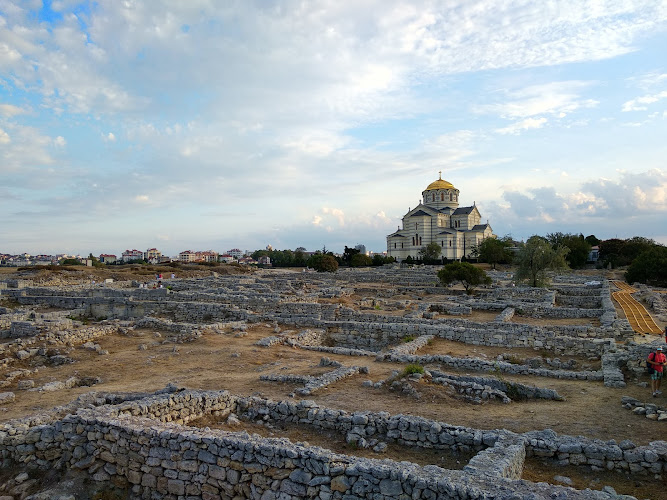
Standing on the southwestern tip of Crimea, the National Preserve of Tauric Chersonesos represents one of those rare archaeological sites where you can actually feel the weight of history beneath your feet.
Highlights & Key Features
Key Features
Best Time to Visit
How to Get There
Tips for Visiting
Visitor Guide & Information
Description
The site sprawls across roughly 300 hectares, though much of the ancient city still lies buried beneath modern development. What’s been excavated, however, is absolutely stunning. You’ll find yourself wandering through the skeletal remains of an entire urban landscape – theatre foundations, residential quarters, defensive walls, and the distinctive layout of a planned Greek polis. The preservation quality here really sets it apart from many Mediterranean ruins I’ve seen. Maybe it’s the Crimean climate or just fortunate circumstances, but these stones have weathered the centuries remarkably well.
What struck me most when reading about visitor experiences is how this place manages to be both a serious archaeological treasure and an accessible destination for regular folks who just want to understand where we all came from. It’s not fussed up with excessive modern interventions or turned into some theme park version of history. The ruins speak for themselves, and that authenticity is increasingly rare in our world of manufactured experiences.
Key Features
The National Preserve of Tauric Chersonesos offers travelers several distinctive elements that make the journey worthwhile:
The Ancient Theatre – One of the few remaining Greek theatres in this part of the world, though reconstruction efforts have given it a somewhat modern appearance that divides opinion among purists
St. Vladimir’s Cathedral – A 19th-century addition that towers over the ancient ruins, marking the supposed baptism site of Prince Vladimir in 988 A.D., which converted Kievan Rus’ to Christianity
The Bell of Chersonesos – This photogenic bronze bell has become an unofficial symbol of the site, originally cast from Turkish cannons captured during the Crimean War
Defensive Walls and Towers – Impressive fortifications that tell the story of a city constantly defending itself against Scythians, Romans, and various other groups who wanted control of this strategic location
Residential Districts – Well-laid-out foundations showing the grid pattern typical of planned Greek colonies, with visible remains of individual homes and workshops
The Basilica in Basilica – Fascinating architectural layers where Byzantine Christians built churches atop earlier structures, creating a physical timeline you can actually see
Ancient Streets – Original paved roads that still bear the marks of cart wheels from centuries of use, which honestly gives me chills thinking about it
Museum Collections – Artifacts recovered from excavations including pottery, coins, jewelry, and everyday objects that humanize the ancient inhabitants
The Mint Complex – Remains of where Chersonesos produced its own currency, demonstrating the city’s economic independence and sophistication
Seaside Location – The ruins dramatically meet the Black Sea, providing context for understanding this city’s maritime importance and offering gorgeous views
Best Time to Visit
Timing your visit to the National Preserve of Tauric Chersonesos can significantly impact your experience, and I’d say this matters more than at many archaeological sites because of how exposed everything is to the elements.
Late spring, particularly May and early June, presents probably the ideal window for most travelers. The weather’s warming up nicely but hasn’t hit that brutal summer heat that can make wandering around ancient stones genuinely uncomfortable. You’ll find wildflowers dotting the landscape, and the Black Sea backdrop looks particularly inviting without the summer crowds fighting for photo angles at every turn.
September through mid-October offers another sweet spot. The summer tourist rush has subsided, temperatures become pleasant for extensive walking, and there’s something poetic about visiting ancient ruins as autumn approaches. The light during these months is spectacular too – photographers will appreciate the golden quality it brings to the limestone ruins.
Summer months of July and August see the highest visitor numbers, which makes sense given school holidays and peak vacation season. But here’s the thing – it gets hot. Really hot. We’re talking exposed ruins with minimal shade, reflective stone surfaces, and Black Sea breezes that don’t always cooperate. If summer is your only option, get there early morning or late afternoon. Midday visits during peak summer can border on miserable, especially for older travelers or families with young children.
Winter visits are possible and the site remains accessible, but you’re gambling with weather conditions. Some travelers actually prefer the solitude and dramatic atmosphere of the ruins against stormy winter skies. Just bundle up properly and accept that some areas might be temporarily closed depending on conditions.
Weekdays generally see lighter crowds than weekends regardless of season, which matters if you’re someone who wants to experience these ancient spaces contemplatively rather than as part of a tourist parade.
How to Get There
Reaching the National Preserve of Tauric Chersonesos requires some planning, but it’s more straightforward than you might expect for such an historically significant site.
The preserve sits within modern Sevastopol, which makes it relatively accessible once you’re in the region. For most international travelers, the journey begins in Simferopol, the main transportation hub for Crimea. From there, you’ve got several options for covering the roughly 80 kilometers to Sevastopol.
Buses run regularly between Simferopol and Sevastopol, taking about 2 hours depending on traffic and stopping patterns. The bus station in Sevastopol is reasonably close to the preserve, and from there you can grab a local bus, taxi, or even walk if you’re feeling energetic and the weather cooperates.
Taxis and private transfers offer more flexibility and comfort, particularly for families or groups. The drive itself passes through some interesting Crimean landscape, so there’s value in having control over your schedule if you want to stop for photos or just take your time.
If you’re driving yourself, the preserve offers accessible parking including designated spaces for visitors with mobility needs. The roads are generally well-maintained, though navigation apps sometimes struggle with recent changes in the area so downloading offline maps is smart.
Within Sevastopol itself, the preserve is well-known enough that most locals can point you in the right direction. Local buses and marshrutkas (minibuses) serve the area frequently. Look for routes heading toward the Gagarin district or specifically mentioning Khersones or Chersonesos – both spellings appear depending on transliteration preferences.
The entrance features wheelchair accessible facilities, which isn’t something you can take for granted at ancient archaeological sites. The main pathways through the ruins accommodate wheelchairs and strollers reasonably well, though some areas inevitably present challenges given the nature of 2,500-year-old terrain.
Tips for Visiting
Making the most of your visit to the National Preserve of Tauric Chersonesos involves more than just showing up and wandering around, though honestly that approach can work too if you’re into spontaneous exploration.
Wear proper walking shoes – and I can’t stress this enough. These are ancient stone streets and foundations we’re talking about, uneven and sometimes surprisingly tricky underfoot. Those Instagram-worthy sandals might look great in photos, but twisted ankles look great to nobody. Comfortable, grippy footwear makes the difference between enjoying your visit and limping through it.
Bring sun protection religiously. The site offers precious little shade, and that Black Sea sun combined with reflective limestone surfaces can burn you faster than you’d expect. Sunscreen, hats, sunglasses – the whole works. And water. Bring more water than you think you’ll need, then bring a bit more. There are facilities on site, but hydration while actually exploring the ruins matters.
Consider hiring a guide if you want the ruins to really come alive. Sure, there’s signage and information boards, but having someone who can explain what you’re actually looking at transforms the experience from “old broken buildings” to understanding the daily lives of ancient Greeks. The stories behind these stones make all the difference.
Photography enthusiasts should plan for either early morning or late afternoon light. Midday sun creates harsh shadows and washed-out images. The golden hours turn these ruins absolutely magical, with warm light playing across the ancient stones and the sea providing that perfect backdrop.
Budget several hours for a thorough visit. You could rush through in an hour or so, but why would you? This is a massive site with multiple distinct areas, a museum, and enough detail to occupy genuinely curious travelers for half a day easily. Give yourself permission to sit on an ancient wall (where permitted) and just absorb the atmosphere.
The museum portions shouldn’t be skipped. I know, I know – everyone wants to see the dramatic outdoor ruins. But the artifacts and explanatory materials inside provide crucial context that makes the outdoor exploration more meaningful. Do the museum first, then apply what you’ve learned outside.
Families with kids will find the site more engaging than they might expect. Children generally love scrambling around old ruins, and the seaside location provides natural interest. Frame it as an adventure or treasure hunt rather than an educational obligation. The accessibility features mean strollers work reasonably well for younger children who can’t manage the full walking distances.
Check current opening hours and any special closure notices before your visit. Archaeological sites sometimes close sections for ongoing excavation or conservation work. Weather can also affect accessibility more than at modern attractions.
Respect the ruins. These structures have survived thousands of years, and they deserve our care. Don’t climb on walls unless clearly permitted, don’t remove anything (not even a small stone), and be mindful of preservation efforts. Future visitors deserve the same experience you’re having.
Combine your visit with other Sevastopol attractions if time allows. The city itself holds considerable historical and cultural interest beyond just the ancient ruins, and you’ll get richer understanding of the region’s layered history by exploring more broadly.
And finally, manage expectations appropriately. This isn’t Pompeii or the Acropolis in terms of grand standing structures. It’s ruins – genuine, ancient, incredibly significant ruins, but ruins nonetheless. Come prepared for imagination and contemplation rather than Disney-style spectacle, and you’ll find the National Preserve of Tauric Chersonesos delivers something far more valuable than easy entertainment. It offers connection to the actual foundations of civilization itself, standing where people lived complex lives thousands of years before we showed up with our cameras and water bottles.
Standing on the southwestern tip of Crimea, the National Preserve of Tauric Chersonesos represents one of those rare archaeological sites where you can actually feel the weight of history beneath your feet. And I mean that quite literally – the ancient streets you’ll walk on were trodden by Greek merchants, Roman soldiers, and Byzantine scholars over the course of nearly two millennia. This isn’t just another pile of old stones (though there are plenty of those too). The ruins of this Dorian-style Greek city, established way back in the 5th century B.C., offer travelers a genuine connection to the classical world that shaped Western civilization.
The site sprawls across roughly 300 hectares, though much of the ancient city still lies buried beneath modern development. What’s been excavated, however, is absolutely stunning. You’ll find yourself wandering through the skeletal remains of an entire urban landscape – theatre foundations, residential quarters, defensive walls, and the distinctive layout of a planned Greek polis. The preservation quality here really sets it apart from many Mediterranean ruins I’ve seen. Maybe it’s the Crimean climate or just fortunate circumstances, but these stones have weathered the centuries remarkably well.
What struck me most when reading about visitor experiences is how this place manages to be both a serious archaeological treasure and an accessible destination for regular folks who just want to understand where we all came from. It’s not fussed up with excessive modern interventions or turned into some theme park version of history. The ruins speak for themselves, and that authenticity is increasingly rare in our world of manufactured experiences.
Key Features
The National Preserve of Tauric Chersonesos offers travelers several distinctive elements that make the journey worthwhile:
The Ancient Theatre – One of the few remaining Greek theatres in this part of the world, though reconstruction efforts have given it a somewhat modern appearance that divides opinion among purists
St. Vladimir’s Cathedral – A 19th-century addition that towers over the ancient ruins, marking the supposed baptism site of Prince Vladimir in 988 A.D., which converted Kievan Rus’ to Christianity
The Bell of Chersonesos – This photogenic bronze bell has become an unofficial symbol of the site, originally cast from Turkish cannons captured during the Crimean War
Defensive Walls and Towers – Impressive fortifications that tell the story of a city constantly defending itself against Scythians, Romans, and various other groups who wanted control of this strategic location
Residential Districts – Well-laid-out foundations showing the grid pattern typical of planned Greek colonies, with visible remains of individual homes and workshops
The Basilica in Basilica – Fascinating architectural layers where Byzantine Christians built churches atop earlier structures, creating a physical timeline you can actually see
Ancient Streets – Original paved roads that still bear the marks of cart wheels from centuries of use, which honestly gives me chills thinking about it
Museum Collections – Artifacts recovered from excavations including pottery, coins, jewelry, and everyday objects that humanize the ancient inhabitants
The Mint Complex – Remains of where Chersonesos produced its own currency, demonstrating the city’s economic independence and sophistication
Seaside Location – The ruins dramatically meet the Black Sea, providing context for understanding this city’s maritime importance and offering gorgeous views
Best Time to Visit
Timing your visit to the National Preserve of Tauric Chersonesos can significantly impact your experience, and I’d say this matters more than at many archaeological sites because of how exposed everything is to the elements.
Late spring, particularly May and early June, presents probably the ideal window for most travelers. The weather’s warming up nicely but hasn’t hit that brutal summer heat that can make wandering around ancient stones genuinely uncomfortable. You’ll find wildflowers dotting the landscape, and the Black Sea backdrop looks particularly inviting without the summer crowds fighting for photo angles at every turn.
September through mid-October offers another sweet spot. The summer tourist rush has subsided, temperatures become pleasant for extensive walking, and there’s something poetic about visiting ancient ruins as autumn approaches. The light during these months is spectacular too – photographers will appreciate the golden quality it brings to the limestone ruins.
Summer months of July and August see the highest visitor numbers, which makes sense given school holidays and peak vacation season. But here’s the thing – it gets hot. Really hot. We’re talking exposed ruins with minimal shade, reflective stone surfaces, and Black Sea breezes that don’t always cooperate. If summer is your only option, get there early morning or late afternoon. Midday visits during peak summer can border on miserable, especially for older travelers or families with young children.
Winter visits are possible and the site remains accessible, but you’re gambling with weather conditions. Some travelers actually prefer the solitude and dramatic atmosphere of the ruins against stormy winter skies. Just bundle up properly and accept that some areas might be temporarily closed depending on conditions.
Weekdays generally see lighter crowds than weekends regardless of season, which matters if you’re someone who wants to experience these ancient spaces contemplatively rather than as part of a tourist parade.
How to Get There
Reaching the National Preserve of Tauric Chersonesos requires some planning, but it’s more straightforward than you might expect for such an historically significant site.
The preserve sits within modern Sevastopol, which makes it relatively accessible once you’re in the region. For most international travelers, the journey begins in Simferopol, the main transportation hub for Crimea. From there, you’ve got several options for covering the roughly 80 kilometers to Sevastopol.
Buses run regularly between Simferopol and Sevastopol, taking about 2 hours depending on traffic and stopping patterns. The bus station in Sevastopol is reasonably close to the preserve, and from there you can grab a local bus, taxi, or even walk if you’re feeling energetic and the weather cooperates.
Taxis and private transfers offer more flexibility and comfort, particularly for families or groups. The drive itself passes through some interesting Crimean landscape, so there’s value in having control over your schedule if you want to stop for photos or just take your time.
If you’re driving yourself, the preserve offers accessible parking including designated spaces for visitors with mobility needs. The roads are generally well-maintained, though navigation apps sometimes struggle with recent changes in the area so downloading offline maps is smart.
Within Sevastopol itself, the preserve is well-known enough that most locals can point you in the right direction. Local buses and marshrutkas (minibuses) serve the area frequently. Look for routes heading toward the Gagarin district or specifically mentioning Khersones or Chersonesos – both spellings appear depending on transliteration preferences.
The entrance features wheelchair accessible facilities, which isn’t something you can take for granted at ancient archaeological sites. The main pathways through the ruins accommodate wheelchairs and strollers reasonably well, though some areas inevitably present challenges given the nature of 2,500-year-old terrain.
Tips for Visiting
Making the most of your visit to the National Preserve of Tauric Chersonesos involves more than just showing up and wandering around, though honestly that approach can work too if you’re into spontaneous exploration.
Wear proper walking shoes – and I can’t stress this enough. These are ancient stone streets and foundations we’re talking about, uneven and sometimes surprisingly tricky underfoot. Those Instagram-worthy sandals might look great in photos, but twisted ankles look great to nobody. Comfortable, grippy footwear makes the difference between enjoying your visit and limping through it.
Bring sun protection religiously. The site offers precious little shade, and that Black Sea sun combined with reflective limestone surfaces can burn you faster than you’d expect. Sunscreen, hats, sunglasses – the whole works. And water. Bring more water than you think you’ll need, then bring a bit more. There are facilities on site, but hydration while actually exploring the ruins matters.
Consider hiring a guide if you want the ruins to really come alive. Sure, there’s signage and information boards, but having someone who can explain what you’re actually looking at transforms the experience from “old broken buildings” to understanding the daily lives of ancient Greeks. The stories behind these stones make all the difference.
Photography enthusiasts should plan for either early morning or late afternoon light. Midday sun creates harsh shadows and washed-out images. The golden hours turn these ruins absolutely magical, with warm light playing across the ancient stones and the sea providing that perfect backdrop.
Budget several hours for a thorough visit. You could rush through in an hour or so, but why would you? This is a massive site with multiple distinct areas, a museum, and enough detail to occupy genuinely curious travelers for half a day easily. Give yourself permission to sit on an ancient wall (where permitted) and just absorb the atmosphere.
The museum portions shouldn’t be skipped. I know, I know – everyone wants to see the dramatic outdoor ruins. But the artifacts and explanatory materials inside provide crucial context that makes the outdoor exploration more meaningful. Do the museum first, then apply what you’ve learned outside.
Families with kids will find the site more engaging than they might expect. Children generally love scrambling around old ruins, and the seaside location provides natural interest. Frame it as an adventure or treasure hunt rather than an educational obligation. The accessibility features mean strollers work reasonably well for younger children who can’t manage the full walking distances.
Check current opening hours and any special closure notices before your visit. Archaeological sites sometimes close sections for ongoing excavation or conservation work. Weather can also affect accessibility more than at modern attractions.
Respect the ruins. These structures have survived thousands of years, and they deserve our care. Don’t climb on walls unless clearly permitted, don’t remove anything (not even a small stone), and be mindful of preservation efforts. Future visitors deserve the same experience you’re having.
Combine your visit with other Sevastopol attractions if time allows. The city itself holds considerable historical and cultural interest beyond just the ancient ruins, and you’ll get richer understanding of the region’s layered history by exploring more broadly.
And finally, manage expectations appropriately. This isn’t Pompeii or the Acropolis in terms of grand standing structures. It’s ruins – genuine, ancient, incredibly significant ruins, but ruins nonetheless. Come prepared for imagination and contemplation rather than Disney-style spectacle, and you’ll find the National Preserve of Tauric Chersonesos delivers something far more valuable than easy entertainment. It offers connection to the actual foundations of civilization itself, standing where people lived complex lives thousands of years before we showed up with our cameras and water bottles.
Key Highlights
Key Features
Best Time to Visit
How to Get There
Tips for Visiting
Location
Places to Stay Near National Preserve of Tauric Chersonesos
Explore verified points of interest within walking or short transit distance.
No neighboring places mapped within 5 km yet.
Find Places to Stay Nearby
Stay22 provides this accommodation search. We may earn a commission if you book through it; verify current prices and terms with the provider.
🗺️
Interactive accommodation map requires marketing cookies to display live rates.
Recommended Experiences & Activities
GetYourGuide provides this tour inventory. We may earn a commission if you book through it; verify current availability, prices, and terms with the provider.
Top Viator Experiences & Guided Tours in Sevastopol
We may earn a commission if you book through links on this page at no extra cost to you. All tours feature verified customer reviews and flexible cancellation options.