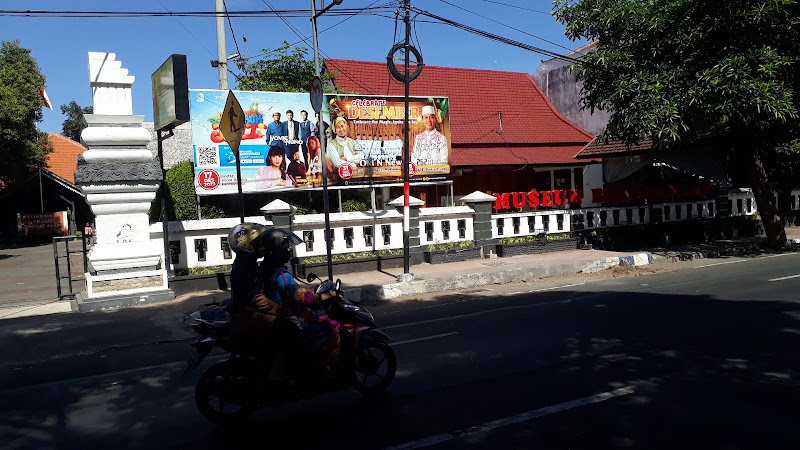
It charts a long arc: from prehistoric tools and pottery through the shifting kingdoms of East Java to colonial-era maps and everyday objects that quietly tell stories about how people lived, worked, and adapted to changing times. The tone inside is unpretentious. There are no theatrical light shows or extravagant installations, just cases of artifacts, old photographs, inscriptions and a few dioramas that, together, let the objects do the talking.
Visitors who like museums that reward curiosity — the kind of place where a single pottery shard can prompt twenty questions — will likely enjoy the Museum Blambangan experience. The displays focus on tangible culture: stone axes, bronze-age items, traditional textiles, ceremonial kris, household ceramics, trade goods and colonial documents. But beyond the artifacts, the museum specializes in context. Labels and small panels explain not only what an object is, but how it fits into daily life, ritual practices, or larger economic systems that shaped the Banyuwangi area.
There is a quiet pride in the way local histories are centered. The museum emphasizes the region historically known as Blambangan and explores its role as a coastal crossroads. It highlights cultural exchanges across the Java Sea, and the blend of indigenous, Hindu-Buddhist, Islamic and colonial influences that layered the area’s material culture. That makes the museum particularly interesting for travelers who want to go deeper than surface-level sightseeing and understand the long-term rhythms that shaped the present landscape.
Accessibility and family needs have been considered, though modestly. A wheelchair-accessible restroom is available on site, which is a big plus for visitors with mobility concerns. There are standard restrooms but no in-house restaurant, so plan for a snack stop elsewhere before or after a visit. Families will find the museum doable: children often get animated about the tangible bits of the past — weapons, costumes and local crafts — and the layout is compact enough that younger visitors don’t get overwhelmed.
The museum’s character is familiar to anyone who has spent time in regional heritage institutions: a bit of serious scholarship, a touch of local storytelling, and pockets of treasures that spark real delight. Expect to wander through rooms that sometimes feel like a history class and sometimes like a cabinet of curiosities. And that mix is precisely the charm. Some artifacts are displayed with careful conservation, others wear the patina of long use — that honest mix gives the place personality and makes the past feel lived-in rather than staged.
For travelers planning their itinerary, Museum Blambangan can be fitted in as a half-hour to two-hour stop depending on interest. A casual pass-through might take 30–45 minutes. For those who read every panel and linger at selected exhibits, the visit could extend to two hours or more. It is not a museum that demands a full day; rather, it pairs nicely with walking around the nearby civic area, visiting local markets, or combining with other Banyuwangi cultural stops.
What stands out about the collection is its range across time. Prehistoric artifacts are modest but evocative: stone tools and pottery fragments that point to an early human presence in the region. These items are a reminder that this coastline and its hinterlands have supported communities for millennia. Moving forward in time, exhibits highlight the Blambangan polity and local kingdoms, showcasing ceremonial regalia, carved wooden objects and other cultural goods that point to court life and ritual practice. The colonial section includes maps, administrative documents and everyday imported goods that illuminate an era of external control and new trade networks.
The museum does a good job of making intangible elements of culture visible. For example, traditional textiles on display can lead to explanations of local motifs, dyeing techniques and their social meanings. Weapons and tools are presented with notes on how they were used and what they symbolized. Simple panels explain agricultural cycles, marriage customs, and festival traditions that shaped what people made and kept. Those contextual layers are what turn objects into stories that travellers can actually use to understand the place they’re visiting.
There are a few corners that will reward an observant visitor. Photographic albums and archival prints show Banyuwangi at different moments — boats along the coast, market scenes, portraiture — and have a candid, documentary feel. A small ethnographic section presents items from daily life: kitchenware, children’s toys, fishing equipment. These mundane objects, when presented together, are oddly moving. They give a sense of ordinary continuity amid historical change and often spark conversations with other visitors or guides about what has changed and what has stayed the same.
Practical details matter to many travelers, and here the museum does meet expectations in straightforward ways. Restrooms are present, signage is readable, and exhibit labels aim for clarity. It’s not a glossy, high-tech operation, so don’t come expecting interactive screens at every turn. But there is value in the simplicity: fewer distractions make it easier to concentrate on the artifacts themselves. For those who appreciate tactile history — the weight of a story held in a single object — this is an advantage.
A note about crowds and atmosphere: most visits feel calm and unhurried. The space is often occupied by local students, researchers, and curious tourists who take their time. The pace encourages reflection rather than rush. That said, the museum’s quieter nature may not suit someone who prefers fast-paced, heavily curated attractions. It’s a place best enjoyed with a patient mindset, a willingness to read and reflect, and perhaps a guide or knowledgeable friend who can add oral context beyond what the labels supply.
There are small surprises too. In one cabinet a set of trade ceramics might sit beside locally made pottery, illustrating exchanges across cultures. Elsewhere, a sequence of maps traces shifting political boundaries and trade routes, which is unexpectedly gripping if one enjoys cartographic history. These moments of juxtaposition are where the museum’s curators let connections show themselves, and they work well for travelers trying to stitch together a larger narrative about the region.
Visitors from outside Indonesia often find value in seeing how local histories intersect with larger national and global processes. The colonial-era exhibits help explain how external powers influenced administrative practices and economic life. The museum doesn’t shy away from uncomfortable histories, but it usually presents them through objects rather than polemics. That can be effective: objects can evoke complexity without oversimplifying motives.
For photographers and people who like detail, the museum offers plenty of material to study — close shots of textile patterns, the fine curves of a kris blade, the texture of hand-thrown ceramics. Keep in mind that flash photography is often discouraged in heritage contexts, and some exhibits may be behind glass. Still, there are many opportunities for low-light or detail shots that capture the materiality of the collection.
Finally, the museum is a launchpad for further discovery. It gives a grounded, material sense of Banyuwangi’s past that can enrich visits to nearby cultural sites, traditional villages, and natural landmarks. A traveler who spends an hour here will leave with historical anchors that make subsequent explorations more meaningful: names of local crafts, awareness of historical trade networks, and a clearer sense of how the modern city grew from centuries of layered interactions.
All in all, Museum Blambangan is the sort of place that rewards curiosity, patience, and a mild appetite for detail. It’s not slick or flashy, but it is honest and informative. For travelers seeking depth and texture in their cultural discoveries, it offers steady, tangible connections to the human history of Banyuwangi and the broader East Java region.
 Real Journey Travels