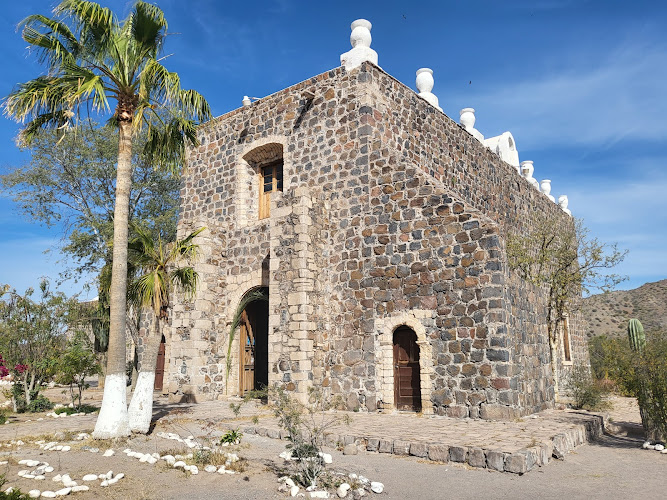
This mission is no fly-by-night tourist stop—it’s been standing proud since way back in 1705. And honestly, to me, wandering around these ancient stone walls is like stepping through a portal to another world, equal parts awe-inspiring and humbling. Let’s just say it’s got that “hold your breath for a second” feeling as you first glimpse its stone façade up above the lush palm oasis below.
This mission—built by Jesuit missionaries, with their classic knack for picking striking locations—sits peacefully on a hill, overlooking the Mulegé River and the sea in the far distance. The drive through desert palms, the sudden bursts of jacaranda and bougainvillea, all make you think, “Ah, so this is what the old Baja must’ve felt like.” The architecture isn’t opulent or over-the-top, but it’s got character: thick volcanic stone walls, sturdy arches, just enough roughness to keep things interesting. It doesn’t have that “polished for the postcards” vibe you find in some overbuilt places—and that’s very much part of its magic.
You might hear that Misión Santa Rosalía de Mulegé is more than a relic; it’s very much alive, with the surrounding village still shaped by the rhythms of the mission’s old traditions. I remember chatting with a local who told me his grandparents were married there, back when family ties and the mission’s bell marked time and events. Stories like those fill the air around these walls. Even if you’re not a history buff, you’re bound to feel the tug of centuries-old memories embedded in every stone.
One thing that surprised me? The view from up here. Climb (well, scramble, if you’re me) up to the back—or peer out from under the arches—and you’ll get a sweeping panorama of green palms meeting the stark brown mountains. The river below is like a silver thread woven through the desert. Not to get too poetic, but—yeah—it’s a sight to see, and it’s amazing how peaceful it feels, especially compared to the busy towns you might have just come from.
There’s a bit of a rough-around-the-edges charm here. Some parts of the mission are better preserved than others; you’ll see original details, but you’ll also spot areas that time and weather have clearly had their way with. I found that refreshing. You can almost imagine the hands that built and repaired this place, generation after generation. And let’s be real: if you’re after glossy, polished tourist traps, Mulegé’s mission might not be for you. If you love real, tactile history you can see, touch, and almost smell, then you’ll wander around here grinning like a fool (guilty as charged).
Even when there are other travelers around, the mission doesn’t feel crowded. Instead, you’ll find plenty of corners to pause, reflect, and just soak in those centuries of stories. It’s easy to see why so many people—locals, historians, architecture lovers, and everyday visitors—have ranked this place as a must-see. But don’t just take their word for it. There’s no substitute for standing in the silence, hearing the wind whistle past the old, pitted stones, and imagining the centuries that have come and gone under this unblinking Baja sun.
Best Time to Visit
I’ll level with you: Baja can really turn on the heat. If you can swing it, plan your visit for the late fall to early spring months (think: November to March). That’s when the sun’s a little gentler, evenings are breezy, and you might even catch the valley green after a bit of rare rain. Summer? Honestly, it can broil. You’ll need to hydrate and maybe take shelter in the shade, especially at midday, or else you’ll be sweating buckets along with your camera.
Honestly, I’ve been here on quiet weekday mornings and those are my absolute favorite. Early sunlight paints the stones gold, there’s hardly anyone around except the occasional songbird, and you can really feel the past seep into your bones. If you arrive closer to Mexican holidays, you might stumble into local festivities—a sight worth catching, though crowds will swell a bit. Weekends get their fair share of road-trippers (especially after the morning rush), but even then, it rarely feels overwhelming.
Avoid rainy days in hurricane season (late summer); rarely, flash flooding down the riverbed could hinder your plans. But when it’s clear, the Baja sky just seems to stretch on forever. If you’ve got a photographer’s eye or just like a good sunrise, early mornings here are pure magic.
How to Get There
Getting to Mulegé isn’t exactly like hopping off a subway in a sprawling metropolis—thank goodness for that, in my book. Most travelers wind up here by car, driving the legendary Transpeninsular Highway (Mexico Highway 1). That road is its own adventure, cutting through cacti fields, mountain switchbacks, and quiet fishing villages. Heads up: parts of the highway are curvy and narrow, so take it slow and enjoy the scenery instead of racing past it.
If you’re coming from the north, say, Guerrero Negro, it’s about a 2.5-hour drive through some of Baja’s most bewildering desert. From Loreto, in the south, expect about two hours on the road. There’s parking just below the mission; it’s a short walk up a gentle hill—watch your step, the path’s a bit rocky in spots, just enough to make you feel adventurous.
Not a driver? Mulegé’s bus connections exist, but they might test your patience. Local buses do rumble through town, but schedules aren’t exactly Swiss-clock precise. If public transit’s your style, double-check times or ask a local—folks are friendly and usually know the drill. And yes: taxis are available, but you’ll want to arrange your return ahead of time. Nothing kills the adventure like being stranded in the midday sun, trust me.
If you’ve got your sense of adventure, pack some tunes for the drive and let the winding highways set the tone for time travel, Baja-style.
Tips for Visiting
First off—bring water and sunscreen. Even if you’re just “popping in,” Baja’s sunshine can be surprisingly fierce, and the stone bounces back the heat. I once spent an hour around midday snapping photos and ended up looking like I’d tried to hug a chili pepper. Not my brightest moment, so consider yourself warned.
Wear sturdy shoes with some grip. Those old stones and paths can be slick with morning dew, especially if you plan to climb around and find the best lookout spots. And if you’re like me, distracted by taking photos, better to be safe than sorry.
Bring a camera or at least a decent phone. The interplay of light and shadow here is legendary at sunrise and sunset, so you’ll want to capture it—even if you’re not a photography nut. It’s the kind of place where every angle tells a story you’ll want to remember later.
Plan for about 30 minutes to an hour at the mission itself, but honestly, slow down
 Real Journey Travels