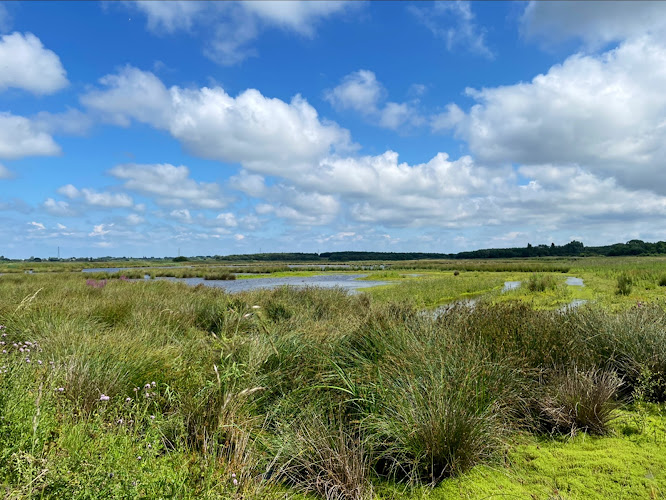
Lunt Meadows Nature Reserve is a 75-hectare wetland on the Sefton coastal plain, just north of Liverpool and close to the village of Lunt near Maghull. It sits within the River Alt flood storage basin and is managed by Lancashire Wildlife Trust. What looks like open farmland from the road is carefully shaped habitat: wet grassland, shallow pools, two reedbeds and wooded edges, all designed to hold birds through the year. With a 4.6 rating from over 300 reviews, it has a strong local following among walkers, birders and families who want open space without a long drive.
The reserve is more than a bird site. It also holds an archaeological site with evidence of a Mesolithic settlement roughly 8,000 to 9,000 years old, and the trail includes interpretation about that human story alongside the wildlife. The pools were landscaped with gently sloping, muddy edges rather than steep banks, which suits waders and ducks and gives visitors a lively view even from the path. The setting is flat, big-skied and quiet, a different side of Merseyside from the city streets to the south.
Standout Highlights & Experience
The draw here is the variety of wildlife that changes with the seasons, seen from easy, mostly level paths with benches, viewing screens and a hide over a reedbed. Visitors regularly report good sightings without needing specialist knowledge, because information boards help with identification.
- Owls: Barn owls hunt low over the grassland and short-eared owls are a winter draw, especially towards dusk.
- Winter wildfowl and waders: Lapwing gather in large flocks on the short wet grassland, with teal, shoveler, pochard, goldeneye and goosander on the pools, and snipe probing the mud.
- Raptors: Marsh harriers, common buzzard and kestrel are all seen, and a passing harrier often sends the lapwing flocks into the air.
- Spring and summer breeders: Lapwing, redshank, oystercatcher and occasionally little ringed plover or avocet nest here, with swallows and swifts overhead.
- Reedbed hide: A patient visit can bring water rail or even a bittern, and kingfishers have been reported by visitors.
- Mesolithic heritage: The archaeology trail adds depth for anyone curious about how people lived on this landscape thousands of years ago.
- Roe deer: They are sometimes spotted crossing the grasses, especially early in the day.
Practical Visitor Strategy
| Factor | What to Know |
|---|
| Best Time to Go | Late autumn to winter for wildfowl, lapwing flocks and owls near dusk; April to July for breeding waders and swallows; early morning for quiet and deer. |
| Suggested Duration | 1 to 2 hours for a relaxed loop; a half-day if you want to use the hide and screens patiently or follow the full trail. |
| Crowd & Entry Tips | Usually not busy, with weekdays the calmest. Visitors describe the car park as good and reasonable value for a morning; check current charges on arrival or the trust’s site. |
| Getting Oriented | Follow the L29 8YA postcode to the car park off the Lunt road, then take the paths out across the wet grassland towards the pools and reedbeds. A compost toilet is on site, but there are no cafe facilities, so bring water and snacks. |
Bring binoculars and waterproof footwear, because the ground is mostly flat but paths can be muddy and wet after rain. Shade is scarce, so on hot days carry sun protection and a hat, while in winter the open landscape is exposed to wind and the cold feels sharper than in town. Reserve management works with water levels and grazing, so what you see varies by season, and some regular visitors comment that vegetation and habitat condition shift over time.
Honest Fit: Who Will Love It (and Trade-Offs)
This is a good match for birdwatchers, casual walkers, photographers, families with older children who enjoy spotting animals, and anyone after a calm, reflective hour outdoors. The paths are natural rather than formal promenades, so those with wheelchairs or pushchairs should expect uneven or soft surfaces in wet weather. If you want landmarks, cafes and constant activity, the reserve will feel quiet and basic. Patience is the price of the best sightings.
For a wider day out, pair it with the nearby Sefton coast and its dunes and pinewoods, or the villages around Maghull and Formby for food and a pub lunch. Liverpool city centre is a short drive south, so Lunt Meadows works as a morning of birds before an afternoon of museums and waterfront. A car is the simplest way to reach it, as public transport links to the site are limited.
 Real Journey Travels