About Louvre Pyramid

History and Significance

Louvre Pyramid

Let’s shatter a myth first: the Louvre Pyramid isn’t some ancient relic hauled from Egypt. It’s younger than Star Wars—built in 1989 amid gasps from Parisians who thought architect I.M. Pei had lost his mind. A glass-and-steel spaceship landing in the courtyard of a 16th-century palace? Sacré bleu!

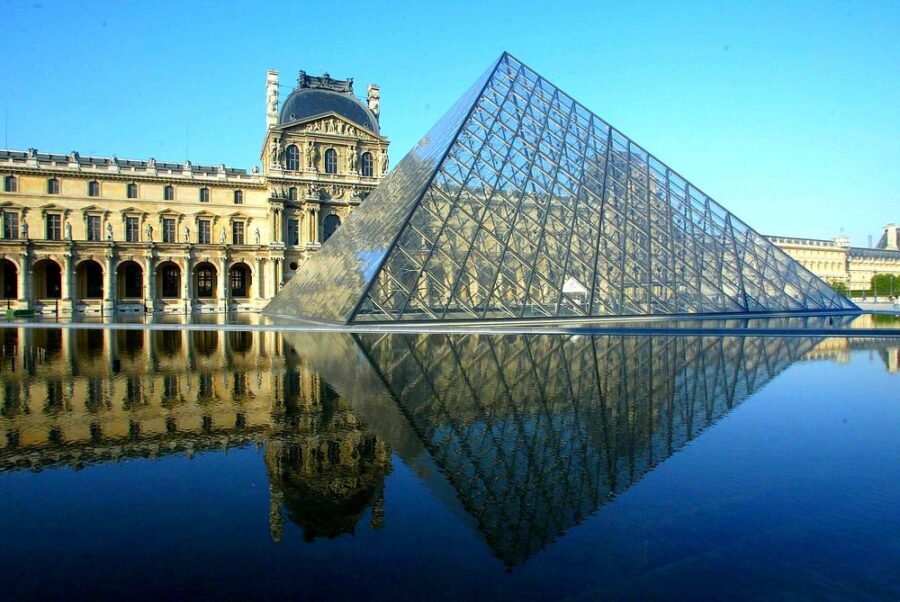
But here’s the twist: that “modern monstrosity” is now as iconic as the Mona Lisa’s smirk. The pyramid solved a practical problem—the Louvre needed a grand entrance that could handle 10 million visitors a year without ruining its historic facades. Pei’s design? A 21-meter-tall geometric marvel with 673 glass panes (666, if you believe the Da Vinci Code conspiracy theories).

Fun fact: The glass is self-cleaning. Because even pyramids deserve to look sharp in the Parisian drizzle.

Main Attractions and Activities

The Pyramid Itself

By day, it’s a kaleidoscope of light, refracting sunbeams onto the Cour Napoléon. By night? A glowing beacon—best viewed from the Arc de Triomphe du Carrousel with a crêpe in hand.

Underground Lobby

The pyramid’s real magic lies beneath. Descend into the Hall Napoléon, a vast subterranean hub where:

  • Ticket lines snake (pro tip: buy online)

  • The inverted pyramid drips mystery (Dan Brown fans, this is your moment)

  • Three wings diverge like a museum choose-your-own-adventure

Photo Ops Galore

  • The “Holding the Pyramid” shot: Squat near the central fountain, pinch the apex between thumb and forefinger. Basic? Yes. Mandatory? Also yes.

  • Reflection hunting: After rain, the wet cobblestones mirror the glass perfectly.

Special Exhibits Access

Temporary shows (like last year’s “Venus de Milo: Color Rediscovered”) often use the pyramid entrance. Early birds get quieter viewing.

Visitor Experience

Here’s the truth: the pyramid is both breathtaking and a bottleneck. At noon, it’s a mosh pit of selfie sticks and school groups. Visit at 9 AM or after 6 PM (Wednesday/Friday late openings) to actually appreciate its geometry without elbowing through crowds.

The glass creates a greenhouse effect—balmy in winter, sweltering in summer. Dress in layers unless you enjoy sweating like a courtier at Versailles.

And about those 673 panes? Spotless. Rumor says a team of robot cleaners scales it nightly. (Reality: brave humans with squeegees on ropes.)

Tips for Visitors

  • Skip-the-line tickets: Book at www.louvre.fr for €17. The on-site queue? A soul-crushing 2+ hours.

  • Free entry: First Saturday of each month, 6-9:45 PM (prepare for crowds).

  • Metro: Palais Royal-Musée du Louvre (Line 1) drops you under the pyramid.

  • Baggage: Large backpacks = forced check-in. Pack light.

  • Combined tickets: The Musée Delacroix (€3 extra) is a 10-minute walk and blissfully quiet.

Accessibility and Facilities

  • Wheelchair access: Ramps and elevators everywhere. Loaner chairs are available.

  • Cloakroom: Free (but often full by 11 AM).

  • Toilets: Underground, surprisingly chic. Peak hours = lines.

  • Food: The Café Marly offers pyramid views at extortionate prices. Better to picnic in the Tuileries.

Unique Features

Why does this pyramid outshine others?

  1. The Illusion: From certain angles, it appears to float. (Pei’s engineering sorcery.)

  2. The Controversy: Parisians hated it initially. Now they defend it fiercely.

  3. The Night View: Lit from within, it becomes a ghostly lantern—best seen from Rue de Rivoli.

Overall Impressions

The Louvre Pyramid is a dichotomy:

  • A futuristic intrusion that somehow enhances the Renaissance palace

  • A practical entrance that became the museum’s most photographed artifact

  • A symbol of change in a city that resists it

Standing beneath its glass grid, you’re literally inside a work of art while surrounded by millennia of others. Meta? Absolutely.

Pros and Cons

Pros:

  • Iconic architecture (your Instagram needs this)
  • Stunning light plays (sunrise = magic hour)
  • Efficient crowd flow (when not at peak times)

Cons:

  • Midday crowds rival Versailles’ Hall of Mirrors
  • Glass glare can hinder photos
  • No seating nearby (blame security concerns)

Should You Visit?

Oui, but strategically. The pyramid isn’t just a doorway—it’s a statement about art’s evolution. Come for:

  • Golden hour photography (6-8 PM in summer)

  • The thrill of standing where history clashes with modernity

  • Bragging rights (because who hasn’t pseudo-held this pyramid?)

Just don’t expect solitude. As Pei himself said: “The Louvre is a mirror—it reflects Paris.” And Paris? She’s always watching.
Key Features

  • Stunning light plays (sunrise = magic hour)
  • Efficient crowd flow (when not at peak times)
  • Midday crowds rival Versailles’ Hall of Mirrors
  • Glass glare can hinder photos
  • No seating nearby (blame security concerns)

More Details

Updated June 29, 2025

History and Significance

Louvre Pyramid

Let’s shatter a myth first: the Louvre Pyramid isn’t some ancient relic hauled from Egypt. It’s younger than Star Wars—built in 1989 amid gasps from Parisians who thought architect I.M. Pei had lost his mind. A glass-and-steel spaceship landing in the courtyard of a 16th-century palace? Sacré bleu!

But here’s the twist: that “modern monstrosity” is now as iconic as the Mona Lisa’s smirk. The pyramid solved a practical problem—the Louvre needed a grand entrance that could handle 10 million visitors a year without ruining its historic facades. Pei’s design? A 21-meter-tall geometric marvel with 673 glass panes (666, if you believe the Da Vinci Code conspiracy theories).

Fun fact: The glass is self-cleaning. Because even pyramids deserve to look sharp in the Parisian drizzle.

Main Attractions and Activities

The Pyramid Itself

By day, it’s a kaleidoscope of light, refracting sunbeams onto the Cour Napoléon. By night? A glowing beacon—best viewed from the Arc de Triomphe du Carrousel with a crêpe in hand.

Underground Lobby

The pyramid’s real magic lies beneath. Descend into the Hall Napoléon, a vast subterranean hub where:

  • Ticket lines snake (pro tip: buy online)

  • The inverted pyramid drips mystery (Dan Brown fans, this is your moment)

  • Three wings diverge like a museum choose-your-own-adventure

Photo Ops Galore

  • The “Holding the Pyramid” shot: Squat near the central fountain, pinch the apex between thumb and forefinger. Basic? Yes. Mandatory? Also yes.

  • Reflection hunting: After rain, the wet cobblestones mirror the glass perfectly.

Special Exhibits Access

Temporary shows (like last year’s “Venus de Milo: Color Rediscovered”) often use the pyramid entrance. Early birds get quieter viewing.

Visitor Experience

Here’s the truth: the pyramid is both breathtaking and a bottleneck. At noon, it’s a mosh pit of selfie sticks and school groups. Visit at 9 AM or after 6 PM (Wednesday/Friday late openings) to actually appreciate its geometry without elbowing through crowds.

The glass creates a greenhouse effect—balmy in winter, sweltering in summer. Dress in layers unless you enjoy sweating like a courtier at Versailles.

And about those 673 panes? Spotless. Rumor says a team of robot cleaners scales it nightly. (Reality: brave humans with squeegees on ropes.)

Tips for Visitors

  • Skip-the-line tickets: Book at www.louvre.fr for €17. The on-site queue? A soul-crushing 2+ hours.

  • Free entry: First Saturday of each month, 6-9:45 PM (prepare for crowds).

  • Metro: Palais Royal-Musée du Louvre (Line 1) drops you under the pyramid.

  • Baggage: Large backpacks = forced check-in. Pack light.

  • Combined tickets: The Musée Delacroix (€3 extra) is a 10-minute walk and blissfully quiet.

Accessibility and Facilities

  • Wheelchair access: Ramps and elevators everywhere. Loaner chairs are available.

  • Cloakroom: Free (but often full by 11 AM).

  • Toilets: Underground, surprisingly chic. Peak hours = lines.

  • Food: The Café Marly offers pyramid views at extortionate prices. Better to picnic in the Tuileries.

Unique Features

Why does this pyramid outshine others?

  1. The Illusion: From certain angles, it appears to float. (Pei’s engineering sorcery.)

  2. The Controversy: Parisians hated it initially. Now they defend it fiercely.

  3. The Night View: Lit from within, it becomes a ghostly lantern—best seen from Rue de Rivoli.

Overall Impressions

The Louvre Pyramid is a dichotomy:

  • A futuristic intrusion that somehow enhances the Renaissance palace

  • A practical entrance that became the museum’s most photographed artifact

  • A symbol of change in a city that resists it

Standing beneath its glass grid, you’re literally inside a work of art while surrounded by millennia of others. Meta? Absolutely.

Pros and Cons

Pros:

  • Iconic architecture (your Instagram needs this)
  • Stunning light plays (sunrise = magic hour)
  • Efficient crowd flow (when not at peak times)

Cons:

  • Midday crowds rival Versailles’ Hall of Mirrors
  • Glass glare can hinder photos
  • No seating nearby (blame security concerns)

Should You Visit?

Oui, but strategically. The pyramid isn’t just a doorway—it’s a statement about art’s evolution. Come for:

  • Golden hour photography (6-8 PM in summer)

  • The thrill of standing where history clashes with modernity

  • Bragging rights (because who hasn’t pseudo-held this pyramid?)

Just don’t expect solitude. As Pei himself said: “The Louvre is a mirror—it reflects Paris.” And Paris? She’s always watching.

Key Highlights

  • Stunning light plays (sunrise = magic hour)
  • Efficient crowd flow (when not at peak times)
  • Midday crowds rival Versailles’ Hall of Mirrors
  • Glass glare can hinder photos
  • No seating nearby (blame security concerns)

Location

Places to Stay Near Louvre Pyramid

Find and Book a Tour

Explore More Travel Guides

No reviews found! Be the first to review!

Traveler Reviews for Louvre Pyramid

There are no reviews yet. Be the first one to write one.

Share Your Experience

Have you visited Louvre Pyramid? Help other travelers by sharing your review.

Find Accommodations Nearby

Recommended Tours & Activities

Visitor Reviews

There are no reviews yet. Be the first one to write one.

Share Your Experience

Have you visited Louvre Pyramid? Help other travelers by leaving a review.