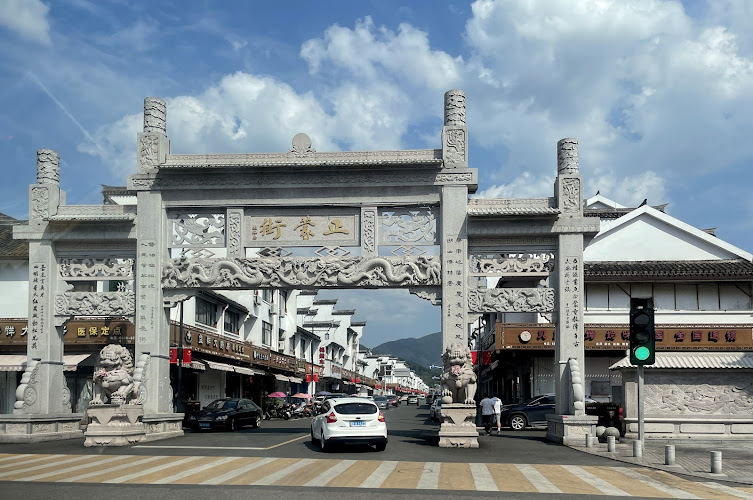
Description
The town has roots going back over a thousand years, and you can feel that age in the stones under your feet. The lanes are narrow and sometimes uneven, and yes, you’ll probably trip once if you’re not paying attention. I did. Worth it. Old residences line the streets, many with carved wooden doors that look like they’ve seen entire dynasties come and go. Some homes are still lived in, laundry hanging out front, kids darting between doorways. It’s not a museum town, and that matters.
Liangnong played a notable role during modern Chinese history as well, especially during the revolutionary period. You’ll notice memorial buildings and preserved sites connected to that era, but they’re integrated into the town instead of set apart. That blending of daily life and historical memory feels very real. Not polished. Real.
Travelers should know upfront that Liangnong Ancient Town isn’t perfectly preserved. Some structures are worn, paint peeling, stones cracked. But honestly, that’s why it feels authentic. There are moments of quiet beauty, and also moments where you think, huh, this place could use a little TLC. Both things can be true at the same time. And if you’re traveling with kids, good news: the town is generally safe, open, and relaxed, with public restrooms available and enough open space for little legs to roam without constant worry.
What sticks with many visitors is the pace. Time stretches here. You’ll hear birds more than traffic, and conversations float through the air in local dialects. And if you stop long enough, someone might actually talk to you. That happened to me at a small tofu shop. I didn’t understand half of what the owner said, but the smile translated fine.
Key Features
- Ancient street layout: The town retains its original street plan, with winding stone alleys that follow the natural slope of the land rather than modern grids.
- Historic residences and ancestral halls: Many buildings date back to the Ming and Qing periods, with wooden beams, inner courtyards, and hand-carved details.
- Revolutionary history sites: Memorial halls and former meeting locations quietly document the town’s role in 20th-century Chinese history.
- Local food stalls: Small, family-run vendors sell simple snacks like rice cakes, handmade tofu, and seasonal produce. Nothing fancy, but it hits the spot.
- Kid-friendly environment: Open spaces, slow traffic, and a generally calm atmosphere make it manageable for families.
- Public amenities: Restrooms are available within the town, which sounds boring until you really need one.
- Surrounding countryside: Step just outside the old streets and you’ll find fields, streams, and walking paths that locals still use daily.
Best Time to Visit
The best time to visit Liangnong Ancient Town is spring or autumn, hands down. Spring brings mild temperatures and greenery creeping into every crack of stone. Autumn is even better in my opinion, cooler air, golden light, and fewer tour groups. Summer can be hot and humid, and the stone streets seem to hold onto that heat like a grudge. Winter is quiet, sometimes very quiet, and a bit damp, but if you like moody atmospheres and don’t mind wearing layers, it has its own appeal.
Weekdays are calmer than weekends. On weekends, you’ll see more domestic tourists, sometimes families on short trips. It never feels overwhelming, but the difference is noticeable. Early morning is magical. Shops are just opening, locals sweeping their doorways, steam rising from breakfast stalls. If you can manage an overnight stay nearby, do it just for that hour.
Festival times can be interesting but unpredictable. Some traditional events bring performances or ceremonies, while others mostly mean crowds. If your goal is photography or quiet exploration, avoid major holidays. If you’re curious about local culture in action, then go for it, just adjust expectations.
How to Get There
Getting to Liangnong Ancient Town takes a little effort, which again, helps keep it from feeling overrun. Most travelers arrive via nearby cities, then continue by bus or taxi. Public transportation is available, but schedules can be confusing if you don’t read Chinese. I learned that the hard way and ended up waiting longer than planned, chatting with a grandma who tried to teach me a local phrase. I still say it wrong.
Taxis or ride-hailing apps are the easiest option if you value time and sanity. Roads leading into the town are generally in decent condition, though the last stretch may narrow. Once you arrive, you won’t need a vehicle. The town is best explored on foot, slowly. Wear comfortable shoes. I know everyone says that, but really, don’t be stubborn about it.
If you’re traveling with kids or older family members, plan transport that drops you close to the entrance. While the town itself isn’t huge, the stone paths and gentle slopes can be tiring over several hours.
Tips for Visiting
First tip: slow down. Liangnong Ancient Town rewards patience. If you rush through, it’ll feel underwhelming. Sit somewhere. Watch people. Listen. That’s when the place starts to make sense.
Bring cash. Some small vendors don’t accept digital payments, especially the older folks. Prices are reasonable, and buying a snack or small souvenir directly supports locals still living there.
Respect privacy. This is still a living town. If someone’s door is open, it doesn’t mean it’s an invitation for photos. I’ve seen travelers get a little too enthusiastic with cameras. Don’t be that person.
For families, plan breaks. There are shaded spots and benches, and public restrooms are available, which makes a big difference when traveling with kids. Snacks are easy to find, but picky eaters might struggle a bit, so pack something familiar just in case.
Photography lovers should bring a wide-angle lens if possible. The streets are tight, and the best shots often come from unexpected angles. Early morning or late afternoon light is your friend.
And finally, manage expectations. Liangnong Ancient Town isn’t flashy. Some buildings are worn, some shops repetitive, and a few areas feel under-maintained. But if you’re open to subtle beauty, layered history, and the quiet rhythms of everyday life, it delivers something richer than a checklist attraction.
When I left, I didn’t feel like I’d seen everything. That’s a good sign. It felt like the town would still be there, doing its thing, whether I came back or not. And somehow, that makes you want to return.