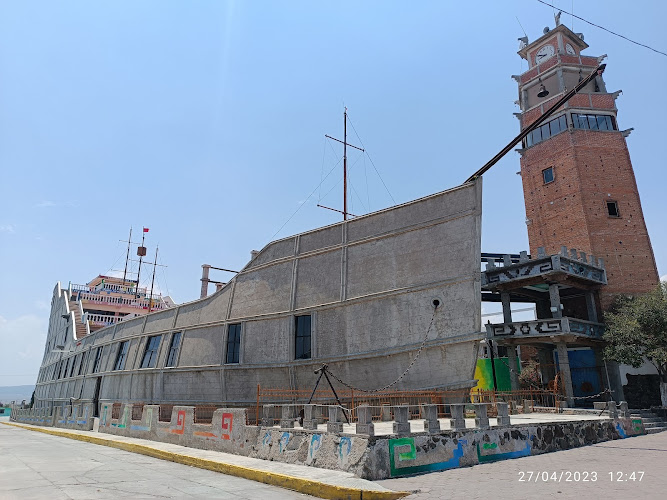
La Barca de la Fe is an unconventional Catholic church in José María Morelos Buenavista, Tlaxcala, recognized for architecture shaped to evoke a boat. Rather than blending into the familiar silhouette of a parish church, the building makes its central symbol immediately visible: faith imagined as a vessel carrying people through unsettled waters. That visual idea gives a visit a distinctive character, whether you arrive for prayer, architecture, photography, or simple curiosity.
Set in a community setting rather than a formal museum district, the church is best approached as an active place of worship and reflection. Its appeal lies in the contrast between its expressive exterior and its quiet interior atmosphere. Natural light is a noted part of the experience, softening the spaces within and encouraging visitors to slow down. Even travelers without a religious connection may appreciate the building’s symbolism, the sense of calm, and the unusual way a familiar sacred space has been reinterpreted.
Standout Highlights & Experience
The boat-like form is the main reason to seek out La Barca de la Fe, but the visit rewards closer attention than a quick exterior photograph. Look at how the nautical concept shapes the building’s identity, then take time to experience the shift in mood when entering. This is a site where design and devotion are closely connected.
- Boat-shaped architecture: The church’s vessel-inspired design is its defining visual feature and a memorable departure from conventional church forms.
- Faith expressed through symbolism: The building’s form refers to faith as a means of endurance, passage, and hope amid life’s difficulties.
- Light-filled interior character: Observe how daylight contributes warmth and a contemplative tone to the interior environment.
- A peaceful pause: Visitors can sit quietly, reflect, or attend respectfully to the prayerful atmosphere of an operating Catholic church.
- Photography with sensitivity: Exterior angles best communicate the structure’s unusual profile; keep interior photography discreet and avoid interrupting worshippers.
- Local-scale setting: A stop here offers a more intimate encounter with Tlaxcala’s community religious life than a large, heavily programmed monument.
Practical Visitor Strategy
| Factor | What to Know |
|---|
| Best Time to Go | Choose a quieter daytime period if you want time to study the architecture and absorb the interior’s reflective mood. |
| Suggested Duration | Allow about 30 to 60 minutes for exterior viewing, a respectful interior visit, and a few unhurried photographs. |
| Crowd & Entry Tips | Remember that this is a religious space. Services, prayer, and local activities take priority over sightseeing; dress and behave accordingly. |
| Getting Oriented | Start outside to understand the boat metaphor, then enter quietly and notice how light, scale, and stillness change the experience. |
Plan your visit with flexibility. Religious sites can feel very different depending on whether a service, private prayer, or community gathering is underway. If the church is active when you arrive, keep conversations low, silence notifications, and postpone extensive photography. Visitors with mobility considerations will find that accessibility has been considered at the entrance and parking area, though it is still sensible to assess conditions on arrival and travel with assistance if needed. There is no need to rush: the strongest impression often comes from taking a few quiet minutes after looking at the exterior.
Honest Fit: Who Will Love It (and Trade-Offs)
La Barca de la Fe is especially suited to travelers interested in religious architecture, symbolic design, small-town cultural stops, and places with a contemplative rather than entertainment-driven atmosphere. It can also work well for families and mixed-interest groups because the unusual silhouette gives younger visitors a clear visual hook, while adults can explore the spiritual and architectural meaning behind it. The trade-off is that this is not a conventional attraction with a museum-style interpretation route, extensive exhibits, or a long checklist of activities; its value is experiential and depends on approaching it respectfully. Those seeking a fast photo stop can appreciate the exterior, but visitors who linger will better understand its calm, reflective character. Pair it with a relaxed exploration of José María Morelos Buenavista and other Tlaxcala stops on your route, allowing the church to be a meaningful pause rather than a tightly scheduled detour.
 Real Journey Travels