Description
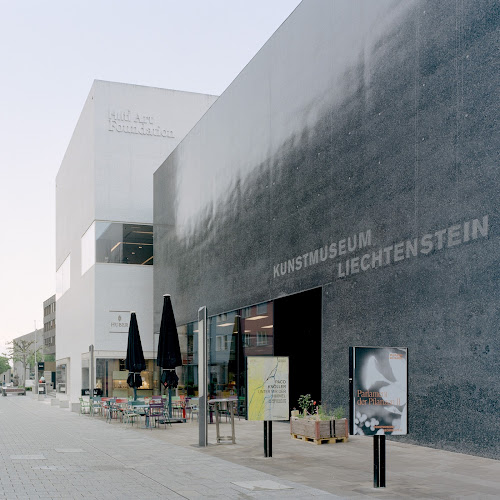
Kunstmuseum Liechtenstein is the kind of place that changes a traveler’s pace. Step off Vaduz’s pedestrian Städtle and there it is: a bold black cube of polished basalt concrete, quietly gleaming like a dark mirror against the Alps. Opened in 2000 and designed by architects Meinrad Morger, Heinrich Degelo, and Christian Kerez, the museum is both a landmark and a promise. Outside, the façade subtly reflects the town; inside, crisp galleries pull the focus fully onto modern and contemporary art. The building’s cubic form and carefully modulated daylight on the upper level create a calm rhythm for seeing—installations and objects, moving image works, and conceptual pieces read differently here, almost like new chapters of a familiar book.
As the state museum of the Principality of Liechtenstein, it holds the national art collection while presenting changing exhibitions from around the world. Expect clear curatorial through-lines, plenty of conversation-starters, and a steady stream of collaborations that make modernism and contemporary art feel right-now. Recent program highlights have ranged from strong thematic group shows to spotlights on artists whose practices live at the junction of text, color, and sound. That question—what happens when contemporary conceptual art meets radical thinking about language—gets real traction here. Exhibitions that set Henrik Olesen in dialogue with Isidore Isou, or survey the sampling logic of video essayists like Tony Cokes, sit comfortably alongside sculptural works, Arte Povera, and classical modernism context next door.
That “next door” matters. The Kunstmuseum connects seamlessly with the Hilti Art Foundation’s exhibition building, a complementary white volume that adds depth and breadth. Think of them as two sides of the same coin: one focused on modern and contemporary dialogues, the other offering concentrated looks at classical modernism and postwar art from a private collection of international standing. In practice, visitors drift back and forth between the two without fuss, gaining a fuller picture of 20th- and 21st-century art in a single visit. It’s a rare pairing that works: minimal architecture, maximal clarity.
And yes, the experience is designed for real people. The museum’s floor plan is compact but spacious, easy to navigate with a stroller or wheelchair. It’s got a genuinely accessible entrance, accessible restrooms, and dedicated accessible parking, so mobility doesn’t become an obstacle. Families will appreciate the kid-friendly activities—hands-on discovery spaces like the playful “kollabor,” creative holiday workshops, and programs that make art approachable without watering it down. There’s even a changing table on-site, which every traveling parent will quietly cheer. Many visitors round out a visit with something from the on-site restaurant, a civilized way to digest an exhibition.
Not everyone walks out with the same take, which is honestly part of the museum’s appeal. Travelers expecting old masters and gilded frames sometimes find the conceptual focus a bit abstract, especially if their last museum was a Renaissance palace. But those who lean toward installations, modernism, and the spark of new ideas tend to rate the experience highly—architecture, curation, and the warm, unfussy staff all get nods. And when live performances pop up—a concert folded into a museum night, a guided tour and discussion that spills into the foyer—the place hums. It doesn’t try to be a blockbuster; it aims to be smart, generous, and open. That’s its sweet spot.
Location-wise, the museum anchors Vaduz’s cultural mile, a short stroll from government buildings, public art, and the postcard view up to the princely castle on the hill. Quick geography note for planners: Vaduz sits in the Rhine Valley, flanked by Switzerland to the west and Austria to the east. Liechtenstein is its own country—a sovereign principality with a constitutional monarchy and a modern government—and it’s part of the Schengen area. So if you’re noodling on “is Liechtenstein worth visiting” while sketching a Switzerland-Austria itinerary, consider this: the art here is contemporary, the setting is mountain-clean, and the logistics are painless. That’s a hard combination to beat.
Key Features
- Striking architecture: a black basalt concrete “cube” with a subtly reflective façade, designed by Morger & Degelo with Christian Kerez
- State art collection of the Principality of Liechtenstein alongside international modern and contemporary art
- Changing exhibitions with clear curatorial concepts—installations, objects, moving image, conceptual art, and modernism
- Seamless connection to the Hilti Art Foundation exhibition building for classical modernism and postwar art
- Live performances and special programs that enliven the galleries and foyer
- Guided tours and discussion formats in German and English on selected dates
- Kid-friendly amenities and activities, including hands-on spaces, workshops, and discounts for children
- Accessible design with wheelchair-accessible entrance, restrooms, and parking
- On-site restaurant and clean restrooms for no-stress breaks
- Central spot on Vaduz’s pedestrian Städtle—easy to pair with nearby sights and public art
Best Time to Visit
Good news: this art museum is a year-round bet. That said, a few simple strategies can sharpen the experience.
For fewer people and quieter galleries, midweek mornings during the school year usually deliver. Thursdays often bring extended evening hours, a gift if you like to see art without clock-watching or you’re arriving late from Zurich or Innsbruck. Rainy days in the Alps can be moody; use that to your advantage. The museum’s calm interiors make the most of a drizzle outside—great light, unhurried pacing, and space to sit with a work longer than usual.
Some travelers time their visit to align with a new exhibition opening—typically several large rotations per year. It’s not about chasing the crowd; it’s about catching the curators at a moment of fresh emphasis, when labels are sharp and programs are buzzing. Keep an eye out for special series like museum talks, family workshops, or Friday concerts. They’re not every week, but when they land, the vibe shifts in a good way.
Pairing both buildings—the Kunstmuseum Liechtenstein and the Hilti Art Foundation—is efficient and rewarding. Plan roughly 90 minutes to two hours if your museum pace is brisk, closer to three hours if you like to read wall texts and watch the full run-time of video pieces. Many travelers find that a half day in Vaduz covers the museum duo, the compact town center, and a short uphill stroll for a view toward the castle. It’s a tidy, satisfying circuit.
How to Get There
Vaduz, Liechtenstein’s capital, sits in the Rhine Valley between Switzerland and Austria. There’s no airport in Liechtenstein and no train station in Vaduz, but public transport connections are smooth and simple.
By train and bus: Most international travelers route through Swiss or Austrian rail hubs. From Switzerland, Sargans and Buchs SG are the closest major train stations; from Austria, Feldkirch is your springboard. From any of these stations, frequent regional buses (think lines 11 or 12E from Swiss side; connections via LIECHTENSTEINmobil/Liemobil) roll into Vaduz Post in well under 30 minutes. The museum is an easy, nearly flat walk from the bus stop along the pedestrian Städtle. Coming straight from Zurich Airport, most itineraries run Zürich HB → Sargans → bus to Vaduz; total travel time is commonly around 90 to 120 minutes, depending on connections.
By car: Drivers follow the Swiss A13/E43 along the Rhine and exit for Vaduz. Wayfinding is straightforward, and parking garages near the Städtle keep the walk short. The museum area includes accessible parking spaces; signage is clear. Do note that the town center is pedestrianized in parts—exactly the relaxed feel that makes an art afternoon pleasant.
Cross-border notes: Liechtenstein is in the Schengen area, and while routine border checks are rare on the Swiss-Liechtenstein line, travelers must comply with Schengen visa rules where applicable. If someone is wondering “do you need a visa for Liechtenstein,” the short answer mirrors Schengen policy: if a Schengen visa is required for Switzerland or Austria for that traveler’s nationality, it’s required for Liechtenstein too.
Tips for Visiting
Make it easy, make it memorable. These practical suggestions come from patterns seen among savvy travelers and locals who know the rhythm of Vaduz.
- Consider the joint ticket: A combined admission with the Hilti Art Foundation typically offers the best value and the fullest story—from classical modernism to contemporary conceptual art in one go.
- Time your visit: If a museum night, concert, or guided tour and discussion is on the calendar, aim for that slot. The galleries feel different when there’s live sound or a curator walking through big ideas.
- Look for a free day: The museum has been known to offer free admission on certain weekdays (often Wednesdays). Offerings change, so check current opening hours and pricing on the spot before you go.
- Stroll the Städtle before or after: Public art lines the pedestrian zone, and the walk gives the black façade a shifting, reflective quality—almost a conversation between town and museum.
- Bring the kids: Families report that child-friendly activities, creative workshops, and discovery spaces lower the barrier to contemporary art. Discounts for kids help, too. The presence of changing tables and stroller-friendly layouts keeps things stress-free.
- Accessibility first: Wheelchair users will find the entrance, restrooms, and parking thoughtfully designed. Staff are attentive and helpful, and the flow between exhibitions is unfussy.
- Photography etiquette: Some exhibitions allow non-flash photography, others don’t. Ask a gallery attendant about current guidelines—saves awkwardness and helps protect delicate works.
- Language and labels: Expect German and English as standard for signage and tours. Even if art-speak isn’t your usual dialect, the curation tends to connect the dots without jargon overload.
- Fuel up smart: The on-site restaurant is a handy reset between the dark cube and the white exhibition building next door. If you prefer a faster bite, cafés along the Städtle are steps away.
- Weather game plan: On a rainy or snowy day, this is one of the best indoor activities in Vaduz. On clear days, combine the museum with a short hillside walk for a castle viewpoint—note the castle itself is a private residence, not generally open for tours.
- Context for planners: Liechtenstein is indeed its own country, a constitutional monarchy with a highly developed government and one of the world’s highest GDPs per capita. That stability is reflected in the cultural infrastructure; everything simply works, on time, with a smile.
- Expect variety: The Kunstmuseum’s exhibitions change regularly. Some rotations lean more conceptual—with text, sound, or moving image front and center—while others emphasize sculpture or modernism. If your taste runs traditional, pair with the Hilti Art Foundation’s classic holdings and give yourself permission to skim a video piece if it isn’t clicking. No guilt; this is art, not homework.
In short, the Kunstmuseum Liechtenstein rewards curiosity. The architecture is a destination in its own right; the program opens doors to big ideas without telling visitors what to think. Many guests describe a pleasant surprise at how approachable the experience feels—no pretension, clear sightlines, and room to breathe. If the prompt is “Kunstmuseum Liechtenstein Vaduz Liechtenstein” on your search bar, the answer is a confident yes. It’s an essential stop for anyone plotting a Rhine Valley day trip, an art-centric detour between Swiss lakes and Austrian peaks, or simply a smart, beautiful way to spend a few hours in a compact capital that punches above its weight in culture.