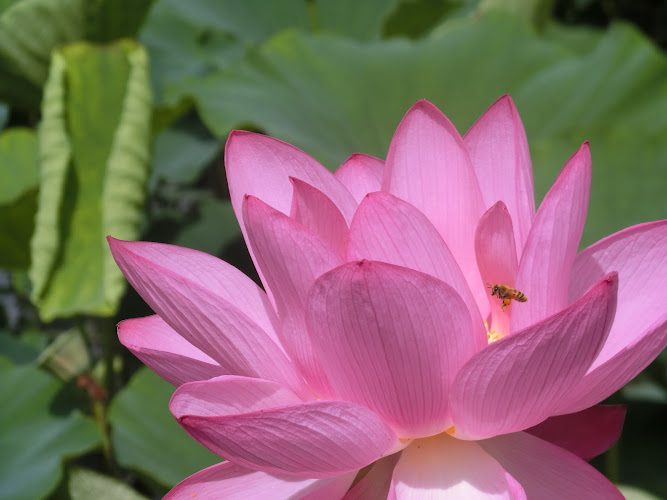
It’s in Gyoda City, Saitama Prefecture, and while it’s famous for its lotus flowers, there’s a lot more going on here than just blooms. This is the kind of park where you can wander without a strict agenda, spotting something new every time—whether it’s the seasonal cherry blossoms, the quirky rice-paddy art that changes each year, or the straw sculptures that seem to pop up like friendly giants watching over the fields. The lotus, though, is the star. These are not just any lotus flowers; they’re ancient, with roots tracing back thousands of years. Standing among them feels like stepping into a living piece of history.
It’s not a perfectly manicured, overly polished tourist trap. That’s part of its charm. Some paths are a little uneven, and you might find yourself sidestepping a puddle after the rain, but that’s real life. The park has a friendly, open vibe—families, couples, photographers, hikers, and people just sitting quietly with a bento box. It’s also one of the more inclusive public spaces I’ve seen in Japan, with wheelchair access, gender-neutral restrooms, and a reputation for being LGBTQ+ friendly. Even dogs get a warm welcome here, which is always a plus if you’re traveling with a furry sidekick.
And here’s something I love: it’s not just about looking at flowers. There’s a playground for kids, open grassy spots for picnics, and trails for an easy hike. The rice-paddy art alone is worth the trip—huge, colorful designs created by planting different varieties of rice, visible in full glory from the observation tower. It’s a little surreal and a lot impressive. Sure, not every corner is picture-perfect, but that’s what makes it feel real and lived-in. It’s a park that works for a slow afternoon or a full day of exploring, depending on your mood.
Key Features
- Open grassy areas perfect for picnics
- Free and paid parking options on-site
Best Time to Visit
The lotus season is the big draw, running from mid-June to early August. If you’ve never seen lotus flowers in full bloom, it’s worth planning your trip around this window. The mornings are especially magical—the flowers open in the early light and start to close by afternoon, so aim to get there before 10 a.m. if you can. That said, the park isn’t a one-season wonder. Come in spring for cherry blossoms and plum blossoms, or in autumn to see the rice-paddy art in its peak color before the harvest. Even in winter, there’s a quiet charm, with frosty mornings and fewer crowds. I once came in late January and stumbled upon the wintersweet blossoms—tiny pops of yellow against bare branches. Totally unexpected, totally worth it.
How to Get There
Reaching Kodai Hasu No Sato is pretty straightforward, though it does feel like a small adventure if you’re not local. From central Tokyo, you can take a train to Gyoda Station, then hop on a local bus or taxi for the short ride to the park. If you’re driving, the on-site parking makes it easy—there’s both free and paid parking, so you can choose based on how close you want to be to the entrance. For cyclists, the surrounding area is surprisingly bike-friendly, and riding in gives you a chance to see the rural landscape up close. Just keep in mind that during peak lotus season, traffic can get a bit heavy, so plan accordingly.
Tips for Visiting
First off, wear comfortable shoes. Even though the park isn’t huge, you’ll probably end up walking more than you expect, especially if you want to see the lotus ponds from different angles or explore the rice fields. If you’re visiting in summer, bring a hat and plenty of water—the sun can be relentless, and there’s not a ton of shade around the lotus ponds. For photographers, mornings are your best friend, both for lighting and for catching the flowers at their freshest. And don’t skip the observation tower—it’s the only way to fully appreciate the scale of the rice-paddy art.
Food-wise, you can bring your own picnic or grab snacks from seasonal stalls that pop up during events. If you’re traveling with kids, the playground is a good pit stop to let them burn off some energy. And if you’re bringing a dog, just be sure to keep them leashed and clean up after them—most visitors are respectful, and it’s part of what keeps the park pet-friendly. Lastly, give yourself time. Even if you think you’re just coming for a quick look at the lotus, you might find yourself lingering over a cup of tea, watching dragonflies skimming the water. That’s the kind of place this is—it slows you down in the best possible way.
 Real Journey Travels