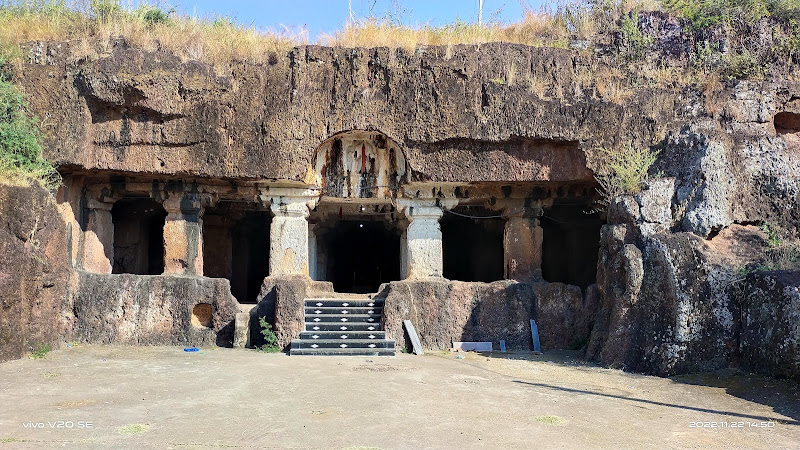
You might arrive thinking it’s just another historical stop, a quick photo-op maybe, and then suddenly you’re standing in front of rock-cut caves that have watched centuries roll by. And you slow down. Almost automatically. That’s what these caves do to you.
Carved into soft laterite rock, the Kharosa Caves sit calmly, not flashy, not trying too hard. They belong to that older India, the one before signboards everywhere and glass railings. These caves are believed to date back to around the 6th or 7th century, often associated with early Hindu influences. Inside, you’ll find carvings that are worn, yes, but still powerful. A Shiva Lingam sits in one of the caves, and even if you’re not particularly religious, there’s a certain gravity to the space. I remember standing there thinking how many hands, how many lives, passed through this exact spot long before me. That thought sticks.
The caves aren’t massive like Ajanta or Ellora, and honestly, that’s part of their charm. You don’t feel rushed. You don’t feel swallowed by crowds. You can hear birds, your own footsteps, maybe a child laughing somewhere behind you. Families come here, local devotees stop by to pray, and travelers wander through with that look of quiet curiosity. It’s an active Hindu worship site and a historical place at the same time, which gives it a lived-in feeling. Not frozen in time, but still deeply rooted in it.
What surprised me the first time was how accessible it is. The pathways are manageable, and there’s clearly been an effort to make the place welcoming for visitors of different abilities. That matters. Especially at historical attractions where accessibility is often an afterthought. Here, you feel included, not like you’re trespassing into something that doesn’t want visitors.
The surrounding area adds to the experience. The caves are set amid greenery and rocky terrain, which makes wandering around feel like a mini escape from city noise. It’s peaceful, but not boring. Educational, but not stiff. A place where you can bring kids and still have meaningful conversations about history, art, and faith. And yeah, you might also just sit on a rock and do nothing for ten minutes. No shame in that.
Best Time to Visit
If you ask me, mornings are magic here. Early mornings, especially. The light hits the rock surfaces just right, bringing out textures you’d completely miss later in the day. Plus, it’s cooler, quieter, and you’ll likely have large parts of the site to yourself. There’s something deeply satisfying about being one of the first people there, almost like you’re being let in on a secret.
The winter months, roughly from October to February, are ideal. The weather stays pleasant, and you can comfortably walk around without constantly hunting for shade. Summers can get hot, and the rocky surroundings don’t help much with heat reflection. If you do visit in summer, aim for early morning or late afternoon. Midday sun here can be unforgiving. I learned that the sweaty way.
Monsoon season brings greenery and a fresh feel to the area, but it also means slippery surfaces and occasional access issues. Some people love that dramatic, rain-washed look of ancient stone. Others, not so much. If you’re traveling with kids or elderly family members, dry weather is definitely the safer bet.
Religious occasions or local festivals can bring in more visitors, especially devotees. That’s not necessarily a bad thing. The energy changes, becomes more alive. Just know that it won’t be the quiet, reflective experience it usually is.
How to Get There
Getting to the Kharosa Caves is fairly straightforward, especially if you’re traveling by road. The roads leading up to the site are mostly decent, and local signage helps once you’re in the general area. If you’re driving, parking is available nearby, which is a relief because nothing kills travel joy faster than circling around looking for a spot.
Public transport options exist, but they may require a bit of patience and flexibility. Local buses and shared vehicles can get you close, and from there it’s usually a short walk or auto-rickshaw ride. Honestly, part of the adventure is asking locals for directions. People here are generally helpful, and you might even get a mini history lesson along the way. That’s happened to me more than once, and those conversations often become the most memorable part of the trip.
If you’re traveling as part of a larger itinerary covering nearby attractions, adding Kharosa Caves makes sense. It doesn’t demand a full day, but it leaves a lasting impression. Ride-sharing apps work in some areas, and digital payments like Google Pay are commonly accepted nearby, which is convenient when you don’t want to carry too much cash.
Tips for Visiting
First things first, wear comfortable footwear. The terrain around the caves is uneven in places, and you’ll want shoes that can handle stone surfaces without turning your visit into a balancing act. Trust me on this one. I once wore slick-soled sandals and spent the whole time walking like a cautious penguin.
Dress modestly, especially if you plan to enter the temple area. This is still a place of worship, and respecting local customs goes a long way. You’ll notice that even tourists tend to naturally lower their voices inside the caves. Follow that lead.
Carry water, especially during warmer months. There are shaded areas, but hydration is key. Snacks are fine, but be mindful of litter. The site is clean, and it would be a shame to add to the mess. I always think, if a place has survived for over a thousand years, the least we can do is not leave plastic behind.
Photography is generally allowed, but avoid using flash inside the caves. It’s not great for the carvings, and it breaks the mood anyway. Sometimes it’s better to just look, really look, instead of trying to capture everything for social media. Some memories are better left unfiltered.
If you’re visiting with kids, turn it into a storytelling session. Talk about how people lived, prayed, and carved these spaces by hand. Kids absorb more than we think, especially when history is presented as a story rather than a lecture.
Lastly, give yourself time. Don’t rush through. Sit for a bit. Listen. Let the place do its thing. The Kharosa Caves aren’t about ticking a box on your travel list. They’re about slowing down, connecting with something older than you, and leaving just a little bit more grounded than when you arrived. And honestly, we could all use more places like that.
 Real Journey Travels