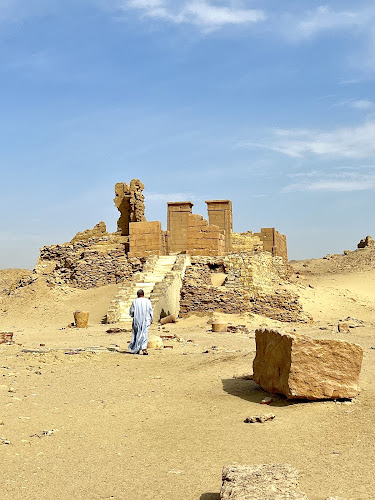
It’s not flashy or overly polished, but that’s part of its charm. This ancient Greco-Roman town in Egypt’s Faiyum Oasis tells a story that stretches back over two thousand years to the Ptolemaic and Roman periods. You can almost feel the hum of daily life that once filled its streets — farmers tending crops, traders haggling over grain, families gathering under mudbrick roofs. It’s the kind of place that makes history feel close enough to touch.
The ruins of Karanis reveal a lot about how ordinary people lived in ancient Egypt. Unlike the grand temples of Luxor or the pyramids of Giza, this site is about the everyday — the small joys and struggles of real people. Archaeologists from the University of Michigan excavated the site in the 1920s and unearthed thousands of artifacts: papyri, pottery, tools, and even children’s toys. These discoveries painted a vivid picture of life in a farming community that thrived under Greek and Roman rule.
Walking through Karanis today, you’ll see remnants of two temples dedicated to Egyptian deities, residential buildings with multiple stories, and streets that still hold their ancient layout. The architecture is simple but clever, built to withstand desert winds and scorching sun. It’s not hard to imagine the sounds of animals, the chatter of markets, or the smell of freshly baked bread drifting through the air centuries ago.
What I personally love about Karanis is its authenticity. It hasn’t been overly commercialized or crowded. You can wander quietly, take your time, and let your imagination fill in the gaps. Sure, some parts are weathered and crumbling, but that’s the beauty of it — it feels real. And if you’re traveling with kids, it’s surprisingly engaging. There’s something almost magical about watching a child’s face light up as they realize they’re standing where ancient Egyptians once played and worked.
Best Time to Visit
If you ask me, the best time to visit Karanis is between October and April. The weather is mild, the sun is warm but not punishing, and the desert breeze feels just right. Summers here can be intense, with temperatures easily soaring above 40°C (104°F). Unless you’re a heat enthusiast, I’d avoid midday visits in June or July. Early mornings and late afternoons are golden — literally. The sunlight hits the ruins in a way that makes the sandstone glow, and you’ll get some stunning photos without the harsh glare.
Winter months are also ideal if you enjoy a slower, quieter experience. The site rarely gets crowded, so you can explore at your own pace. I’ve been here in December once — wore a light jacket, sipped tea from a nearby stall, and watched the horizon turn pink as the sun dipped behind the dunes. It’s a memory that still makes me smile.
How to Get There
Reaching Karanis is easier than you might think. The site lies in the Faiyum Governorate, roughly a couple of hours southwest of Cairo. You can hire a private car, join a guided tour, or take a local bus heading toward Faiyum city. From there, it’s a short drive to the archaeological site. If you prefer flexibility (and a bit of adventure), renting a car gives you the freedom to stop at nearby attractions like Lake Qarun or the Hawara Pyramid.
I’d recommend setting out early in the morning — not only to beat the heat but also to catch that soft morning light that photographers dream about. The roads are well-paved for the most part, though you might encounter a few bumps along the way. And if you’re like me and enjoy chatting with locals, don’t hesitate to stop for a tea break in one of the small villages en route. You’ll likely get a few curious smiles and maybe even a story or two about the area’s history.
Tips for Visiting
Visiting Karanis isn’t complicated, but a few small things can make your trip even better. Here’s what I’ve learned from experience:
- Bring Water and Snacks: There aren’t many shops nearby, so stock up before you arrive. The desert air can be deceptively drying.
- Wear Comfortable Shoes: You’ll be walking on uneven ground, and some areas are sandy or rocky. Good footwear makes a big difference.
- Hire a Local Guide: While you can explore on your own, a knowledgeable guide brings the ruins to life with stories and details you might otherwise miss.
- Respect the Site: Remember, this is an ancient archaeological area. Avoid climbing on fragile walls or removing stones — every piece here tells part of a 2,000-year-old story.
- Photography: The lighting is best early in the morning or late afternoon. Bring a wide-angle lens if you can; the panoramic views are incredible.
- Plan for Shade: There’s little cover, so a hat, sunscreen, and sunglasses are must-haves. Trust me, you’ll thank yourself later.
- Pair Your Visit: Combine Karanis with other nearby sites in Faiyum for a full-day adventure — like the Karanis Museum or Lake Qarun.
One more thing — take a moment to just stand still while you’re there. Listen to the wind, feel the silence, and imagine the lives that once filled this place. There’s something oddly grounding about it. You realize how connected we all are to the past, even if centuries separate us. Karanis isn’t just a pile of ruins; it’s a whisper from history, a reminder that ordinary lives matter just as much as the grand ones written in stone.
So if you’re planning a trip to Egypt and want to see a side of its history that’s often overlooked, make the journey to Karanis. It’s a place that rewards curiosity and patience. And who knows — maybe you’ll walk away with a story of your own.
 Real Journey Travels