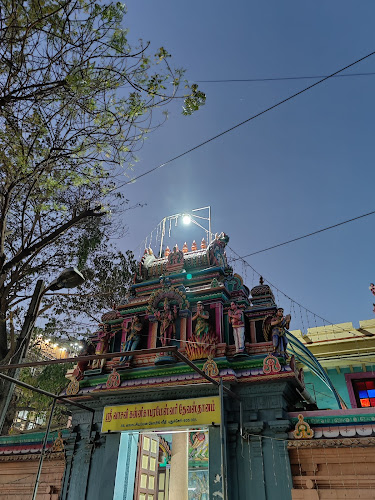
Set amid the busy streets of central Puducherry, Kanniga Parameswari Temple offers a concentrated encounter with living Hindu worship and the city’s unusually layered architectural identity. The temple is dedicated to Sri Vasavi Kanyaka Parameswari, a form of Shakti associated with ideals of purity, sacrifice and protection. Devotees come to pray, make offerings and take a quiet pause from the surrounding commercial rhythm; visitors should approach it first as an active sacred space rather than simply a sightseeing landmark.
Its appeal lies in the details. South Indian temple traditions shape the shrine’s visual language, from the sanctum-focused arrangement to decorative pillars and sacred imagery. Yet the building also carries features often linked with Puducherry’s French-influenced streetscape: colourful arches, stained-glass elements and decorative choices that create a distinctive visual contrast. Near Mahatma Gandhi Road and within reach of the city’s heritage quarters, it fits naturally into an itinerary that moves between Tamil religious culture, local markets and colonial-era urban scenery.
What to See & Experience
Take time to observe the temple as a composed whole before focusing on individual details. The experience is less about ticking off a long list of monuments and more about noticing how devotional use, ornament and place coexist. Activity and access can vary around worship, so let the atmosphere of the moment set the pace. If you enter, follow the lead of regular visitors and any instructions from temple staff.
- Deity and devotion: Learn the significance of Sri Vasavi Kanyaka Parameswari and observe the respectful rhythms of a functioning Shakti shrine.
- Architectural contrast: Look for the meeting of Dravidian temple forms with colourful, French-influenced decorative touches.
- Decorative pillars: Examine the carved and ornamented supports, which add texture to the temple interior and approach.
- Stained-glass details: Notice how coloured glass and light contribute a visual note less expected in many South Indian temples.
- Street context: Step back outside to appreciate the temple as part of central Puducherry’s dense, walkable religious and commercial fabric.
Practical Visitor Strategy
| Planning Factor | Visitor Advice |
|---|
| Best Time to Go | Choose a cooler part of the day and allow extra patience around prayer periods, when the temple may feel more animated. |
| Suggested Duration | Allow roughly 20 to 40 minutes for a respectful visit, longer if you want to study the decorative details and nearby streets. |
| Crowd & Pacing Tips | Keep a quiet, unhurried pace; avoid blocking worshippers, sanctum approaches or narrow circulation areas during busy moments. |
| Getting Oriented | Use Mahatma Gandhi Road as a central reference point, then combine the stop with a self-guided walk through nearby Puducherry neighbourhoods. |
Dress modestly and be prepared to remove footwear if requested before entering. Temple etiquette matters more than getting a particular photograph: speak softly, ask before photographing people or ritual activity, and respect any areas reserved for worshippers. It is sensible to carry only what you need, particularly when the interior or entrance area is busy. As with many sacred sites, conditions on the day, observances and visitor access can shape the experience, so remain flexible rather than planning a tightly timed stop.
Who Will Enjoy It Most (and Trade-Offs)
This temple suits travelers interested in Hindu traditions, religious architecture and the cultural intersections that distinguish Puducherry from a purely colonial-heritage destination. It is also rewarding for detail-oriented visitors who prefer a compact, meaningful stop over a large museum-style attraction. Families and independent walkers can include it in a broader central-city route, pairing it with nearby heritage streets, local shopping areas or a stroll toward the French Quarter. Travelers seeking extensive interpretation, a large landscaped complex or a highly curated visitor experience may find the visit brief. Access conditions can also be shaped by steps, thresholds, footwear removal and close interior spaces, so visitors with limited mobility should assess the entrance and circulation on arrival. The most satisfying approach is to arrive with curiosity, give worship priority over sightseeing, and let the temple add a Tamil devotional dimension to a day spent exploring Puducherry.
 Real Journey Travels