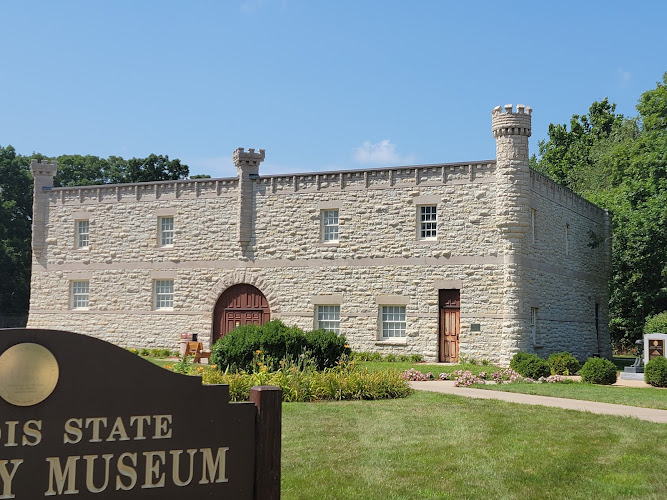
It sits within the Camp Lincoln complex and serves as a repository for artifacts, uniforms, flags, and personal stories that track service from the Civil War through modern conflicts. The museum takes the often broad subject of military history and narrows it to the human scale: soldiers, families, units, and the decisions that shaped their lives. For travelers who are curious about the Illinois National Guard, Army history in the state, or want a quieter, contemplative museum experience off the usual tourist track, this site tends to deliver.
The exhibit design leans traditional but effective. Display cases present artifacts with clear captions, while larger items—such as vehicles, artillery pieces, and a selection of uniforms—are staged to show evolution over time. The museum includes a small theater used for short films and presentations, which is handy on rainy days or for visitors who prefer a narrative overview before wandering the galleries. Tours are available and often led by volunteers or staff who know the material well; these guided walks add context that makes plaques and objects click into place. And because the staff includes former service members and local historians, visitors frequently hear little anecdotes—about units from Illinois, or about the day-to-day life at Camp Lincoln—that do not appear in standard guidebooks.
Accessibility is a practical strength here. The entrance, parking, and restrooms are wheelchair accessible, and the layout is compact enough that most paths are easy to navigate. That matters, because some museums of a similar theme spread exhibits over several floors or buildings, which can be tiring for older guests or families with small children. Speaking of kids, the museum is explicitly family friendly. There are kid-oriented displays and educational programming designed to engage younger visitors without dumbing anything down. Parents report that the hands-on elements—simple handling objects or replica gear for dress-up—help keep restless children engaged while adults read and reflect.
The museum emphasizes Illinois military heritage and the role of the state in national events. Items on display often come with local provenance: letters from soldiers stationed in Illinois regiments, medals awarded to Illinoisans, and photos of community send-offs. For travelers who like to stitch together a regional narrative, these pieces help link Springfield’s civic identity to broader national stories. The collection highlights connections to Abraham Lincoln-era history by placing military developments in the context of the 19th century, though the museum does not position itself as a Lincoln shrine. Instead it offers balance: Lincoln-era references appear where relevant, but the focus remains on the evolution of military service in Illinois over time.
Practical visitor amenities are modest but sufficient. There is a staffed information desk and restrooms on site; the museum does not house a restaurant, so plan accordingly for meals. Many visitors combine a museum visit with lunch elsewhere in Springfield. The museum also functions as an educational hub: researchers and history buffs can often find staff willing to point toward archives or resources connected to Illinois military records. That makes it useful not just for quick visits but for deeper research trips, genealogy inquiries, or school group planning.
Atmosphere here is quiet and respectful rather than theatrical. The interpretive approach favors stories over spectacle, giving personal letters, oral histories, and curated artifact groupings room to breathe. This suits travelers who prefer museums that invite reflection rather than sensory overload. That said, the space is by no means static. Temporary exhibits and rotating displays appear periodically, so repeat visitors can usually find something new. Events—lectures, commemorations, and special programs—are announced on-site and provide opportunities to see the museum in a different light, with guest speakers or veteran panels adding immediacy to the exhibits.
One little-known aspect that often surprises first-time visitors is the depth of the museum’s ties to the Illinois National Guard. Beyond uniforms and patches, exhibits explore organizational changes, training practices, and Camp Lincoln’s role in state readiness. A visitor with even a passing interest in military organization will walk away with a clearer sense of how the Guard fits into both state and national defense infrastructures. And while the museum does cover major wars—Civil War, World War I, World War II, Korea, Vietnam, and more recent operations—it also highlights non-combat service roles and community responses to mobilization. These broader perspectives can shift expectations: this is not just a collection of weapons, but a narrative about service, community, and consequence.
There are a few practical limitations to be aware of. The building is compact compared with larger metropolitan museums, so itineraries should anticipate a focused visit rather than an all-day exploration. Signage is generally informative but, on occasion, could benefit from additional context for visitors who arrive without prior knowledge of military terminology. Still, staff and volunteers are approachable and usually willing to fill in gaps during a guided tour or at the information desk.
Overall, the Illinois State Military Museum in Springfield is a strong choice for travelers drawn to military history, local heritage, and sincere storytelling. It rewards curiosity: the more questions a visitor brings, the more threads there are to follow through letters, artifacts, and personal accounts. For someone planning a stop in Springfield, a ninety-minute to two-hour visit is a good rule of thumb. It gives enough time to absorb key exhibits, catch a short film in the theater, and ask a few questions without feeling rushed. In short, it’s a compact, accessible, and well-curated glimpse into Illinois’s military past that quietly punches above its weight for history-minded travelers.
 Real Journey Travels