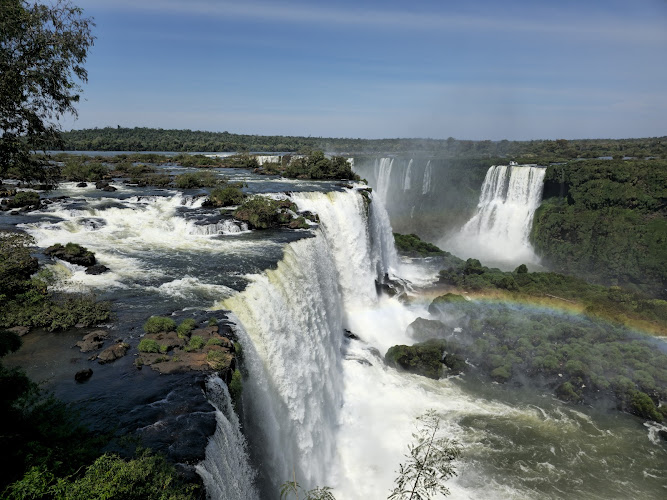
Iguazu Falls
About Iguazu Falls
Description
Iguazu Falls in northern Argentina is one of those rare spots on Earth that makes you question whether nature might actually be showing off a little. Spanning the border between Argentina and Brazil, this waterfall system boasts more than 270 individual cascades spread out across nearly three kilometers along the Iguazú River. Standing close to Garganta del Diablo, or Devil’s Throat, it’s impossible not to feel small in the grand face of such power. The roar of the water alone fills you with awe—the kind that presses deep into your chest and stays there for days.
The falls are part of Iguazú National Park, a UNESCO World Heritage Site, where deep-green jungle surrounds every trail. Here, howler monkeys echo through the trees, colorful toucans swoop overhead, and butterflies—thousands of them—float in the mist rising from the river. I’ve been lucky enough to visit many natural wonders before, but this one hit differently. Maybe it’s the contrast between thunderous falls and quiet rainforest paths, or the pride shown by locals who care for the park and share its stories.
The Argentine side takes you right into the heart of the experience. You can walk just above the river and feel the rumble of the waterfalls beneath your feet, or hop on the Ecological Jungle Train that chugs gently through the forest to the upper viewing decks. This immersive design makes the falls accessible to nearly everyone, and it’s pleasant to see how well it’s organized—from the wide paths and picnic tables to the accessible facilities. Visitors can enjoy cycling lanes, resting spots under towering trees, kid-friendly hikes, and picnic areas that transform the outing into a full-day adventure.
Key Features
- Over 270 separate waterfalls make up one of the largest waterfall systems in the world.
- The dramatic Garganta del Diablo (Devil’s Throat) showcases the falls’ greatest power, plunging nearly 80 meters into a churning basin.
- Spread across two national parks: Iguazú National Park in Argentina and Iguaçu National Park in Brazil.
- A UNESCO World Heritage Site due to its biodiversity and ecological importance.
- Wheelchair-accessible pathways, restrooms, and train rides for inclusive travel experiences.
- The Ecological Jungle Train connects different circuits—Upper, Lower, and Devil’s Throat routes—through lush rainforest.
- Perfect for hiking, wildlife watching, photography, and short rainforest walks.
- Family-friendly facilities including playgrounds, picnic tables, and kid-oriented nature trails.
- Boat rides available for those wanting a face-full of spray from the lower cascades (and what a thrill that is!).
- Cashless payment options accepted, making logistics smooth for international visitors.
What really elevates Iguazu Falls, beyond its scale, is the sensory overload you get from every direction—the constant mist cooling your skin, the rainbow-reflecting droplets dancing in sunlight, the earthy scent after rain. It’s easy to understand why more than a million travelers visit annually. Not everyone walks away with the same opinion, of course. Some feel it’s too crowded or commercialized, while others find it absolutely worth the effort. To me, it’s the balance between accessibility and authenticity that makes it stand out.
Best Time to Visit
Choosing the best time to visit Iguazu Falls comes down to what kind of experience you’re after. The region has a humid subtropical climate, meaning it’s humid most of the year and grows lush quickly after rainfall. December through February (summer in the Southern Hemisphere) brings both high temperatures and higher water levels. During this time, the falls surge dramatically—gorgeous for photos but prepare to get soaked and maybe even caught in a tropical downpour.
If you prefer milder conditions and fewer people, aim for the shoulder months—March to May or August through October. During my last trip in May, the falls were still roaring powerfully, but the trails were less crowded, and you could linger a bit longer to enjoy the views without jostling for space. It’s also easier to spot wildlife then; I remember a pair of coatis waddling past on my way to the upper circuit, completely unfazed by curious humans.
Winter (June to August) can be surprisingly pleasant—cooler, less humid, and ideal for long walks along the Lower Circuit. The water flow can drop slightly, but the trade-off is beautiful: you can actually hear the jungle better. Birds, insects, and even the soft hum of the river upstream become the day’s soundtrack. For photographers, that’s magic light season. Early morning and late afternoon bring golden hues spreading across the mist—some of the best natural lighting you could ask for.
How to Get There
Most travelers start their Iguazu adventure in Puerto Iguazú, Argentina, a small but charming town about 18 kilometers from the park entrance. The Cataratas del Iguazú International Airport (IGR) handles flights from major Argentine cities like Buenos Aires, Córdoba, and Salta. On arrival, taxis, shuttle vans, and public buses run frequently to the national park entrance.
If you’re coming from the Brazilian side, the nearby Foz do Iguaçu Airport (IGU) offers plenty of options too. Crossing between borders is straightforward for most passport holders, though you should double-check visa requirements before you travel. The border control is generally efficient, but factor in some waiting time, especially around holidays or weekends. There’s something delightful about saying you’ve stood with one foot in Argentina and the other in Brazil, gazing at the same natural wonder from two perspectives.
Inside the park itself, getting around is both easy and fun. The train runs every thirty minutes or so and connects major viewpoints—so you can spend less time figuring out logistics and more time watching the Iguazú River crash into the misty canyons below. For the more adventurous, cycling routes and walking trails snake through subtropical vegetation. You can take a guided tour, rent bikes, or simply wander along at your own pace. There’s even a small visitor center at the entrance with maps, information, and shaded resting areas to plan your route.
If you ask me, the Lower Circuit is the most rewarding route to start on. It’s where the falls surround you at multiple angles, soaking you in spray and perspective all at once. Then save Devil’s Throat for last—it has that grand finale energy, the crescendo nature planned herself. Boat rides that approach the base of certain waterfalls are available for those not afraid of getting drenched, and believe me, it’s worth every drop.
Tips for Visiting
A trip to Iguazu Falls takes planning but also a mindset to just go with the flow—literally and figuratively. Here are a few tips that might save you time and make your experience all the richer:
- Arrive early: The park opens around sunrise, and the first hours are magical—soft light, calm trails, and wildlife at its liveliest. You’ll avoid the biggest crowds near Devil’s Throat that build up later in the day.
- Book tickets in advance: It’s smart to get your park tickets ahead of time. Lines can be long, especially during Argentine holidays or school breaks.
- Dress prepared: Wear lightweight, quick-drying clothes and waterproof shoes. Even if you plan to stay dry, mist finds a way. Trust me, you’ll thank yourself later.
- Protect your gear: Bring a plastic cover or dry bag for your camera and phone. Electronics and waterfall spray don’t mix well.
- Bring snacks and water: There are restaurants and food stalls, but a small picnic by the trails feels more personal. The park even provides clean picnic tables under big shade trees.
- Respect wildlife: Coatis and monkeys might appear cute, but feeding them causes big problems later. Keep your snacks zipped up tight.
- Spend time on both sides: The Argentine side immerses you right into the action; the Brazilian side gives you that panoramic “wow” view where the whole expanse spreads before you. Both are worth every step.
- Stay overnight in Puerto Iguazú: Rushing a full-day trip feels like a missed opportunity. Stay at least one or two nights, maybe take an evening stroll around town, and unwind after your day of exploring.
- Check water levels: Before your visit, look up the current water conditions. Extreme rains can close certain circuits, while dry seasons change the waterfalls’ intensity.
- Be mindful of the sun: Even on overcast days, UV levels run high. A hat, sunglasses, and sunscreen are non-negotiable.
One last thought: don’t rush the experience. Many visitors race from one viewing deck to another, trying to “see it all.” But the best parts are often in between—where you pause long enough to watch the mist roll upward or listen to the roar dissolve into birdsong. The falls are more than a tourist attraction—they’re a reminder of how wild and beautiful the planet remains. And if you give yourself time, Iguazu Falls shows you that beauty in its purest, most unforgettable form.

Key Features
- Over 270 separate waterfalls make up one of the largest waterfall systems in the world.
- The dramatic Garganta del Diablo (Devil’s Throat) showcases the falls’ greatest power, plunging nearly 80 meters into a churning basin.
- Spread across two national parks: Iguazú National Park in Argentina and Iguaçu National Park in Brazil.
- A UNESCO World Heritage Site due to its biodiversity and ecological importance.
- Wheelchair-accessible pathways, restrooms, and train rides for inclusive travel experiences.
- The Ecological Jungle Train connects different circuits—Upper, Lower, and Devil’s Throat routes—through lush rainforest.
- Perfect for hiking, wildlife watching, photography, and short rainforest walks.
- Family-friendly facilities including playgrounds, picnic tables, and kid-oriented nature trails.
More Details
Updated October 21, 2025
Table of Contents
Description
Iguazu Falls in northern Argentina is one of those rare spots on Earth that makes you question whether nature might actually be showing off a little. Spanning the border between Argentina and Brazil, this waterfall system boasts more than 270 individual cascades spread out across nearly three kilometers along the Iguazú River. Standing close to Garganta del Diablo, or Devil’s Throat, it’s impossible not to feel small in the grand face of such power. The roar of the water alone fills you with awe—the kind that presses deep into your chest and stays there for days.
The falls are part of Iguazú National Park, a UNESCO World Heritage Site, where deep-green jungle surrounds every trail. Here, howler monkeys echo through the trees, colorful toucans swoop overhead, and butterflies—thousands of them—float in the mist rising from the river. I’ve been lucky enough to visit many natural wonders before, but this one hit differently. Maybe it’s the contrast between thunderous falls and quiet rainforest paths, or the pride shown by locals who care for the park and share its stories.
The Argentine side takes you right into the heart of the experience. You can walk just above the river and feel the rumble of the waterfalls beneath your feet, or hop on the Ecological Jungle Train that chugs gently through the forest to the upper viewing decks. This immersive design makes the falls accessible to nearly everyone, and it’s pleasant to see how well it’s organized—from the wide paths and picnic tables to the accessible facilities. Visitors can enjoy cycling lanes, resting spots under towering trees, kid-friendly hikes, and picnic areas that transform the outing into a full-day adventure.
Key Features
- Over 270 separate waterfalls make up one of the largest waterfall systems in the world.
- The dramatic Garganta del Diablo (Devil’s Throat) showcases the falls’ greatest power, plunging nearly 80 meters into a churning basin.
- Spread across two national parks: Iguazú National Park in Argentina and Iguaçu National Park in Brazil.
- A UNESCO World Heritage Site due to its biodiversity and ecological importance.
- Wheelchair-accessible pathways, restrooms, and train rides for inclusive travel experiences.
- The Ecological Jungle Train connects different circuits—Upper, Lower, and Devil’s Throat routes—through lush rainforest.
- Perfect for hiking, wildlife watching, photography, and short rainforest walks.
- Family-friendly facilities including playgrounds, picnic tables, and kid-oriented nature trails.
- Boat rides available for those wanting a face-full of spray from the lower cascades (and what a thrill that is!).
- Cashless payment options accepted, making logistics smooth for international visitors.
What really elevates Iguazu Falls, beyond its scale, is the sensory overload you get from every direction—the constant mist cooling your skin, the rainbow-reflecting droplets dancing in sunlight, the earthy scent after rain. It’s easy to understand why more than a million travelers visit annually. Not everyone walks away with the same opinion, of course. Some feel it’s too crowded or commercialized, while others find it absolutely worth the effort. To me, it’s the balance between accessibility and authenticity that makes it stand out.
Best Time to Visit
Choosing the best time to visit Iguazu Falls comes down to what kind of experience you’re after. The region has a humid subtropical climate, meaning it’s humid most of the year and grows lush quickly after rainfall. December through February (summer in the Southern Hemisphere) brings both high temperatures and higher water levels. During this time, the falls surge dramatically—gorgeous for photos but prepare to get soaked and maybe even caught in a tropical downpour.
If you prefer milder conditions and fewer people, aim for the shoulder months—March to May or August through October. During my last trip in May, the falls were still roaring powerfully, but the trails were less crowded, and you could linger a bit longer to enjoy the views without jostling for space. It’s also easier to spot wildlife then; I remember a pair of coatis waddling past on my way to the upper circuit, completely unfazed by curious humans.
Winter (June to August) can be surprisingly pleasant—cooler, less humid, and ideal for long walks along the Lower Circuit. The water flow can drop slightly, but the trade-off is beautiful: you can actually hear the jungle better. Birds, insects, and even the soft hum of the river upstream become the day’s soundtrack. For photographers, that’s magic light season. Early morning and late afternoon bring golden hues spreading across the mist—some of the best natural lighting you could ask for.
How to Get There
Most travelers start their Iguazu adventure in Puerto Iguazú, Argentina, a small but charming town about 18 kilometers from the park entrance. The Cataratas del Iguazú International Airport (IGR) handles flights from major Argentine cities like Buenos Aires, Córdoba, and Salta. On arrival, taxis, shuttle vans, and public buses run frequently to the national park entrance.
If you’re coming from the Brazilian side, the nearby Foz do Iguaçu Airport (IGU) offers plenty of options too. Crossing between borders is straightforward for most passport holders, though you should double-check visa requirements before you travel. The border control is generally efficient, but factor in some waiting time, especially around holidays or weekends. There’s something delightful about saying you’ve stood with one foot in Argentina and the other in Brazil, gazing at the same natural wonder from two perspectives.
Inside the park itself, getting around is both easy and fun. The train runs every thirty minutes or so and connects major viewpoints—so you can spend less time figuring out logistics and more time watching the Iguazú River crash into the misty canyons below. For the more adventurous, cycling routes and walking trails snake through subtropical vegetation. You can take a guided tour, rent bikes, or simply wander along at your own pace. There’s even a small visitor center at the entrance with maps, information, and shaded resting areas to plan your route.
If you ask me, the Lower Circuit is the most rewarding route to start on. It’s where the falls surround you at multiple angles, soaking you in spray and perspective all at once. Then save Devil’s Throat for last—it has that grand finale energy, the crescendo nature planned herself. Boat rides that approach the base of certain waterfalls are available for those not afraid of getting drenched, and believe me, it’s worth every drop.
Tips for Visiting
A trip to Iguazu Falls takes planning but also a mindset to just go with the flow—literally and figuratively. Here are a few tips that might save you time and make your experience all the richer:
- Arrive early: The park opens around sunrise, and the first hours are magical—soft light, calm trails, and wildlife at its liveliest. You’ll avoid the biggest crowds near Devil’s Throat that build up later in the day.
- Book tickets in advance: It’s smart to get your park tickets ahead of time. Lines can be long, especially during Argentine holidays or school breaks.
- Dress prepared: Wear lightweight, quick-drying clothes and waterproof shoes. Even if you plan to stay dry, mist finds a way. Trust me, you’ll thank yourself later.
- Protect your gear: Bring a plastic cover or dry bag for your camera and phone. Electronics and waterfall spray don’t mix well.
- Bring snacks and water: There are restaurants and food stalls, but a small picnic by the trails feels more personal. The park even provides clean picnic tables under big shade trees.
- Respect wildlife: Coatis and monkeys might appear cute, but feeding them causes big problems later. Keep your snacks zipped up tight.
- Spend time on both sides: The Argentine side immerses you right into the action; the Brazilian side gives you that panoramic “wow” view where the whole expanse spreads before you. Both are worth every step.
- Stay overnight in Puerto Iguazú: Rushing a full-day trip feels like a missed opportunity. Stay at least one or two nights, maybe take an evening stroll around town, and unwind after your day of exploring.
- Check water levels: Before your visit, look up the current water conditions. Extreme rains can close certain circuits, while dry seasons change the waterfalls’ intensity.
- Be mindful of the sun: Even on overcast days, UV levels run high. A hat, sunglasses, and sunscreen are non-negotiable.
One last thought: don’t rush the experience. Many visitors race from one viewing deck to another, trying to “see it all.” But the best parts are often in between—where you pause long enough to watch the mist roll upward or listen to the roar dissolve into birdsong. The falls are more than a tourist attraction—they’re a reminder of how wild and beautiful the planet remains. And if you give yourself time, Iguazu Falls shows you that beauty in its purest, most unforgettable form.
Key Highlights
- Over 270 separate waterfalls make up one of the largest waterfall systems in the world.
- The dramatic Garganta del Diablo (Devil’s Throat) showcases the falls’ greatest power, plunging nearly 80 meters into a churning basin.
- Spread across two national parks: Iguazú National Park in Argentina and Iguaçu National Park in Brazil.
- A UNESCO World Heritage Site due to its biodiversity and ecological importance.
- Wheelchair-accessible pathways, restrooms, and train rides for inclusive travel experiences.
- The Ecological Jungle Train connects different circuits—Upper, Lower, and Devil’s Throat routes—through lush rainforest.
- Perfect for hiking, wildlife watching, photography, and short rainforest walks.
- Family-friendly facilities including playgrounds, picnic tables, and kid-oriented nature trails.
Location
Places to Stay Near Iguazu Falls
Find and Book a Tour
Explore More Travel Guides
No reviews found! Be the first to review!
Traveler Reviews for Iguazu Falls
There are no reviews yet. Be the first one to write one.
Have you visited Iguazu Falls? Help other travelers by sharing your review.
Find Accommodations Nearby
Recommended Tours & Activities
Visitor Reviews
There are no reviews yet. Be the first one to write one.
Share Your Experience
Have you visited Iguazu Falls? Help other travelers by leaving a review.