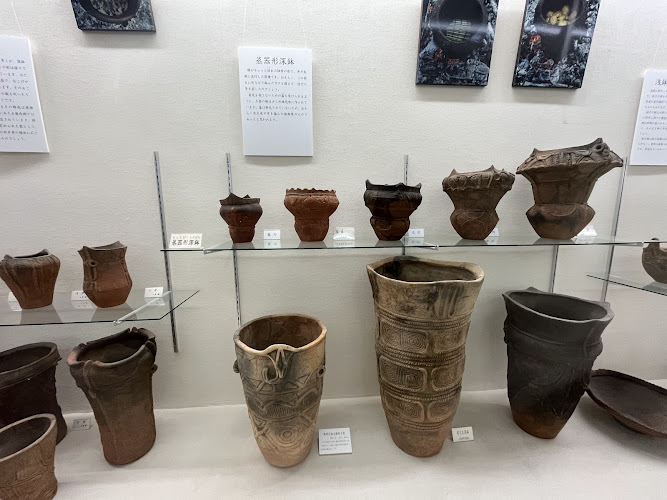
It’s not a massive institution with endless halls, but rather a focused, intimate museum that really digs deep (literally and figuratively) into the world of the Jōmon period. The collection spans over 2,000 artifacts unearthed from Fujimi itself, including tools, pottery, and figurines that carry stories from thousands of years ago. What makes it stand out is the way it doesn’t just display objects behind glass—it builds a narrative about how people lived, farmed, and even how they may have understood the spiritual world through the patterns carved into their pottery.
One of the most striking displays is the “Ancestor Goddess” clay figurine discovered at the Sakaue site. It has this raw, almost haunting presence that makes you pause. Alongside it, you’ll find the nationally designated Important Cultural Properties, like the artifacts from the Tōnai site, and the prefectural treasure, the “Water Flame Deep Pot.” These pieces aren’t just beautiful—they’re intricate, symbolic, and they make you wonder how much meaning was packed into everyday objects back then. For those who love archaeology or history, it’s a treasure chest. For those who don’t, it still feels strangely personal, like you’re peeking into the lives of people who weren’t so different from us after all.
Now, the museum isn’t perfect. Some parts feel a little old-fashioned, and the signage can be a bit text-heavy if you’re not already fascinated by ancient history. But that’s part of its charm. It’s not trying to be flashy—it’s authentic, and you can tell the curators are deeply passionate about sharing the story of the Jōmon people. Families often bring their kids here, and while younger ones might not get all the details, the clay figures shaped like half-human, half-animal beings usually spark their curiosity. And honestly, seeing a child’s face light up when they realize people thousands of years ago made something that looks like a frog-human hybrid? That’s priceless.
Best Time to Visit
Timing your visit can make a big difference here. Spring and autumn are especially rewarding because the museum sits between Mt. Amigasa and Mt. Nyukasa, offering sweeping mountain views and crisp air that makes the whole trip feel refreshing. If you’re already in Nagano for cherry blossoms or autumn foliage, adding a stop at Idojiri is a smart move. Summer is also fine, but it can get warm, and you might want to pair it with a hike in the surrounding highlands. Winter visits have their own charm, with snow blanketing the region, but keep in mind that travel can be slower and you’ll want to dress warmly.
In terms of crowds, weekdays are usually quiet, which gives you more space to linger in front of the displays. Weekends bring in families and school groups, so if you prefer a peaceful experience, aim for mid-morning on a weekday. Personally, I found that visiting in late afternoon gave the place a calm, almost contemplative atmosphere—it felt like stepping into a time capsule just before the day ended.
How to Get There
Reaching the museum from Tokyo is easier than you might think. Hop on a train from Shinjuku to Fujimi Station, which takes about two to three hours depending on the service. From there, it’s a short taxi ride or a manageable walk if you don’t mind stretching your legs. Driving is also an option, and honestly, having a car gives you the freedom to explore other nearby attractions in Nagano. Parking is available, and the roads are well-maintained, though winter driving can be tricky if you’re not used to snow.
If you’re planning a day trip, it’s absolutely doable from Tokyo, but I’d recommend staying overnight in the area if you can. There are cozy inns and hot spring spots nearby, and nothing beats soaking in an onsen after a day of exploring ancient history. Plus, staying local lets you enjoy the slower pace of Fujimi, which is part of the experience.
Tips for Visiting
First tip—don’t rush. This isn’t the kind of museum you breeze through in 20 minutes. Give yourself at least an hour or two to really take in the details. The pottery patterns alone can keep you staring as you try to decode what they might have meant thousands of years ago. Bring a notebook if you’re the type who likes to jot down thoughts; I found myself scribbling little sketches of some of the figurines because they were just that unusual.
Second, check ahead for live performances or seasonal events. Sometimes the museum hosts reenactments or hands-on activities that let you try out ancient techniques. These are especially fun if you’re traveling with kids or just want to get a more tactile sense of the Jōmon lifestyle. I once tried grinding grains with a stone tool replica during one of these events, and let me tell you—it gave me a whole new respect for how much effort went into daily survival back then.
Third, accessibility is a mixed bag. While restrooms and wheelchairs are available, the entrance isn’t fully accessible, so plan accordingly if mobility is a concern. And since there’s no restaurant onsite, it’s smart to eat beforehand or pack a snack. The area around Fujimi has some lovely little cafés, though, so you won’t go hungry for long.
Finally, bring an open mind. Some visitors expect flashy technology or interactive screens, but this museum is more about substance than spectacle. If you let yourself slow down and really engage with the artifacts, you’ll walk away with a deeper appreciation for the Jōmon people and maybe even a sense of connection to them. After all, they were humans trying to make sense of their world—just like we are today.
All in all, the Idojiri Archaeological Museum is one of those under-the-radar gems that rewards curiosity. It’s not perfect, but its authenticity, its rare treasures, and its ability to spark imagination make it a worthwhile stop for any traveler interested in the roots of Japanese culture. And who knows—you might just find yourself thinking about that frog-faced figurine long after you’ve left.
 Real Journey Travels