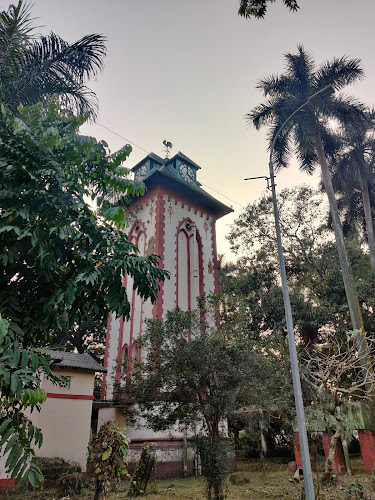
Howrah is the industrial and railway city on the western bank of the Hooghly River, facing Kolkata across the water. On a map it is listed as a park-type place, but visitors will find a whole district of riverfront, heritage infrastructure and green pockets rather than a single fenced park. The first impression for many arrivals is Howrah Junction, opened in 1854, one of India’s busiest railway hubs, with porters, trains and traffic working around the clock. Beyond that gateway energy, the city has quieter corners that reward a slower visit.
Its best-known landmark is Howrah Bridge, officially Rabindra Setu, a steel cantilever span completed in 1943 that carries a constant stream of pedestrians, trams, buses and handcarts. A short distance downriver is the Acharya Jagadish Chandra Bose Indian Botanic Garden, founded in 1787, famous for its Great Banyan Tree. Belur Math, a spiritual centre on the riverbank, adds a calm, contemplative counterpoint. Together these places make Howrah a good half-day or full-day exploration that mixes engineering, nature and spirituality.
Standout Highlights & Experience
Howrah rewards visitors who treat it as a set of distinct stops rather than one attraction. The contrast between the busy bridge and rail area and the shaded garden and riverside temple grounds is the main appeal. Here is what to look for:
- Howrah Bridge: a riveted steel cantilever bridge with no central pier, best seen at dawn or after dark when the lights reflect on the Hooghly.
- Howrah Junction: a historic station dating to 1854, with a red-brick facade and lively platform scenes that give a real sense of the city’s pace.
- Indian Botanic Garden: wide lawns, tree-lined paths, ponds and thousands of plant species, centred on the sprawling Great Banyan Tree.
- Belur Math: riverside temple grounds known for their calm atmosphere and an architectural style that blends several religious traditions.
- Hooghly River ferries: short crossings that give a low-level view of the bridge and the ghats on both banks.
- Flower market near the bridge: an early-morning wholesale market with garlands and marigolds stacked along the approach roads.
Practical Visitor Strategy
| Factor | What to Know |
|---|
| Best Time to Go | October to February is the cool, dry period and the most comfortable for walking. Go early in the morning for softer light and lighter traffic, or at dusk for the bridge lights. |
| Suggested Duration | Allow half a day for the bridge, the station area and a ferry ride. Add another half day if you want to include the Botanic Garden and Belur Math at an unhurried pace. |
| Crowd & Entry Tips | The bridge and station area are crowded at nearly all hours, especially weekday rush periods. Gardens and religious sites may have their own entry rules and visiting hours, so check locally before you go. Keep bags close in dense areas. |
| Getting Oriented | Howrah Junction is the main transport anchor, with metro, buses, taxis and ferries nearby. Kolkata is reached across the bridge or by ferry. Use the station as your starting point and move outward by road or river. |
Plan the day in a loop: begin near the bridge and flower market while it is cooler, then move on to the garden or Belur Math in the middle of the day when shade matters most. Ferries are a practical and inexpensive way to cross the river and avoid road congestion, though fares and schedules should be confirmed on the day rather than assumed. Carry water, wear comfortable shoes and keep cash handy for small purchases.
Honest Fit: Who Will Love It (and Trade-Offs)
Howrah suits curious travelers who enjoy heritage infrastructure, street-level city life, photography and local transport. History and engineering enthusiasts will appreciate the bridge and the 19th-century station, while nature lovers and families can use the Botanic Garden for long, shaded walks. Spiritual visitors often include Belur Math for its quiet riverside setting.
The trade-offs are real: pavements near the bridge and station are crowded and uneven, noise is constant, and the humid summer months can be tiring. Accessibility is limited in the busiest areas, though garden paths are generally flatter and easier to manage. If you want a more relaxed pace, base yourself in Kolkata and visit Howrah on a focused day trip, pairing it with the ghats and the colonial-era districts across the river.
 Real Journey Travels