
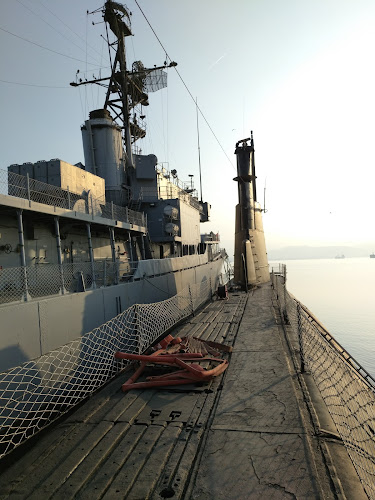
Hizir Reis Submarine Museum
About Hizir Reis Submarine Museum
The Hizir Reis Submarine Museum offers a rare chance to step inside a piece of Turkish naval history and to feel, literally, the narrowness and ingenuity that define life beneath the waves. Visitors approach expecting a static display and instead find an immersive, sometimes intimate experience: a real submarine converted into a museum ship that preserves machinery, living quarters, and the atmosphere of an active vessel. For travelers who love maritime history, naval technology, or simply the thrill of being somewhere a bit unusual, Hizir Reis delivers a compact, memorable visit.
On arrival one quickly understands that this is not a sprawling museum complex with acres of exhibits — it is a concentrated, detail-rich attraction. The density is the charm. Panels explaining systems sit beside the diesel engines; torpedo tubes are shown with context rather than spectacle; the conning tower offers a view of instruments that once guided missions. And yes, the corridors are narrow. That makes the visit feel authentic. It also means the museum rewards curiosity: small hatches, labels on gauges, a bunk tucked into a corner — these are the moments that pull a visitor into the daily reality of submariners.
The museum is geared toward people who enjoy tactile history and who don’t mind moving through compact spaces. It’s also surprisingly family-friendly. There are clear explanatory signs aimed at younger audiences, and kids often light up when they see periscopes, switches, and the tight bunks. The layout works well for families who want an educational outing that keeps children engaged. That said, the experience will be different for everyone: some visitors come away exhilarated by the technical detail, others remark on how claustrophobic the environment feels. Both reactions are valid, and both are part of the museum’s honest representation of submarine service.
Practical details shape expectations. Restroom facilities are available near the entrance, which is a comfort many appreciate after exploring tight compartments. There is no restaurant on site, so visitors should plan accordingly — a coffee shop or a local café nearby is the usual plan for a post-visit debrief. Advance ticket purchase is recommended on busier days, as the submarine’s limited internal space means admissions are often staggered to keep flows comfortable and safe.
Content-wise, the museum does a solid job balancing technical explanation with human stories. Visitors can learn about propulsion systems, the role of the submarine in the Turkish navy, and the types of missions submarines have performed. The exhibition includes displays on torpedo systems, sonar, navigation equipment, and living accommodations. But it is the human touches — a worn jacket, a handwritten note, an informal sign explaining daily routines — that often linger longest in memory. The curators clearly wanted to convey that submarines are not only machines; they are workplaces and homes for crews who lived by routines that were strict, ingenious, and often improvisational.
One less obvious but striking attribute is how the museum connects local and broader naval narratives. It speaks to Turkey’s maritime tradition, the evolution of modern submarines, and the specific class and service history of the vessel itself. For those with an interest in naval technology, phrases and references like Reis class, diesel engines, and torpedo tubes will feel familiar; for newcomers, the displays provide a digestible introduction without being condescending. The balance leans toward enthusiasts but remains welcoming to casual visitors.
Accessibility is an honest talk here: the ship’s original design limits wheelchair access and makes some areas impractical for visitors with mobility issues. People with limited mobility should contact the museum ahead of time to discuss options. Conversely, the museum is excellent for most children and for adults who are comfortable with tight stairways and hatchways. Those who are prone to claustrophobia should take the warning seriously; it is better to read about certain compartments on a quiet bench outside than to push through an uncomfortable experience inside.
Photographers and social-media-minded travelers should be aware that photo opportunities are plentiful but constrained. The confined interiors produce intense, moody shots of dials and pipes, and the conning tower or deck can provide a broader scene. However, lighting inside is often low to protect artifacts and to maintain atmosphere, so bringing a camera with good low-light performance (or knowing how to use a smartphone camera’s night mode) will help. The museum staff typically does an admirable job of keeping the flow steady so that visitors have time to frame a few thoughtful images without disrupting others.
Visitor comfort is another subtlety the museum manages well. There’s an almost cinematic contrast between the open-air approach to the hull and the sudden shift to enclosed, machine-filled interior. That transition underscores the sensory reality of submarines: noise, metallic smells, and the compact arrangement of living spaces. For many, this is fascinating; for some, intense. The museum’s signage and staff are pragmatic and friendly, offering context and a sense of safety. They also provide helpful tips for families, for example where to wait for children who may prefer to skip particularly tight compartments.
Pricing and time expectations often surprise people in a good way. The ticket price is reasonable for what is essentially a guided self-exploration of a preserved military vessel, and most visitors find that 45 to 90 minutes is sufficient to take in the main highlights at a relaxed pace. History buffs can linger longer, reading each panel and studying machinery; families typically move a bit faster, focusing on the interactive bits and photo ops.
There are small, thoughtful touches that increase the overall quality of the visit. The museum includes clear explanations of the naval terminology that can trip up newcomers, and panels often compare systems to civilian analogues that make technical concepts intuitive. For example, propulsion systems are explained with analogies to car engines, and living space descriptions emphasize how crews adapted to prolonged confinement — a point that often generates conversation among visitors about human resilience and design ingenuity.
What most sets Hizir Reis apart is its authenticity. The submarine remains a real vessel rather than a reconstruction, and that authenticity is palpable. Visitors can see and, in some cases, touch elements that were part of active service. It’s not a sanitized, theatrical reconstruction; instead, it retains the marks of real use, with scuffs, repairs, and patina that lend credibility and a sense of lived history. That rawness appeals to travelers who prefer their museums to be honest rather than overly polished.
Finally, the museum sits in a community that appreciates maritime heritage, and that local context enhances the visit. After exiting the submarine, many visitors spend time reflecting, comparing notes, and heading off to sample nearby food or other regional attractions. The lack of an onsite restaurant nudges visitors to explore the neighborhood, which is often a pleasant outcome: local cafés, bakeries, or small museums nearby extend the maritime story into a broader cultural outing.
In short, the Hizir Reis Submarine Museum is a compact, immersive destination for travelers who enjoy military and maritime history, technical detail, and authentic artifacts. It rewards curiosity, accommodates families, and expects a bit of physical agility. Visitors who plan ahead — especially those who account for limited on-site services and the submarine’s confined spaces — tend to leave with a strong sense of having encountered something rare and tactile: a true piece of naval heritage preserved in metal and memory.
Key Features
Hizir Reis Submarine Museum
You Might Also Like

*BDT BELEK DOGA TOUR | Daily Tours, Day Trips and Excursions in Antalya*

1464. Sk. No:55

2006. Sk. No:2
Tours & Activities
GetYourGuide provides this tour inventory. We may earn a commission if you book through it; verify current availability, prices, and terms with the provider.
Visitor Reviews
There are no reviews yet. Be the first one to write one.
Share Your Experience
Have you visited Hizir Reis Submarine Museum? Help other travelers by leaving a review.