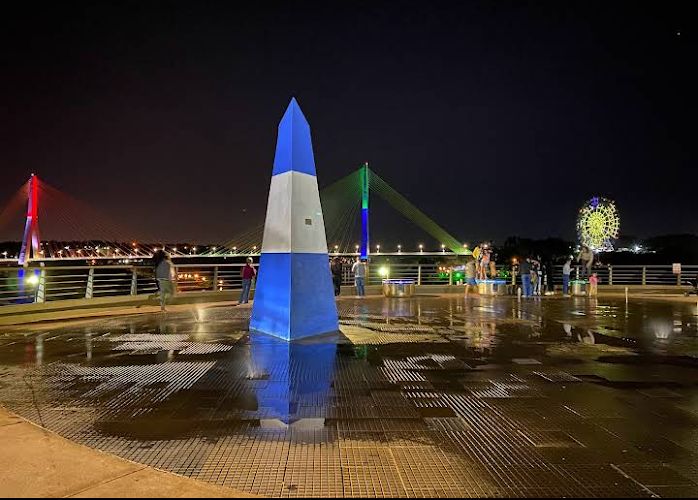
Hito Tres Fronteras (Argentina)
About Hito Tres Fronteras (Argentina)
Description
The Hito Tres Fronteras in Argentina is one of those places that makes you stop for a second and just think about where you’re standing. It’s not every day you find yourself at the exact meeting point of three countries—Argentina, Brazil, and Paraguay—all divided by the wide, slow-moving waters of the Iguazú and Paraná rivers. Standing here, you can literally look across the river and see two other nations at once. It feels surreal, like geography class coming to life right in front of your eyes.
The landmark itself is simple but symbolic: an obelisk painted in Argentina’s blue and white colors, a fountain that lights up at night, and a viewing area where you can watch the rivers merge. It’s not a grand monument in the sense of towering architecture, but it’s powerful in its symbolism. Many visitors describe it as peaceful, a spot where you can just sit, breathe, and take in the view. Others, though, find it a bit underwhelming if they’re expecting something overly flashy. Honestly, that’s part of its charm—it’s authentic, it’s straightforward, and it’s very much about the setting rather than the structure.
What I personally loved about visiting is the atmosphere. Families stroll around, kids run by with ice creams, and you’ll often find local artisans selling handicrafts. It’s not just a “monument stop”, it’s a little slice of daily life in Puerto Iguazú. And if you stick around in the evening, the fountain show adds a nice touch, with lights and music creating a relaxed vibe. It’s a place that feels both touristy and local at the same time, which is rare.
Key Features
- Iconic obelisk painted in Argentina’s national colors
- Panoramic views of the Iguazú and Paraná rivers meeting
- Direct line of sight to Brazil and Paraguay across the water
- Nighttime fountain show with lights and music
- Handicraft stalls selling local souvenirs
- Wheelchair accessible paths, restrooms, and parking
- Family-friendly environment with open spaces for children
- Free parking and easy payment options for nearby purchases
Best Time to Visit
The best time to visit really depends on what kind of experience you want. If you’re someone who likes a quieter, reflective moment, go early in the morning. The air is cooler, the crowds are thinner, and you’ll probably have the rivers almost to yourself. I remember going around 9 a.m. and watching the mist lift off the water—it was magical in its own quiet way.
Evenings are livelier, especially when the fountain show kicks in. The lights reflecting on the rivers make the whole area feel festive, and it’s a nice way to wind down after a long day of exploring Iguazú Falls or the town. Weekends tend to be busier with locals, so if you like that bustling energy, that’s your time. Weather-wise, the cooler months from May to September are more comfortable, but the lush greenery after the rains in summer (December to February) also makes for stunning photos.
How to Get There
Getting to Hito Tres Fronteras is pretty straightforward if you’re already in Puerto Iguazú. It’s just a short drive or even a walk from the town center, depending on where you’re staying. Taxis are affordable and plentiful, and many hotels will happily call one for you. If you’re like me and enjoy stretching your legs, the walk along the riverside is actually quite pleasant—though be prepared for the humidity if you’re visiting in summer.
For those coming from the Brazilian or Paraguayan side, you’ll need to cross the border, which can sometimes take a while depending on traffic and checks. But once you’re in Puerto Iguazú, the landmark is well signposted and easy to find. Parking is free, and there’s plenty of space, so driving yourself is also an option if you’ve rented a car.
Tips for Visiting
First tip: manage your expectations. This isn’t a massive theme park or a towering monument—it’s a cultural and geographical landmark, and its beauty lies in its simplicity. Go with the mindset of soaking in the view and the symbolism, and you’ll appreciate it a lot more.
Second, bring a little cash. While many stalls and small shops now accept cards or mobile payments, some artisans prefer cash. And honestly, buying a handmade souvenir here feels more meaningful than grabbing something from a big store. I still have a small wooden carving I picked up, and it always reminds me of that trip.
Third, don’t skip the evening visit if you can help it. The fountain show isn’t Vegas-level, but it has a charm of its own. Plus, the cooler evening air makes it more comfortable to linger.
Finally, take your time. Too many people stop by for five minutes, snap a photo, and leave. Sit on a bench, watch the boats drift along the river, listen to the chatter of families around you. It’s those little moments that make the visit memorable. And, if you’re a history or geography buff, bring a guidebook or read up a little beforehand—the context makes standing at the meeting point of three nations even more fascinating.

Key Features
- Iconic obelisk painted in Argentina’s national colors
- Panoramic views of the Iguazú and Paraná rivers meeting
- Direct line of sight to Brazil and Paraguay across the water
- Nighttime fountain show with lights and music
- Handicraft stalls selling local souvenirs
- Wheelchair accessible paths, restrooms, and parking
- Family-friendly environment with open spaces for children
- Free parking and easy payment options for nearby purchases
More Details
Updated September 24, 2025
Table of Contents
Description
The Hito Tres Fronteras in Argentina is one of those places that makes you stop for a second and just think about where you’re standing. It’s not every day you find yourself at the exact meeting point of three countries—Argentina, Brazil, and Paraguay—all divided by the wide, slow-moving waters of the Iguazú and Paraná rivers. Standing here, you can literally look across the river and see two other nations at once. It feels surreal, like geography class coming to life right in front of your eyes.
The landmark itself is simple but symbolic: an obelisk painted in Argentina’s blue and white colors, a fountain that lights up at night, and a viewing area where you can watch the rivers merge. It’s not a grand monument in the sense of towering architecture, but it’s powerful in its symbolism. Many visitors describe it as peaceful, a spot where you can just sit, breathe, and take in the view. Others, though, find it a bit underwhelming if they’re expecting something overly flashy. Honestly, that’s part of its charm—it’s authentic, it’s straightforward, and it’s very much about the setting rather than the structure.
What I personally loved about visiting is the atmosphere. Families stroll around, kids run by with ice creams, and you’ll often find local artisans selling handicrafts. It’s not just a “monument stop”, it’s a little slice of daily life in Puerto Iguazú. And if you stick around in the evening, the fountain show adds a nice touch, with lights and music creating a relaxed vibe. It’s a place that feels both touristy and local at the same time, which is rare.
Key Features
- Iconic obelisk painted in Argentina’s national colors
- Panoramic views of the Iguazú and Paraná rivers meeting
- Direct line of sight to Brazil and Paraguay across the water
- Nighttime fountain show with lights and music
- Handicraft stalls selling local souvenirs
- Wheelchair accessible paths, restrooms, and parking
- Family-friendly environment with open spaces for children
- Free parking and easy payment options for nearby purchases
Best Time to Visit
The best time to visit really depends on what kind of experience you want. If you’re someone who likes a quieter, reflective moment, go early in the morning. The air is cooler, the crowds are thinner, and you’ll probably have the rivers almost to yourself. I remember going around 9 a.m. and watching the mist lift off the water—it was magical in its own quiet way.
Evenings are livelier, especially when the fountain show kicks in. The lights reflecting on the rivers make the whole area feel festive, and it’s a nice way to wind down after a long day of exploring Iguazú Falls or the town. Weekends tend to be busier with locals, so if you like that bustling energy, that’s your time. Weather-wise, the cooler months from May to September are more comfortable, but the lush greenery after the rains in summer (December to February) also makes for stunning photos.
How to Get There
Getting to Hito Tres Fronteras is pretty straightforward if you’re already in Puerto Iguazú. It’s just a short drive or even a walk from the town center, depending on where you’re staying. Taxis are affordable and plentiful, and many hotels will happily call one for you. If you’re like me and enjoy stretching your legs, the walk along the riverside is actually quite pleasant—though be prepared for the humidity if you’re visiting in summer.
For those coming from the Brazilian or Paraguayan side, you’ll need to cross the border, which can sometimes take a while depending on traffic and checks. But once you’re in Puerto Iguazú, the landmark is well signposted and easy to find. Parking is free, and there’s plenty of space, so driving yourself is also an option if you’ve rented a car.
Tips for Visiting
First tip: manage your expectations. This isn’t a massive theme park or a towering monument—it’s a cultural and geographical landmark, and its beauty lies in its simplicity. Go with the mindset of soaking in the view and the symbolism, and you’ll appreciate it a lot more.
Second, bring a little cash. While many stalls and small shops now accept cards or mobile payments, some artisans prefer cash. And honestly, buying a handmade souvenir here feels more meaningful than grabbing something from a big store. I still have a small wooden carving I picked up, and it always reminds me of that trip.
Third, don’t skip the evening visit if you can help it. The fountain show isn’t Vegas-level, but it has a charm of its own. Plus, the cooler evening air makes it more comfortable to linger.
Finally, take your time. Too many people stop by for five minutes, snap a photo, and leave. Sit on a bench, watch the boats drift along the river, listen to the chatter of families around you. It’s those little moments that make the visit memorable. And, if you’re a history or geography buff, bring a guidebook or read up a little beforehand—the context makes standing at the meeting point of three nations even more fascinating.
Key Highlights
- Iconic obelisk painted in Argentina’s national colors
- Panoramic views of the Iguazú and Paraná rivers meeting
- Direct line of sight to Brazil and Paraguay across the water
- Nighttime fountain show with lights and music
- Handicraft stalls selling local souvenirs
- Wheelchair accessible paths, restrooms, and parking
- Family-friendly environment with open spaces for children
- Free parking and easy payment options for nearby purchases
Location
Places to Stay Near Hito Tres Fronteras (Argentina)
Find and Book a Tour
Explore More Travel Guides
No reviews found! Be the first to review!
Traveler Reviews for Hito Tres Fronteras (Argentina)
There are no reviews yet. Be the first one to write one.
Have you visited Hito Tres Fronteras (Argentina)? Help other travelers by sharing your review.
Find Accommodations Nearby
Recommended Tours & Activities
Visitor Reviews
There are no reviews yet. Be the first one to write one.
Share Your Experience
Have you visited Hito Tres Fronteras (Argentina)? Help other travelers by leaving a review.