Description
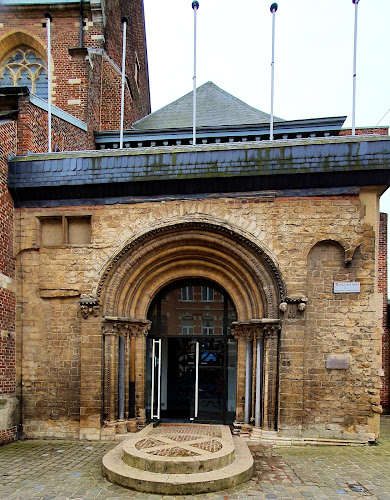
Standing quietly in Leuven’s historic center, De Romaanse Poort represents one of those remarkable pieces of history that somehow managed to survive centuries of change and upheaval. This elegant Romanesque gateway is actually the sole remaining fragment of what was once the extensive Saint Elisabeth hospital complex, dating back to the early 13th century – though some sources suggest its origins might stretch even further back to the 11th century.
What strikes most visitors first is how this medieval structure has seamlessly integrated into modern life. Today, the gate serves as the entrance to a cultural center, hosting everything from youth programs to festivals that draw students from across the city. And honestly, that’s what makes it so special – it’s not just a museum piece gathering dust behind velvet ropes.
The architecture itself tells a fascinating story. This isn’t your typical grand castle gate or imposing fortress entrance. Instead, De Romaanse Poort reflects the more humble yet essential role of medieval healthcare facilities. Medieval hospitals weren’t quite what we think of today – they functioned more like monasteries with medical care, combining spiritual healing with physical treatment. The gate’s design reflects this dual purpose, with religious architectural elements mixed with practical considerations.
Many travelers walk right past without realizing they’re looking at a 800-year-old structure. But that’s part of its charm – De Romaanse Poort has become so naturally woven into Leuven’s urban fabric that it feels alive rather than preserved. The wheelchair accessible entrance ensures that everyone can appreciate this piece of history up close, which is something you don’t always find with medieval architecture.
Key Features
The distinctive elements that make De Romaanse Poort worth seeking out include several remarkable details:
- Authentic Romanesque architecture – The rounded arches and thick stone walls showcase classic 13th-century building techniques that have withstood the test of time
- Last surviving remnant – This gate represents the only remaining piece of Saint Elisabeth hospital, making it irreplaceable in terms of historical significance
- Active cultural venue – Unlike many historical landmarks, this space continues to serve the community through cultural programming and events
- Intricate stone detailing – Close examination reveals carved elements and decorative features that demonstrate medieval craftsmanship
- Full accessibility – Modern adaptations allow wheelchair users to experience the landmark without barriers
- Student-friendly atmosphere – The combination of historical significance and contemporary use creates a unique social space
- Photogenic setting – The contrast between medieval stonework and modern surroundings provides excellent photography opportunities
- Central location – Positioned perfectly for combining with other Leuven attractions during walking tours
Best Time to Visit
The beauty of De Romaanse Poort lies in its accessibility throughout the year, but timing your visit can definitely enhance the experience. During the academic year – roughly September through May – you’ll witness the gate in its most authentic modern context, with students flowing through and cultural events bringing the space to life.
Spring and early summer months offer the most comfortable weather for exploring the exterior details without rushing. The stone architecture looks particularly striking in the warm afternoon light, when shadows emphasize the carved elements and rounded arches. But don’t discount winter visits – there’s something almost magical about seeing this medieval structure dusted with snow.
If you’re hoping to experience one of the cultural events or festivals, check the cultural center’s programming schedule. Student festivals typically happen during term time, and these events can give you a completely different perspective on how historical spaces adapt to contemporary needs.
Early morning visits provide the best opportunity for photography without crowds, though you might miss some of the social atmosphere that makes this place special. Late afternoon timing works well for combining your visit with other Leuven attractions, as the gate sits perfectly positioned for historical walking routes through the city center.
How to Get There
Reaching De Romaanse Poort is straightforward thanks to its central Leuven location. The city center is compact and pedestrian-friendly, making walking the most practical option once you arrive in Leuven.
From Brussels, regular trains run to Leuven station approximately every 15-20 minutes, with the journey taking about 30 minutes. Once at Leuven station, the historic center is roughly a 15-minute walk, or you can catch local buses that stop near the city center.
If you’re driving, Leuven offers several parking areas around the city center, though spaces can be limited during university terms. The historic center has restricted vehicle access, so plan to park and walk the final portion of your journey.
The gate itself is located on Brusselsestraat, and the easiest landmark to look for is the cultural center entrance – that’s where you’ll find De Romaanse Poort. Don’t expect massive signs or tourist infrastructure pointing the way; this is very much a local landmark that requires a bit of intentional seeking.
Public transportation within Leuven includes buses, but honestly, the city center is compact enough that most visitors find walking between attractions more convenient than figuring out bus routes. Plus, you’re likely to stumble across other interesting historical details during your walk.
Tips for Visiting
Making the most of your De Romaanse Poort experience requires a slightly different approach than typical tourist landmarks. First and foremost – look up from your phone. This isn’t a site that announces itself dramatically, and many people walk right past without noticing the historical significance of what they’re seeing.
Take time to examine the stonework closely. The architectural details that have survived eight centuries deserve more than a quick glance. The rounded arches, the stone texture, and the way medieval builders solved structural problems all tell stories if you know how to look.
Don’t expect extensive interpretive signage or guided tours. This site operates more like a living piece of the city than a formal tourist attraction. Consider downloading information about medieval hospital architecture beforehand, or research Saint Elisabeth hospital’s history to provide context for what you’re seeing.
If the cultural center is open, step inside briefly. The contrast between the medieval entrance and contemporary interior use illustrates beautifully how historical spaces can adapt without losing their character. Staff members are usually friendly and may share additional insights about the building’s history.
Photography works best during golden hour lighting, when the stone takes on warm tones and architectural details become more pronounced. And remember – this is a working cultural space, so be respectful of any events or activities taking place.
Combine your visit with other Leuven historical sites for a complete picture of the city’s medieval heritage. The proximity to other landmarks makes route planning simple, though give yourself enough time to properly appreciate what you’re seeing rather than rushing between checkpoints.
Finally, embrace the fact that this isn’t Bruges or Ghent level tourist infrastructure. De Romaanse Poort rewards visitors who appreciate authenticity over polish, substance over spectacle.