## Historical Foundations: The Golden Enclosure of the Incas
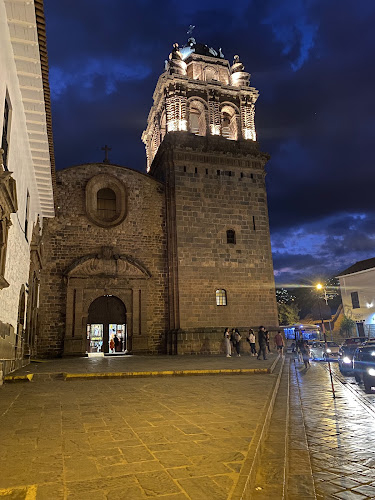
The **Church and Convent of Santo Domingo of Guzmán**—superimposed directly upon the monumental stone foundations of the ancient Inca temple complex of **Coricancha** (spelled *Qorikancha* in Quechua, translating to the “Golden Enclosure”)—represents one of the most powerful and visible architectural expressions of cultural collision in the Western Hemisphere. Located just two blocks southeast of Cusco’s historic Plaza de Armas, this sacred ground served as the supreme spiritual, ceremonial, and astronomical axis of **Tawantinsuyu** (the Inca Empire).
Originally dedicated to **Inti**, the sovereign Sun God, the temple was extensively redesigned and expanded in the mid-fifteenth century under the ninth Inca emperor, **Pachacuti Inca Yupanqui**, who revolutionized Inca civic planning and transformed Cusco into the imperial capital. Spanish colonial chroniclers, including Garcilaso de la Vega and Pedro Cieza de León, described with astonishment the unimaginable wealth displayed within Coricancha. The temple’s exterior and interior stone walls were lined with hundreds of sheets of beaten gold weighing thousands of kilograms, designed to reflect the blinding mountain sunlight. In the central courtyard lay the famed **Garden of the Sun**, where imperial goldsmiths had fashioned life-sized replicas of indigenous Andean flora and fauna entirely from solid gold and silver—including life-sized maize plants with golden stalks and silver husks, llamas with their offspring, hummingbirds, butterflies, and grazing vicuñas.
## The Sacred Astronomical Sanctuaries of Qorikancha
Beyond its role as a tribute sanctuary to Inti, Coricancha functioned as a sophisticated celestial observatory and sacred astronomical calendar. The complex encompassed distinct stone chambers dedicated to the principal deities of the Inca pantheon:
– **The Temple of the Moon (Mama Killa):** Situated adjacent to the Sun Temple, this enclosure was lined with sheets of beaten silver. As the divine sister-wife of Inti, the Moon regulated the agricultural calendar, lunar months, and ocean tides.
– **The Temple of the Stars (Ch’aska):** Dedicated to the constellations and Venus (the morning and evening star). Inca astronomers tracked stellar pathways through specialized trapezoidal window apertures cut into the stone walls to determine the precise timing of maize planting and potato harvesting.
– **The Temple of Lightning and Thunder (Illapa):** Honoring the fierce celestial god of precipitation, storms, and lightning, who was invoked during drought seasons to bring life-giving rains to the Andean mountain terraces.
– **The Temple of the Rainbow (K’uychi):** Dedicated to the rainbow, an omen of cosmic balance, adorned with gold plates reflecting prismatic light across the stone chambers.
– **The Ceque System Center:** Coricancha served as the absolute geographic origin point (*omphalos*) of the **Ceque System**—a network of 41 imaginary sacred alignment lines radiating outward across the four quarters of the Inca Empire. Along these lines lay 328 sacred shrines (*huacas*), uniting geography, astronomy, and imperial state religion.
## Spanish Conquest and Dominican Construction
Following the Spanish capture of Emperor Atahualpa in Cajamarca in 1532, Spanish conquistadors dispatched an advance contingent to Cusco to strip the golden sheets from Coricancha’s walls to satisfy Atahualpa’s royal ransom. Over 700 gold plates were pried from the masonry, melted into ingots, and shipped to Spain.
In **1538**, Francisco Pizarro ceded the sacred site to his brother, Hernando Pizarro, who donated the grounds to the **Dominican Order** under Friar Vicente de Valverde, the first Bishop of Cusco. Construction of the **Church and Convent of Santo Domingo** commenced shortly thereafter, deliberately utilizing the sacred Inca masonry as foundational support to signify the Catholic Church’s triumph over indigenous Andean religion. The monastery incorporated an expansive Spanish Renaissance cloister, arched arcades with terracotta tiled roofs, an elaborate carved cedar choir loft, and an impressive baroque stone bell tower designed by Spanish architect Francisco Becerra.
## The Triumph of Inca Seismic Engineering
The true architectural drama of Santo Domingo is revealed through the seismic history of the Cusco valley:
– **The Great Earthquakes of 1650 and 1950:** In May 1650, a catastrophic earthquake of estimated magnitude 7.5 struck Cusco, leveling most colonial Spanish buildings and collapsing the arches, domes, and bell towers of the Santo Domingo convent. In May 1950, another powerful earthquake struck the city, once again destroying large sections of the colonial Spanish church.
– **Indestructible Inca Masonry:** On both occasions, while the colonial masonry collapsed into rubble, the underlying Inca stone walls of Coricancha—including the majestic curved exterior basalt wall (*muro curvo*) supporting the church apse—remained completely upright, undamaged, and unmoved.
– **Aseismic Stonemasonry Techniques:** Inca stonemasons achieved this miraculous seismic resilience by carving hard volcanic andesite and basalt stones into precision-cut, mortarless blocks that fit together with razor-thin tolerances. Each stone incorporates subtle convex and concave interlocking joints, bevelled edges, and inward-tilting trapezoidal walls that shift slightly during ground tremors to dissipate seismic shockwaves before settling back perfectly into their original positions.
– **Post-1950 Restorations:** The 1950 earthquake dramatically exposed the hidden Inca chambers that had been buried inside colonial plaster for four centuries. Rather than rebuilding the Spanish walls over the ruins, international heritage conservators chose to preserve both architectural layers, creating the world-renowned hybrid site seen today.
## Art Treasures, Museum Exhibits, and Modern Traditions
Exploring the Church and Convent of Santo Domingo offers rich cultural encounters:
– **The Cusco School Paintings (Escuela Cusqueña):** The convent galleries house an extraordinary collection of 17th- and 18th-century canvas paintings by indigenous and mestizo artists. These masterworks combine European Christian iconography with subtle Andean symbolism, depicting the Life of Saint Dominic and the Virgin Mary adorned in traditional Andean mountain textiles.
– **Archaeological Museum of Coricancha:** The on-site subterranean museum displays authentic artifacts uncovered during twentieth-century archaeological excavations, including sacred ceramic vessels, ceremonial textiles, stone grinding mortars, mummies, and trepanned skulls demonstrating pre-Columbian cranial surgical techniques.
– **The Starting Point of Inti Raymi:** Every year on **June 24th**, the dramatic opening ceremonies of **Inti Raymi** (the Festival of the Sun) are staged on the esplanade in front of Coricancha. Dressed in magnificent imperial tunics, actors portraying the Sapa Inca and the Mama Ocllo deliver ceremonial invocations to the sun god before leading thousands of celebrants up to the fortress of Sacsayhuamán.
## Practical Visitor Guidelines and Accessibility
Essential logistical advice for travelers visiting Coricancha:
– **Opening Hours and Admission:** The site is open Monday through Saturday from **8:30 AM to 5:30 PM**, and Sundays from **2:00 PM to 5:00 PM**. Admission tickets cost **15 Peruvian Soles (PEN)** for adults (approx. $4.00 USD). Note that Coricancha is operated directly by the Dominican Order and is not included in the standard municipal *Boleto Turístico*.
– **Location and Walking Route:** Situated along **Calle Ahuacpinta** and the **Plazoleta Santo Domingo**, the site is an easy five-minute walk downhill from the Plaza de Armas along Calle Loreto (Afligidos), where ancient Inca palace walls line the pedestrian pathway.
– **Hiring a Local Guide:** To fully appreciate the intricate celestial alignments, stonemasonry joints, and colonial religious history, hiring a licensed bilingual guide at the ticket gate is highly recommended.