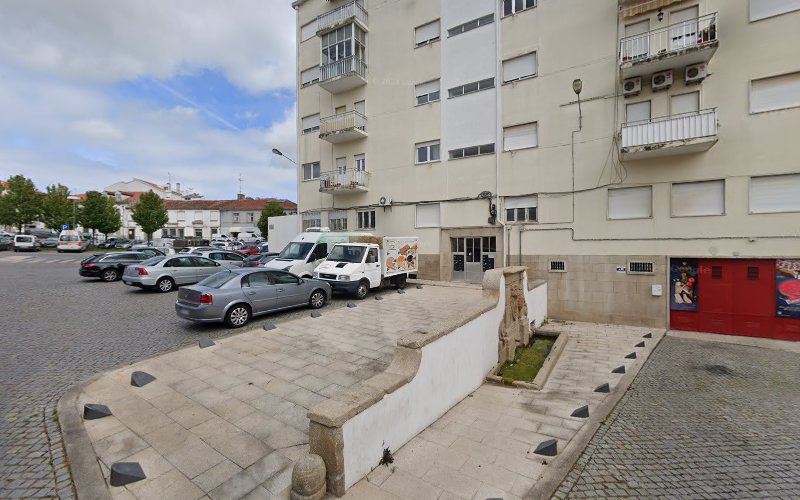
In Castelo Branco, Chafariz de São Marcos is the kind of modest landmark that rewards unhurried looking. Positioned in Largo de São Marcos, the fountain belongs to the fabric of the city rather than standing apart from it: a practical public feature, a visual marker in the streetscape and a reminder that water infrastructure once had a prominent civic presence. Its appeal lies in scale and context. This is a brief stop, but one that can add texture to a walk through the older parts of the city.
Visitors should approach the chafariz as an element of local town life rather than a destination demanding a long itinerary slot. Pause to take in its relationship with the square, surrounding façades and pedestrian movement, then continue through Castelo Branco at a measured pace. The name São Marcos gives the site a clear local identity, while the fountain itself offers an opportunity to notice the functional details that can be overlooked when concentrating only on major monuments, museums or formal gardens.
What to See & Experience
The experience is chiefly observational. Look at the fountain as a piece of public design: its water-related purpose, its placement in the square and the way it contributes to a coherent urban scene. Details may be easier to appreciate from several angles, especially when the space is quiet enough to step back and see how the feature sits within its immediate setting. Photography works best when it includes the fountain’s context instead of isolating every detail.
- Observe how the fountain anchors a small public space in the São Marcos area.
- Look for material, form and decorative details visible from the surrounding pavement.
- Use the stop to slow down between larger Castelo Branco sights.
- Frame photographs with the square and nearby streets for a stronger sense of place.
- Notice the contrast between a utilitarian water feature and its civic setting.
- Combine the visit with a wider wander through the historic urban centre.
Practical Visitor Strategy
| Planning Factor | Visitor Advice |
|---|
| Best Time to Go | Choose daylight for easier viewing and photographs. Early or later in the day can provide a calmer atmosphere and softer light, while conditions depend on the season and weather. |
| Suggested Duration | Allow around 10 to 20 minutes for the fountain itself, or longer if using Largo de São Marcos as part of a relaxed walking route. |
| Crowd & Pacing Tips | There is no need to rush. Take a few views from different points, then continue on foot rather than treating the site as a lengthy visit. |
| Getting Oriented | Use Largo de São Marcos as the reference point. The fountain is best found while exploring Castelo Branco’s central streets on foot. |
Because this is an outdoor public feature, the practical experience is shaped by weather, street activity and any temporary maintenance or local restrictions. If you intend to drink from the fountain, confirm locally that the water is currently suitable for consumption; a drinking-water designation does not replace up-to-date on-site guidance. Wear comfortable footwear for a wider city walk, keep an eye on uneven paving where present and allow time to explore without relying on the fountain as the sole focus of the outing.
Who Will Enjoy It Most (and Trade-Offs)
Chafariz de São Marcos will suit independent walkers, photographers, architecture-minded travelers and visitors who enjoy minor heritage details woven into daily urban life. It is also a sensible addition for anyone building a low-cost, flexible route through Castelo Branco rather than scheduling only ticketed attractions. The trade-off is straightforward: it is a compact, open-air sight with limited interpretive material and no need for an extended visit. Those seeking a major monument, extensive exhibits or a highly structured experience should pair it with Castelo Branco’s larger cultural and historic stops. The terrain and accessibility of the wider route depend on the streets you choose, so travelers with reduced mobility should assess pavement conditions and the most convenient approach on arrival. Pair the fountain with nearby streets, cafés or other central landmarks for a fuller sense of the city’s scale and character.
 Real Journey Travels