
Casco Histórico de Calabozo
About Casco Histórico de Calabozo
Key Features
- Large contiguous colonial-era urban core (≈25 blocks)
- Historic churches and civic buildings with colonial architectural elements
- Traditional markets and local food vendors offering regional cuisine
- Photogenic streets, wooden balconies and shaded plazas
- Small local museums and cultural exhibits highlighting Calabozo history
More Details
Updated April 15, 2024
Casco Histórico de Calabozo is the colonial heart of Calabozo, a plains city in Guárico state, central Venezuela. This historic core spreads across roughly 25 city blocks and is often cited as one of the largest surviving colonial centers in the country.
Below is a detailed, fact-based guide for RealJourneyTravels.com readers.
—
## Where Is the Casco Histórico de Calabozo?
– Location: Central Calabozo, Guárico state, Venezuela
– Approx. coordinates: 8.9355349, −67.4283017 (around Carrera 13 Páez & Calle 3)
– Altitude: About 105 m above sea level
Calabozo lies in the central Llanos (plains) region, on the left bank of the Guárico River and close to the Generoso Campilongo Dam, one of Venezuela’s major irrigation reservoirs.
—
## Why the Historic Center Matters
### One of Venezuela’s largest colonial centers
Sources consistently describe Calabozo as mostly colonial in its core and note that its historic area forms the largest or one of the largest colonial centers in Venezuela, extending over about 25 blocks.
The historic center preserves:
– Long streets of single-story colonial houses with thick adobe or masonry walls
– Colorful facades and clay-tile roofs
– Traditional wooden doors and barred windows
– A layout based on a formal Spanish grid, with the main square and cathedral at the heart
Some local descriptions also mention that part of the zone was declared a National Monument in 1979, with efforts focused on preserving major religious and civic buildings.
Because information about heritage management in Venezuela can change and is sometimes inconsistently reported, the exact current extent of legal protections may be different from older sources. If you need up-to-date legal or conservation status, check directly with Venezuelan cultural authorities or local municipal offices.
### A window into the history of the Llanos
Calabozo’s story goes well beyond a pretty plaza:
– The town emerged as a Spanish colonial settlement in the 18th century, linked to earlier missionary activity and formalized as a Spanish town in the 1720s.
– In the 19th century it became an important cultural and livestock center, with wealthy ranching families and strong ties to the cattle trade supplying Caracas.
– The area around Calabozo later gained prominence through large-scale irrigation and rice production associated with the Guárico River Reclamation Project and the Guárico/Generoso Campilongo dam.
This background is essential for understanding why such an extensive colonial core still exists: economic importance, ecclesiastical influence, and relative isolation helped preserve the historic layout.
—
## Key Sights Inside the Casco Histórico
Descriptions from Venezuelan heritage and travel sources highlight a cluster of religious and civic landmarks inside the colonial core.
### 1. Calabozo Metropolitan Cathedral
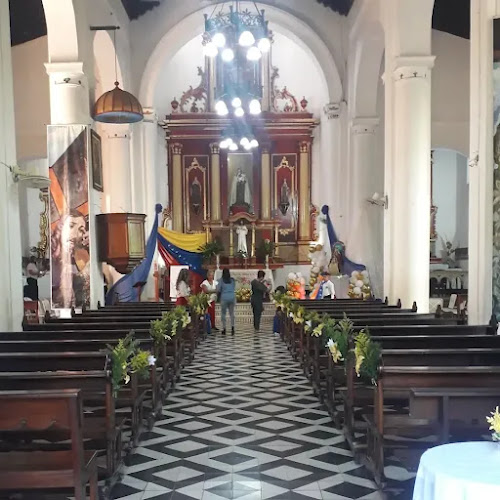
The Metropolitan Cathedral dominates the main square. It is part of the Roman Catholic Archdiocese of Calabozo, whose seat is in the city.
From photos and local descriptions, you can expect:
– A multi-door baroque-influenced facade, painted in warm colors with white detailing
– A separate bell tower that anchors many of the classic skyline views of the historic center
– An interior that reflects centuries of religious life on the plains
Because church interiors and parish access schedules can change, visitors should confirm opening hours locally, especially around religious festivals or maintenance closures.
### 2. Plaza Bolívar and surrounding streets
Like most Venezuelan colonial cities, the Casco Histórico is organized around a central square traditionally known as Plaza Bolívar, framed by the cathedral and public buildings.
Recent urban improvement programs have reported:
– Repaving and sidewalk improvements
– New benches and street lighting
– Facade maintenance on several historic buildings
These works have been credited in official communications to national beautification initiatives aimed at supporting tourism in historic centers. Library
Condition can vary street to street, and some houses are still noted as neglected in traveler comments, while others have been restored and freshly painted.
### 3. Historic churches beyond the cathedral
Heritage articles mention several other colonial-era churches within or close to the historic area, including:
– Iglesia de Las Mercedes
– Nuestra Señora de los Ángeles
These churches form part of a wider religious circuit in the city and are often cited in discussions of Calabozo’s architectural heritage. Their current conservation status and accessibility may vary; on-the-ground verification is important if you are planning detailed photo or architectural work.
### 4. Museo de la Ciudad and other civic buildings
Some local texts refer to a “Museo de la Ciudad” (City Museum) and other historical houses around the main square that showcase the city’s past as a cultural and economic center.
Museum opening hours, exhibitions, and funding situations in Venezuela have changed frequently over recent years, so any assumption that the museum is fully operational should be treated cautiously. Verify locally or through up-to-date Venezuelan cultural channels before planning a museum-focused visit.
—
## Urban Fabric: What It’s Like to Walk the Historic Center
### Street grid and architecture
The Casco Histórico follows a rectangular grid of streets—typical of Spanish colonial town planning—with long straight blocks and cross-streets intersecting at right angles.
While exact street-by-street conditions differ, common elements include:
– Colonial townhouses with internal courtyards
– Plain, continuous facades directly on the sidewalk
– Clay roof tiles and modest decorative elements rather than highly ornate baroque sculpting
– Color schemes that range from ochre and terracotta to bright blues and greens, as documented in travel photography and recent restoration reports Library
### Conservation and restoration: what’s up-to-date?
A few key, recent points:
– Official articles from 2019 onward describe coordinated beautification projects in central streets (for example, Carrera 12 and adjacent streets), mentioning resurfaced pavements, new benches, and upgraded lighting. Library
– Coverage from 2023 highlights the 300-year anniversary of Calabozo, framing the historic center as an anchor for local identity and tourism promotion.
– Reviews from early 2023 on international travel platforms note a “beautiful colonial center, quite large”, while also mentioning a few neglected houses among otherwise picturesque streets.
These sources suggest active efforts at maintenance and tourism promotion, but actual day-to-day conditions can shift quickly in Venezuela due to economic and political factors. Travelers should expect a mix of restored and worn structures rather than uniform preservation.
—
## Context: Calabozo and the Venezuelan Llanos
Understanding the Casco Histórico is easier when you see Calabozo in the broader landscape of the Llanos, Venezuela’s wide tropical savannas.
### Geography and climate
– Calabozo lies on low plains that can be flooded in the rainy season, with a tropical savanna climate (Aw).
– There are two seasons:
– Rainy: roughly May–October
– Dry: roughly November–May
– Average annual temperatures are in the high 20s °C, with hotter months typically in March–April and again around October–November.
High heat and humidity can make daytime walking demanding. For photography and strolling, early morning and late afternoon are generally more comfortable, though visitors should always confirm current safety and weather conditions locally.
### Economy and land use
– Calabozo is associated with cattle ranching and rice production, thanks to the extensive irrigation system linked to the Guárico River and the Generoso Campilongo Dam.
– Historically, this agricultural wealth supported a literate, cultured elite in the 19th century and left a legacy of substantial townhouses in the historic center. Heritage of Guárico
That agricultural backdrop still shapes everyday life around the historic core—expect working city streets rather than a purely touristic “old town.”
—
## Culture, Identity, and the Meaning of “Calabozo”
The word “calabozo” in Spanish literally means “dungeon” or “prison.” Historical and linguistic sources suggest that the city’s name reflects its early colonial role:
– The name may be linked to confinement of Indigenous people or prisoners in the area during the colonial period.
– Some historical accounts associate the area with banishment of convicts to remote frontier outposts instead of formal imprisonment.
The modern city, however, positions itself more around its agro-industrial importance, its role as former state capital, and its extensive colonial center.
—
## Practical Considerations and Information Gaps
A few realities to keep in mind:
– Tourism infrastructure: International travel coverage of Calabozo is limited. Most recent photos and comments circulate on local or regional platforms, plus occasional entries on global review sites.
– Safety and accessibility: Up-to-date safety, transport options, and service availability in Calabozo can change quickly and are not reliably covered in global travel media. Always cross-check with current, on-the-ground sources before planning a visit.
– Facilities in the historic center: Public information in English on opening hours of churches, museums, or guided tours is scarce. Expect to rely on local contacts or recent Spanish-language sources once in Venezuela.
Because of these information gaps and the evolving situation in Venezuela, any practical travel planning (transport, lodging, safety assessments) should be based on very recent local advice rather than solely on older articles or historic descriptions.
—
## Summary
Table of Contents
Key Highlights
- Large contiguous colonial-era urban core (≈25 blocks)
- Historic churches and civic buildings with colonial architectural elements
- Traditional markets and local food vendors offering regional cuisine
- Photogenic streets, wooden balconies and shaded plazas
- Small local museums and cultural exhibits highlighting Calabozo history
Location
Places to Stay Near Casco Histórico de Calabozo
Find and Book a Tour
Explore More Travel Guides
No reviews found! Be the first to review!
Traveler Reviews for Casco Histórico de Calabozo
There are no reviews yet. Be the first one to write one.
Have you visited Casco Histórico de Calabozo? Help other travelers by sharing your review.
Nearby Attractions
You Might Also Like
Lazo Martí Park
Best Western Hotel Plaza Real
Calabozo
Find Accommodations Nearby
Recommended Tours & Activities
Visitor Reviews
There are no reviews yet. Be the first one to write one.
Share Your Experience
Have you visited Casco Histórico de Calabozo? Help other travelers by leaving a review.