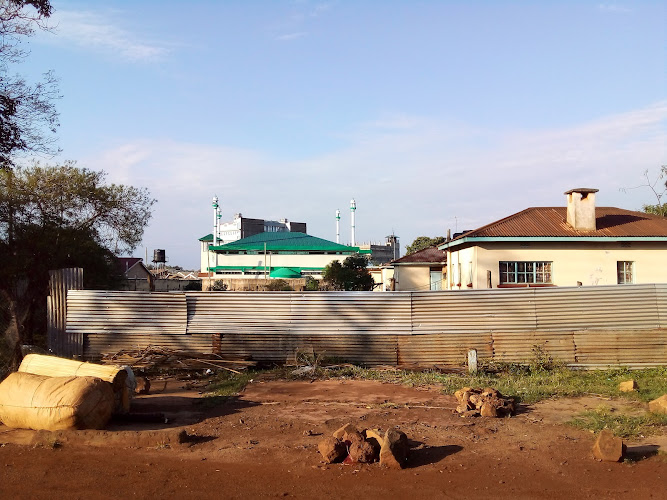
Busia Mosque brings a quiet, devotional presence to Busia, Uganda, a border town shaped by movement, trade, and daily cross-border life. Its bright facade, dome, and vertical minaret forms create a recognisable landmark against the open sky, while geometric detailing gives the building a more intricate character on closer inspection. Although it is visually striking, this is first and foremost an active mosque rather than a conventional sightseeing attraction.
A respectful visit offers a small but revealing window into the town’s Islamic heritage and community rhythms. The atmosphere can shift markedly with the prayer schedule: at some moments the grounds may feel still and contemplative, while at others worshippers and students may be arriving or leaving. Travelers should treat the site as a place of worship, observe from appropriate areas, and be prepared to adjust their plans if religious activities take priority.
What to See & Experience
The mosque’s appeal lies in the relationship between its architectural elements and its spiritual function. From outside, look for the pale exterior treatment, Islamic geometric motifs, dome, and minaret silhouette. These features give the complex a clear identity within the townscape without requiring a lengthy visit. Inside access, photography, and movement through the grounds should always depend on permission and the needs of worshippers present.
- Observe the white exterior and patterned decorative details from public-facing areas.
- Notice the dome and minaret forms that define the mosque’s skyline.
- Look for Arabic calligraphy in the prayer hall if entry is welcomed.
- Spend a quiet moment near the central courtyard when it is accessible.
- Appreciate the separate worship arrangements designed for men and women.
- Recognise the mosque’s role in Quranic study and community life.
The courtyard and surrounding greenery, where accessible, add a calmer counterpoint to the formal building. Rather than trying to see every area, take time to understand the setting as a functioning religious complex. A brief, observant stop is often more appropriate than treating the mosque as a photo backdrop. If a caretaker, worshipper, or local guide is available, a polite greeting and a simple request for guidance can help clarify which spaces may be visited.
Practical Visitor Strategy
| Planning Factor | Visitor Advice |
|---|
| Best Time to Go | Choose a quieter period outside prayer activity where possible, and confirm whether visitors may enter before approaching interior spaces. |
| Suggested Duration | Allow a short, unhurried stop for exterior viewing and respectful observation; stay longer only when access is clearly welcomed. |
| Crowd & Pacing Tips | Give worshippers priority, keep voices low, and avoid lingering in entrances, walkways, ablution areas, or prayer spaces. |
| Getting Oriented | Begin from the exterior, identify public-facing areas, then ask a responsible person about appropriate visitor boundaries. |
| Nearby Pairing | Combine the visit with a gentle walk through Busia’s town centre and other publicly accessible local landmarks. |
Dress and conduct matter as much as timing. Modest clothing that covers shoulders and knees is a sensible baseline, and footwear may need to be removed before entering designated indoor areas. Ask before taking any photographs, especially of people, prayer activity, classrooms, or the interior. Avoid visiting with the expectation that all spaces will be open; access can change according to worship, teaching, maintenance, or community events. Visitors unfamiliar with mosque etiquette should follow local direction without debate.
Who Will Enjoy It Most (and Trade-Offs)
Busia Mosque will especially interest travelers who value religious architecture, local cultural context, and slower observation over a checklist-style attraction. It can suit architecture enthusiasts, respectful photographers working from permitted exterior viewpoints, and visitors looking to understand another layer of Busia beyond border formalities and commercial activity. It is also a worthwhile stop for people interested in how faith spaces serve as centres for worship, learning, gathering, and reflection.
The main trade-off is that a sacred setting cannot be experienced entirely on a visitor’s timetable. Interior access may be limited, the most meaningful areas may be reserved for worshippers, and the experience is likely to be brief for casual visitors. Paths and access conditions should be assessed on arrival, particularly by travelers with mobility needs, rather than assumed from descriptions alone. Pair the mosque with time in Busia’s central streets, a meal or refreshment stop nearby, or other community-focused places that are openly accessible. Keeping the visit flexible and respectful will make it more rewarding for both guests and the congregation.
 Real Journey Travels