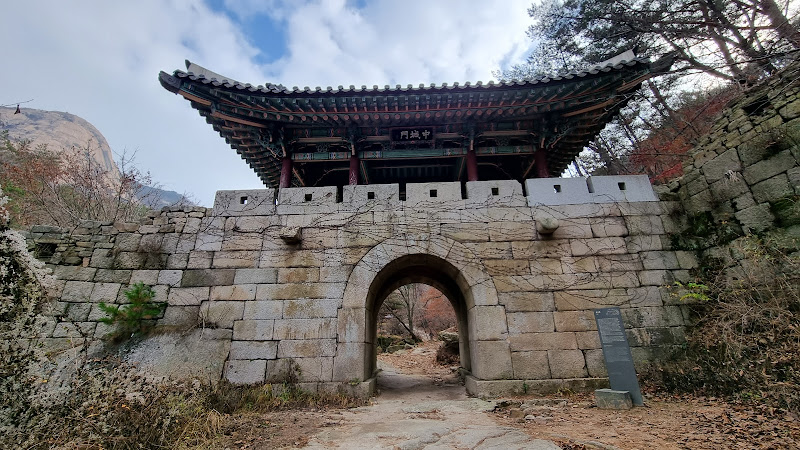
Built during the Joseon Dynasty in 1711, this massive stone fortress sprawls across the slopes of Bukhansan Mountain, blending seamlessly with the rugged granite peaks and forest trails that surround it. There’s something deeply humbling about standing among its ancient walls, knowing that centuries ago, it served as a last line of defense for Seoul’s kings and soldiers. The fortress was designed not just as a military stronghold but also as a refuge in times of invasion — a kind of emergency capital hidden in the mountains.
The structure itself is impressive: six main gates, eight secret gates, and two water entrances that were ingeniously built to allow access to fresh mountain streams. The walls stretch for nearly 12 kilometers, hugging the contours of the mountain like a protective arm. Walking along them, you can almost hear echoes of the soldiers who once patrolled these paths. The air feels different here — cooler, quieter, and somehow heavier with history.
What makes Bukhansanseong truly special, though, is how it’s managed to remain both a historical monument and a living part of everyday life. Locals come here to hike, pray at the small temples tucked along the trails, or simply to escape the noise of the city. And even though it’s centuries old, the fortress still feels alive — not frozen in time but part of a continuous story that stretches from ancient Baekje to modern South Korea. Sure, some visitors might find the climb challenging or the signage a bit sparse, but honestly, that’s part of the charm. It’s not a polished museum piece; it’s a piece of the mountain itself.
Best Time to Visit
If you ask me, the best time to visit Bukhansanseong Fortress is either in the crisp air of autumn or the soft bloom of spring. In fall, the entire mountain transforms into a fiery canvas of red, orange, and gold — it’s almost impossible to take a bad photo. The trails are dry, the weather is cool, and you’ll find plenty of locals out enjoying the season. Spring, on the other hand, brings cherry blossoms and wildflowers that peek through the cracks of ancient stone walls. It’s poetic, really — nature reclaiming history, one petal at a time.
Summer can be beautiful too, but it’s humid and the climb can feel tougher than expected. You’ll sweat — a lot. Winter has its own magic, though. When the fortress walls are dusted with snow, it feels like stepping into a Korean folktale. Just be careful — the paths can get icy. If you plan your visit around early morning or late afternoon, you’ll catch the best light and fewer crowds. And trust me, watching the sun dip behind the peaks from one of the gates is the kind of moment that sticks with you long after you’ve left.
How to Get There
Getting to Bukhansanseong Fortress is easier than you might think, even if you’re not fluent in Korean. From central Seoul, hop on the subway to Gupabal Station (Line 3), then transfer to a local bus heading toward Bukhansanseong Fortress. The ride winds through quiet neighborhoods before dropping you off near the park entrance. From there, it’s a short uphill walk — though “short” is relative when you’re climbing a mountain. If you’re feeling adventurous, you can also hike from other points in Bukhansan National Park, connecting trails that lead directly into the fortress area.
For those who prefer a more relaxed visit, taxis from Seoul are an option, especially if you’re traveling with friends or family. Parking is available near the entrance, but it tends to fill up quickly on weekends. The good news is that public transportation is reliable and affordable, which makes this fortress one of the more accessible historical sites in the region. Just remember to wear comfortable shoes — the terrain is rocky, and you’ll be doing more walking than you might expect.
Tips for Visiting
Here’s where a little insider knowledge goes a long way. First off, start early. The fortress opens with the sunrise, and the morning light filtering through the trees is absolutely worth the early wake-up. Plus, you’ll beat the crowds — and the midday heat if you’re visiting in summer. Bring water and snacks, but don’t overpack. There are small shops and stalls near the entrance where you can grab a bottle of makgeolli (Korean rice wine) or a bowl of hot noodles after your hike — a local tradition that feels well-earned after a few hours on the trail.
If you’re into photography, bring a wide-angle lens. The fortress walls curve and stretch in ways that are hard to capture otherwise. And if you’re more of a history buff, consider hiring a local guide. They’ll share stories about the fortress’s role during invasions and how it served as a military command center during the Joseon period. You’ll see the site in a completely different light.
One thing to keep in mind: the signage isn’t always in English, and while that’s improving, it can make navigation tricky. Download an offline map or use a translation app if you’re unsure. Also, respect the temples within the fortress grounds. They’re active places of worship, not just tourist stops. Remove your shoes before entering and keep your voice low.
And here’s something I learned the hard way — don’t underestimate the hike back down. It’s easier, sure, but your knees might disagree after a few kilometers of stone steps. Take breaks, soak in the views, and don’t rush. The whole point of visiting Bukhansanseong Fortress is to slow down, to feel the weight of history and the calm of nature at the same time. It’s not just another sightseeing spot; it’s a reminder of resilience — both human and natural.
In the end, Bukhansanseong Fortress isn’t the kind of place you visit just once. It’s the kind of place that calls you back, quietly, like an old friend. Maybe it’s the mountain air, or the way the light hits the ancient stones, or just the peace that comes from standing somewhere that has seen centuries pass. Whatever it is, it stays with you — long after you’ve left the mountain behind.
 Real Journey Travels