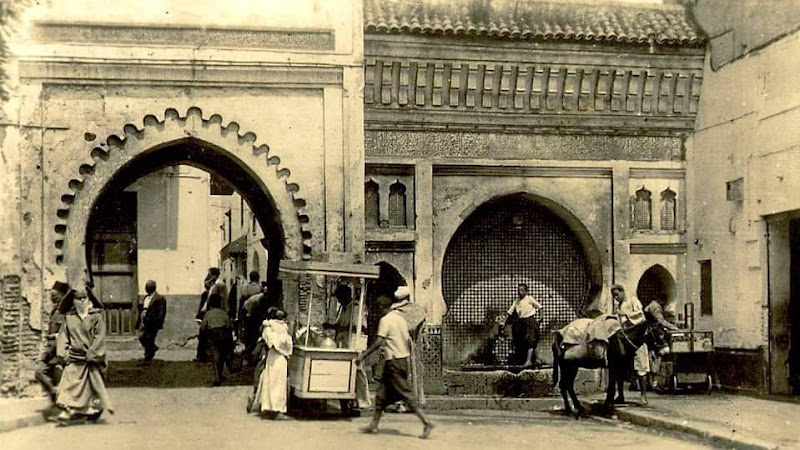
It’s a historic gate, a door in the most literal and symbolic sense, marking a threshold between different rhythms of the city. Travelers often rush past gates like this, aiming for big-name landmarks, but Bab Tut rewards the curious, the slow walkers, the people who stop and look up. And yes, look up. I learned that the hard way, neck craned back while everyone else streamed past me like I was a misplaced statue.
This gate has stood through centuries of change. Empires shifted, rulers came and went, markets expanded, streets narrowed, widened, then narrowed again. Bab Tut just stayed. You can feel it when you stand close to the stone. It’s not mystical in a dramatic way, but more like the quiet confidence of something that’s seen it all and doesn’t need to prove anything. If you’ve ever touched an old wall and felt oddly grounded, you’ll know what I mean.
What makes Bab Tut especially appealing for travelers is how integrated it is into daily life. This isn’t a fenced-off monument with velvet ropes and hushed voices. People walk through it on their way to work, kids dart around it playing games they probably invented five minutes earlier, and vendors set up nearby because, well, people pass through here. When I visited with a friend who grew up nearby, she laughed at my intense note-taking and said, “It’s just a gate.” But even she admitted later that it’s easy to forget how meaningful everyday places can be.
Bab Tut is also notable for being accessible. Wheelchair users can enter without a fuss, which is sadly still not a given with historical landmarks. And families with kids won’t feel awkward or out of place. Children belong here. They always have. That alone tells you something important about the spirit of this place.
Another detail worth mentioning, and one I personally appreciate, is that Bab Tut is associated with women-led stewardship. That might not be the first thing you notice as a traveler, but it adds an extra layer of respect. There’s care here. Maintenance feels intentional, not rushed or careless. You sense pride in how the site is presented, even if it’s understated.
Best Time to Visit
The best time to visit Bab Tut depends on what kind of experience you’re after. Early mornings are quiet in a way that feels almost secret. The light hits the stone at a low angle, pulling out details you won’t notice later in the day. I’m not a morning person, but I dragged myself there once before breakfast, coffee-less and grumpy. Worth it. Absolutely worth it.
Midday brings energy. People pass through constantly, and if you enjoy observing local life, this is your window. You’ll see shopkeepers chatting, kids heading home or back to school, and travelers pausing, confused, checking maps on their phones. It’s lively without being overwhelming. But it can get warm, depending on the season, so plan accordingly.
Late afternoon into early evening is my personal favorite. The sun softens, the crowds thin just enough, and there’s this sense of exhale in the air. Locals slow down. Conversations linger. If you like photography, this is prime time. Shadows stretch, colors deepen, and the gate seems to glow, just a little.
Seasonally, spring and autumn are ideal. Summer heat can be intense, and while Bab Tut doesn’t require hours of walking, standing around in high temperatures isn’t fun for anyone. Winter is quieter and cooler, which some travelers love. Just bring layers, because stone holds cold like a grudge.
How to Get There
Getting to Bab Tut is refreshingly straightforward. It’s connected to main pedestrian routes and public transport lines, so you don’t need to plan an expedition. If you’re staying in or near the historic core, you can likely walk there. And walking is honestly the best way. You notice things. Smells from nearby bakeries, snippets of conversation, the way the streets subtly change texture.
If you’re coming from farther out, local transport will get you close enough that the final stretch is on foot. Drivers and locals generally know the gate by name, which is always reassuring. There’s nothing worse than mentioning a landmark and getting blank stares. That won’t happen here.
For travelers with mobility needs, access is smooth. The approach paths are manageable, and the entrance itself doesn’t throw up unnecessary obstacles. I once accompanied a relative who uses a wheelchair, and we braced ourselves for the usual complications. They never came. That alone made the visit feel respectful, not just inclusive on paper.
Tips for Visiting
First tip: slow down. This isn’t a place you “do” in five minutes and move on, even though technically you could. Stand still for a bit. Watch people pass through. Notice how no one treats it like a museum exhibit, yet everyone respects it. That balance is rare.
Second, look for details. The stonework tells stories if you give it time. Different textures, subtle repairs, marks left by hands and weather. I once spent a good ten minutes tracing a crack with my eyes, imagining when it first appeared. Yes, I’m that kind of traveler. No shame.
If you’re visiting with kids, let them lead for a moment. They notice things adults don’t. One child I overheard was convinced the gate was a giant’s doorway. And honestly? I liked that theory better than most academic explanations.
Photography tip: include people in your shots. Bab Tut isn’t just about architecture. It’s about movement, passage, transition. A perfectly empty photo can feel flat here. Wait for someone to walk through, or a group to pause and chat. That’s when the place comes alive.
Be respectful, but not stiff. This is a working part of the city. Don’t block pathways for too long, and ask before photographing individuals up close. A smile and a gesture go a long way. I’ve ended up in conversations just by asking someone if they pass through the gate every day. Spoiler: many do.
And finally, manage expectations. Bab Tut isn’t flashy. Some travelers might walk away thinking, “That’s it?” But if you approach it with curiosity instead of a checklist mentality, it leaves an impression. It’s the kind of place that sneaks up on you. Days later, you’ll realize it’s one of the spots you remember most clearly.
Bab Tut stands as a reminder that travel isn’t always about the biggest, loudest attractions. Sometimes it’s about doors. About thresholds. About standing in one place and feeling the weight of time pass quietly around you. If that appeals to you, even a little, then Bab Tut deserves a spot on your itinerary. And who knows, you might find yourself defending it passionately later, like I have, when someone shrugs and says, “It’s just a gate.”
 Real Journey Travels