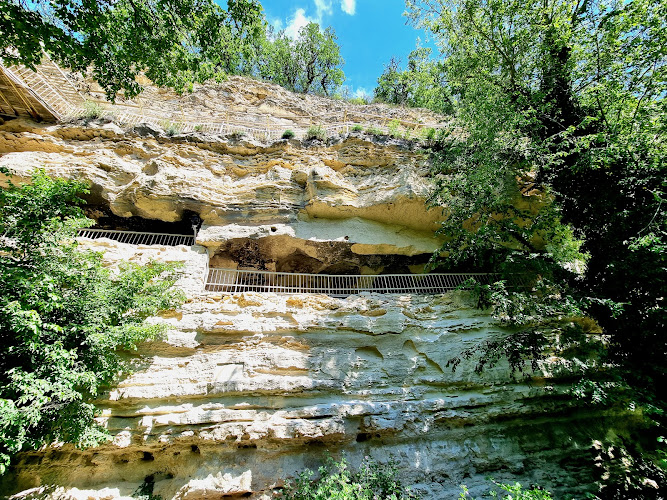
Aladzha Monastery is one of those places that quietly takes your breath away long before you even realize it.
Highlights & Key Features
Key Features
Best Time to Visit
How to Get There
Tips for Visiting
Visitor Guide & Information
Description
The name “Aladzha” is thought to come from a Turkish word meaning “motley” or “colorful,” possibly referring to the vivid frescoes that once covered the rock walls. Though time and weather have faded most of them, you can still see traces of paint here and there—ghostly reminders of the monastery’s once-bright interior. What’s striking is how the monks carved an entire spiritual complex into the cliff face, complete with chapels, monastic cells, a refectory, and even a small crypt. It’s a remarkable feat of human devotion and craftsmanship.
Walking through the site, you can almost picture the monks’ daily routines—the quiet prayers, the echo of footsteps against stone, the smell of burning candles. There’s something haunting yet peaceful about it. And while the site isn’t huge, it’s layered with centuries of history, mystery, and a touch of melancholy. Some locals even whisper about hidden catacombs and underground tunnels. Whether or not those stories are true, they add an intriguing edge to the visit.
Key Features
Medieval cave complex: Entirely carved into a limestone cliff, featuring chapels, monk cells, and a refectory.
Historical significance: Dates back to the 13th–14th centuries, representing Bulgaria’s medieval Orthodox heritage.
Fresco remnants: Faded yet evocative wall paintings that hint at the monastery’s colorful past.
Catacombs: A mysterious underground section believed to have served as burial chambers or hermit retreats.
Museum area: Exhibits artifacts, photographs, and reconstructions that tell the story of monastic life.
Natural surroundings: Located within the Golden Sands Nature Park, offering forest trails and sea views.
Accessibility: Wheelchair-accessible entrance and parking, with restrooms available on-site.
What makes Aladzha Monastery stand out isn’t just its history—it’s the feeling it gives you. It’s that rare mix of nature and spirituality, stone and silence. And if you’re the kind of traveler who enjoys places that still feel a bit untamed and unpolished, this one will speak to you.
Best Time to Visit
Personally, I’d say spring or early autumn is the sweet spot. The weather is mild, the forest is lush, and the crowds are thinner. Summer can get a bit busy, especially with tourists from nearby Golden Sands beach resort popping in for a quick cultural detour. But even then, the monastery somehow manages to maintain its calm. Early mornings are magical—mist curling through the trees, birdsong echoing off the cliffs. Winter, on the other hand, has its own charm. It’s quieter, moodier, and if you don’t mind a bit of chill, you’ll have the place almost to yourself.
There’s also something special about visiting during Orthodox holidays when local visitors come to light candles and pay respects. It’s a glimpse into living tradition, not just history behind glass.
How to Get There
Reaching Aladzha Monastery is easier than you might think. It’s about 17 kilometers north of Varna, Bulgaria’s seaside capital, and just a short drive from the Golden Sands resort. You can rent a car, grab a taxi, or hop on a local bus heading toward the park area. The road winds gently through pine forests before opening up to a small parking area near the entrance. From there, it’s a short walk to the monastery itself.
If you’re up for it, consider hiking one of the forest trails that lead to the site. There’s a certain satisfaction in arriving on foot, hearing the crunch of leaves under your shoes before the limestone cliff suddenly appears through the trees. It’s like discovering something ancient on your own terms.
Tips for Visiting
Here’s the thing about Aladzha Monastery—it rewards curiosity and patience. It’s not a massive complex with endless corridors or souvenir shops at every turn. It’s intimate, contemplative, and best experienced slowly. Here are a few tips to make the most of your visit:
Take your time: Don’t rush through. Spend a few moments in silence inside the chapel area. The acoustics alone are worth it.
Bring comfortable shoes: The stairs carved into the rock are uneven in places, and good grip helps.
Visit the small museum: It’s right next to the main site and gives great context about the monks’ daily lives.
Photography: Natural light changes quickly inside the caves, so mornings and late afternoons are best for photos.
Combine with nearby attractions: The Golden Sands Nature Park has some lovely trails and viewpoints. It’s worth exploring after your visit.
Respect the site: This isn’t just a tourist attraction—it’s a sacred place. Keep noise to a minimum and avoid touching the ancient walls.
Accessibility: The site is wheelchair accessible, with nearby parking and restrooms available for visitors.
One thing I learned the first time I came here—if you sit quietly on one of the benches overlooking the forest, you’ll notice how the light shifts across the rock face. It’s subtle but mesmerizing. And it’s in those moments that you understand why monks chose this spot centuries ago. It’s not just about isolation—it’s about connection. To nature, to faith, to something bigger than yourself.
If you’re a history lover, a spiritual seeker, or just someone who enjoys discovering places that still feel a bit off the beaten path, Aladzha Monastery deserves a spot on your itinerary. It’s one of those rare places that manages to be both deeply human and quietly divine at the same time. And trust me, once you’ve been, you’ll find yourself thinking about it long after you’ve left.
Aladzha Monastery is one of those places that quietly takes your breath away long before you even realize it. Carved into a sheer limestone cliff in northeastern Bulgaria, this medieval cave monastery feels like stepping into a forgotten world. It’s tucked within a protected forest area near the Black Sea, surrounded by the kind of stillness that makes you lower your voice without even thinking about it. The monastery dates back to the 13th and 14th centuries when hermit monks lived, prayed, and worked here. And you can still feel that sense of solitude clinging to the stone walls.
The name “Aladzha” is thought to come from a Turkish word meaning “motley” or “colorful,” possibly referring to the vivid frescoes that once covered the rock walls. Though time and weather have faded most of them, you can still see traces of paint here and there—ghostly reminders of the monastery’s once-bright interior. What’s striking is how the monks carved an entire spiritual complex into the cliff face, complete with chapels, monastic cells, a refectory, and even a small crypt. It’s a remarkable feat of human devotion and craftsmanship.
Walking through the site, you can almost picture the monks’ daily routines—the quiet prayers, the echo of footsteps against stone, the smell of burning candles. There’s something haunting yet peaceful about it. And while the site isn’t huge, it’s layered with centuries of history, mystery, and a touch of melancholy. Some locals even whisper about hidden catacombs and underground tunnels. Whether or not those stories are true, they add an intriguing edge to the visit.
Key Features
Medieval cave complex: Entirely carved into a limestone cliff, featuring chapels, monk cells, and a refectory.
Historical significance: Dates back to the 13th–14th centuries, representing Bulgaria’s medieval Orthodox heritage.
Fresco remnants: Faded yet evocative wall paintings that hint at the monastery’s colorful past.
Catacombs: A mysterious underground section believed to have served as burial chambers or hermit retreats.
Museum area: Exhibits artifacts, photographs, and reconstructions that tell the story of monastic life.
Natural surroundings: Located within the Golden Sands Nature Park, offering forest trails and sea views.
Accessibility: Wheelchair-accessible entrance and parking, with restrooms available on-site.
What makes Aladzha Monastery stand out isn’t just its history—it’s the feeling it gives you. It’s that rare mix of nature and spirituality, stone and silence. And if you’re the kind of traveler who enjoys places that still feel a bit untamed and unpolished, this one will speak to you.
Best Time to Visit
Personally, I’d say spring or early autumn is the sweet spot. The weather is mild, the forest is lush, and the crowds are thinner. Summer can get a bit busy, especially with tourists from nearby Golden Sands beach resort popping in for a quick cultural detour. But even then, the monastery somehow manages to maintain its calm. Early mornings are magical—mist curling through the trees, birdsong echoing off the cliffs. Winter, on the other hand, has its own charm. It’s quieter, moodier, and if you don’t mind a bit of chill, you’ll have the place almost to yourself.
There’s also something special about visiting during Orthodox holidays when local visitors come to light candles and pay respects. It’s a glimpse into living tradition, not just history behind glass.
How to Get There
Reaching Aladzha Monastery is easier than you might think. It’s about 17 kilometers north of Varna, Bulgaria’s seaside capital, and just a short drive from the Golden Sands resort. You can rent a car, grab a taxi, or hop on a local bus heading toward the park area. The road winds gently through pine forests before opening up to a small parking area near the entrance. From there, it’s a short walk to the monastery itself.
If you’re up for it, consider hiking one of the forest trails that lead to the site. There’s a certain satisfaction in arriving on foot, hearing the crunch of leaves under your shoes before the limestone cliff suddenly appears through the trees. It’s like discovering something ancient on your own terms.
Tips for Visiting
Here’s the thing about Aladzha Monastery—it rewards curiosity and patience. It’s not a massive complex with endless corridors or souvenir shops at every turn. It’s intimate, contemplative, and best experienced slowly. Here are a few tips to make the most of your visit:
Take your time: Don’t rush through. Spend a few moments in silence inside the chapel area. The acoustics alone are worth it.
Bring comfortable shoes: The stairs carved into the rock are uneven in places, and good grip helps.
Visit the small museum: It’s right next to the main site and gives great context about the monks’ daily lives.
Photography: Natural light changes quickly inside the caves, so mornings and late afternoons are best for photos.
Combine with nearby attractions: The Golden Sands Nature Park has some lovely trails and viewpoints. It’s worth exploring after your visit.
Respect the site: This isn’t just a tourist attraction—it’s a sacred place. Keep noise to a minimum and avoid touching the ancient walls.
Accessibility: The site is wheelchair accessible, with nearby parking and restrooms available for visitors.
One thing I learned the first time I came here—if you sit quietly on one of the benches overlooking the forest, you’ll notice how the light shifts across the rock face. It’s subtle but mesmerizing. And it’s in those moments that you understand why monks chose this spot centuries ago. It’s not just about isolation—it’s about connection. To nature, to faith, to something bigger than yourself.
If you’re a history lover, a spiritual seeker, or just someone who enjoys discovering places that still feel a bit off the beaten path, Aladzha Monastery deserves a spot on your itinerary. It’s one of those rare places that manages to be both deeply human and quietly divine at the same time. And trust me, once you’ve been, you’ll find yourself thinking about it long after you’ve left.
Aladzha Monastery, Varna: A Practical Guide to Bulgaria’s Most Famous Rock-Hewn Monastery
Aladzha Monastery (Аладжа манастир) is a medieval Orthodox cave complex carved into a limestone cliff inside Golden Sands Nature Park, about 17 km north of central Varna. The spaces—chapel, monks’ cells, refectory, crypt—were hewn on tiers of a ~25–40 m rock face and inhabited mainly in the 13th–14th centuries, with nearby caves (“the Catacombs”) showing evidence of even earlier, early-Christian use (5th–6th c.).
Why it matters
Rarity & clarity of plan: Among Bulgaria’s cave monasteries, Aladzha is notable because functions of rooms remain legible—church, refectory, cemetery chapel, cells—across two levels.visit.varna.bg
Archaeological pedigree: Systematic research began in the late 19th century led by the Shkorpil brothers, founders of Bulgarian archaeology; the site is protected as a national architectural monument.tourism.government.bg
Setting: It sits inside a protected forest of the Golden Sands Nature Park, pairing heritage with a short woodland walk.visit.varna.bg
Essential Facts (2025)
Location (for GPS / taxis): “Abai 61, 9000 Varna” on the museum’s page; the cliff lies just west of the Golden Sands resort. Coordinates: 43.2779988, 28.0155209.museumvarna.com
Ticket price: Adults 5 BGN (~€2.56); schoolchildren 3 BGN; under 6 free. (Museum’s official 2025 price list.)museumvarna.com
Opening hours:
Summer (May–Oct): daily 09:00–17:00.
November: 10:00–17:00, closed Monday & Tuesday.
December–February: closed.
These hours are published by the Regional History Museum–Varna (RHM-Varna) for 2025. Always re-check close to your date.museumvarna.com
Who manages it: A site of RHM-Varna, which also manages Varna’s Archaeological Museum and other open-air sites.
⚠️ Seasonality & potential changes: Hours and pricing are set by RHM-Varna and shift between winter and summer; winter closures are explicit for Dec–Feb in 2025. Verify before you go in shoulder seasons.museumvarna.com
What You’ll See
Two rock-cut levels plus a separate Catacombs area
Level 1: Church, monks’ cells, refectory and kitchen, small cemetery church, and crypt cut into the cliff.visit.varna.bg
Level 2: A natural recess with the monastery chapel; fragments of medieval mural painting survive here.visit.varna.bg
The Catacombs: A cluster of caves 600–700 m west of the main cliff. Finds (ceramics, coins, graffiti) indicate early-Christian (5th–6th c.) occupation. Paths are forested and uneven.visit.varna.bg
Murals & layout details for keen observers
Archaeological descriptions note a stone stair cut near the altar leading through a narrow passage to other rooms; wooden partitions once divided spaces, and the upper chapel preserved more of the original painted decoration (e.g., an Ascension on the ceiling).varnaheritage.com
Evening sound-and-light (summer)
Sources note seasonal thematic light shows (“Legends of Aladzha Monastery”) staged in summer months. Ask on site or at RHM-Varna for current dates.
Getting There
By public bus: The Varna culture portal lists Bus 29 to “Aladzha Monastery” stop, or Bus 9 to “Chaika” (then walk). This is the cleanest public reference for DIY visitors.varnaculture.bg
By car/taxi: ~25–35 minutes from central Varna, depending on traffic; the final approach is through the Golden Sands Nature Park road. (Use the Abai/Abay 61 address published by RHM-Varna.)museumvarna.com
Tours: Several operators run combined trips with the Stone Forest (Pobiti Kamani)—handy if you want transport plus timed entry. (Choice and availability vary; vet reviews and inclusions.)
How Long to Allow & Crowd Strategy
Time on site: 45–90 minutes covers the museum, cliff levels, and a quick walk toward the Catacombs. Add another 30–40 minutes if you plan to reach the Catacombs and linger. (Distances and route context from official/municipal sources.)visit.varna.bg
Best time: Arrive near opening (09:00) in summer to photograph the façades in softer light and avoid coach groups. Hours confirm an early open in peak season.museumvarna.com
Accessibility & Safety Notes (evidence-based)
Stairs & exposure: Access to rooms is via external staircases and walkways on the cliff. Expect uneven steps and narrow passages—significant stair use is unavoidable. (Multiple independent sources describe the stairs connecting levels.)varnaheritage.com
Mobility considerations: Given the terrain, the cliff sections are unlikely to be suitable for wheelchairs or visitors who cannot manage stairs; the small museum at the base is the easier portion. (This reflects stair-dependent access documented above; third-party ticketing pages also flag reduced-mobility constraints.)varnaheritage.com
Footwear: Treat this as a short outdoor historic site—wear grippy shoes, especially after rain; limestone steps can be slick. (Terrain described in official/archaeological notes; slipperiness is a known limestone trait.)varnaheritage.com
Inclusivity note: As an open-air archaeological monument rather than an active monastery, there’s no published dress code from RHM-Varna. If you plan to visit active churches afterward, bring a light cover-up out of respect.
Smart Route Pairings (Same Museum System / Nearby)
Varna Archaeological Museum: If you like context, the city museum that manages Aladzha holds the Varna Gold—the world’s oldest processed gold (c. 4600–4200 BCE)—plus robust medieval collections. It’s a strong pre- or post-visit anchor in town.
Petrified Forest (Pobiti Kamani): Another RHM-Varna site used to be on joint day trips; confirm current hours and closure days (they vary seasonally).museumvarna.com
Visitor Workflow (Step-by-Step)
Start at the base museum for orientation (models and panels explain room functions).Хотел Глория
Climb Level 1: identify the church, cells, refectory/kitchen; note the small cemetery church and crypt cut into the rock.visit.varna.bg
Continue to Level 2: the chapel area where fresco remnants survive.varnaheritage.com
Forest walk to Catacombs (optional): ~600–700 m west; carry water, mind footing, and turn back before dusk. Artefacts from here attest to early-Christian usage.visit.varna.bg
Practicalities & Costs (2025 snapshot)
Admission: 5 BGN adults; 3 BGN schoolchildren; under 6 free. Card acceptance can vary at small Bulgarian sites—carry cash as backup. (Price from RHM-Varna; payment modality varies by site—verify locally.)museumvarna.com
Hours: Summer 09:00–17:00 daily; Nov 10:00–17:00 (Mon–Tue closed); Dec–Feb closed. Reconfirm near your travel date; winter schedules change first.museumvarna.com
Facilities: Small ticket office/shop and exhibits at the base; the cliff areas are outdoors with limited shade. (Museum and destination pages.)Хотел Глория
Fast History Download
Peak habitation: 13th–14th c., likely hesychast monks of the Second Bulgarian Empire; decline followed the late-14th-century Ottoman conquest, with abandonment by the 15th–16th c.
Deep roots: Nearby finds and the Catacombs indicate Christian monastic or hermitic use centuries earlier (5th–6th c.).visit.varna.bg
Protection status: Declared a public historical monument in 1927 and of national significance in 1968.tourism.government.bg
Photography & Ethics
Tripods & drones: No formal public policy is posted on the RHM-Varna page; assume no drones inside the Nature Park without a permit and keep tripods discreet on narrow stairs. (Absence of explicit museum guidance—verify on arrival.)museumvarna.com
Respect the fabric: Many surfaces are original medieval cuttings; avoid touching fresco remnants and edges.
Bottom Line
If you’re in Varna, Aladzha is a high-yield 60–90-minute stop that turns abstract medieval history into something tangible—cells, chapels, and a cliff-face plan you can read with your own eyes. Time it for a quiet morning, pair it with the Archaeological Museum in town, and—if the path is dry—walk to the Catacombs to extend the story back to late antiquity.visit.varna.bg
Data validated against official museum/tourism sources as of October 31, 2025; note seasonal closures and occasional after-hours light shows in summer (confirm locally).museumvarna.com
Explore verified points of interest within walking or short transit distance.
No neighboring places mapped within 5 km yet.
Find Places to Stay Nearby
Stay22 provides this accommodation search. We may earn a commission if you book through it; verify current prices and terms with the provider.
🗺️
Interactive accommodation map requires marketing cookies to display live rates.
Recommended Experiences & Activities
GetYourGuide provides this tour inventory. We may earn a commission if you book through it; verify current availability, prices, and terms with the provider.
Top Viator Experiences & Guided Tours in Varna
We may earn a commission if you book through links on this page at no extra cost to you. All tours feature verified customer reviews and flexible cancellation options.