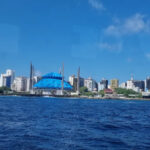
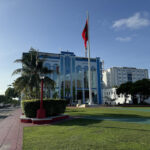
Malé is the Maldives without the postcard filter. Roughly the size of a few dozen city blocks, the capital packs several hundred thousand people, office towers, mosques, fish markets and motorbikes onto a single coral island in the Kaafu (North Malé) Atoll. There is no resort beach here and no alcohol sold; the soundtrack is outboard engines, scooters and the call to prayer.That density is exactly why it rewards a few hours or a night. A 17th-century coral-stone mosque sits minutes from a golden-domed Islamic Centre, and cafés serve mas huni (tuna, coconut and onion with flatbread) to office workers at breakfast. Most visitors pass through on the way to resorts and guesthouses, and treating Malé as a short, deliberate stop gives you the country’s everyday life before the lagoons take over.Where to Base Yourself & Key AreasMalé is small enough to walk end to end, so the real choice is between the capital itself and its neighbouring islands, which are linked by ferry and by the Sinamalé bridge. Pick by how much city versus sand you want.Area / CorridorBest Suited ForCharacter & AccessTrade-Off to KnowCentral MaléCulture, markets, first-time local-life seekersWalled-in grid of narrow lanes near the harbour; almost everything is walkableNoisy, crowded, no swimming beach, and modest dress expectedHarbour & Jetty WaterfrontFerry connections, early departuresFerry jetties, Republic Square and the fish market; the airport ferry leaves from the northeast jettiesBusy and loud; limited quiet after darkHulhumaléAirport stopovers, budget stays, beach walksReclaimed island with a grid layout, a public beach and cafés; short road or bus ride from the airportFeels planned and suburban; a ferry or road transfer to reach Malé’s sightsHulhulé (Airport Island)Very early or late flightsVelana International Airport sits here, with a few hotels nearbyLittle to do beyond the terminalVilimaléA quiet half-day away from the crowdsShort ferry ride from Malé; calmer, residential feelMore a day outing than a base; limited places to stayStandout Sights & How to Pace Your VisitThe headline monument is Hukuru Miskiy, the Old Friday Mosque, completed in 1658 and built from carved coral stone blocks fitted without mortar. Its walls are decorated with floral and calligraphic carving, and the neighbouring minaret and cemetery add context. Access rules around prayer times and dress can change, so confirm locally before you go.The Islamic Centre with its golden dome dominates the skyline near Republic Square. Non-Muslim visitors are generally welcome outside prayer hours with shoulders and knees covered. Sultan Park, set on the former royal palace grounds, is a shaded green pause, and the National Museum sits beside it. Along the eastern seafront, the Tsunami Monument recalls the 2004 disaster, and the small Artificial Beach is where locals swim.Half a day on foot covers the essentials; a full day adds cafés, shopping streets and slow wandering. Friday is the quiet day, with many shops closed around midday prayers, so plan sights accordingly.If you have time beyond the core loop, walk the back lanes (magus) in the late afternoon, when light softens and shopfronts fill with school uniforms, hardware, spices and textiles. The harbour edge is the best place to watch dhonis and cargo boats load for the outer islands, a reminder that the whole country depends on sea transport.One layover (3-4 hours): fish market, Hukuru Miskiy, Islamic Centre, Sultan Park, then the seafront.One day: add the National Museum, a long café lunch and the late-afternoon snack stalls around the harbour.Two to three days: split time with Hulhumalé’s beach, a Vilimalé ferry afternoon, and a day trip to a nearby local island.Local Food Culture & Dining SceneTuna is the backbone of Maldivian cooking. Look for garudhiya (clear tuna broth served with rice, lime and chilli), mas huni for breakfast, and hedhikaa, the tea-time snacks such as fried fish balls and pastries that appear in cafés and stalls in the late afternoon. The fish market by the harbour is the most direct view of the industry, with whole tuna cut on open slabs, and the neighbouring produce market sells bananas, breadfruit and chillies from across the atolls.Dining in the capital skews casual: small local cafés, tea shops and a growing number of coffee spots. Because alcohol is not sold in the city, drinks are tea, fresh juice and young coconut. Check prices before ordering, as tourist-facing places can charge noticeably more than neighbourhood cafés.Try short eats such as bajiya (pastry filled with tuna and onion) and gulha (fried fish balls) with sweet milky tea, and ask for local fruit like mango or screwpine-flavoured sweets in season. Eating where office workers queue is usually the safest bet for freshness and fair prices.Getting There, Seasonal Timing & Practical TipsAlmost everyone arrives at Velana International Airport (MLE) on neighbouring Hulhulé island. A short public ferry links the airport to Malé’s northeastern jetties, taxis cross the Sinamalé bridge, and Hulhumalé is reachable by road. Within Malé you will walk; taxis are cheap and plentiful, and scooters dominate the lanes. Ferries from the jetties serve Hulhumalé, Vilimalé and nearby atoll islands, while speedboats and domestic flights carry resort guests onward. Fares and schedules change, so check current timetables before travelling.The dry northeast monsoon, roughly November to April, brings the clearest skies and calmest seas, with temperatures typically around 25-30°C (77-86°F). It is also the busiest and priciest stretch. May to October is wetter and breezier, with cheaper rooms and occasional heavy downpours, which matter little if you are mostly walking a compact city. Carry a light rain layer, sunscreen, modest clothing that covers shoulders and knees, and some cash for small purchases. Respect local rules on alcohol, dress and photography near mosques.
 Real Journey Travels