
Sahip Ata Museum
About Sahip Ata Museum
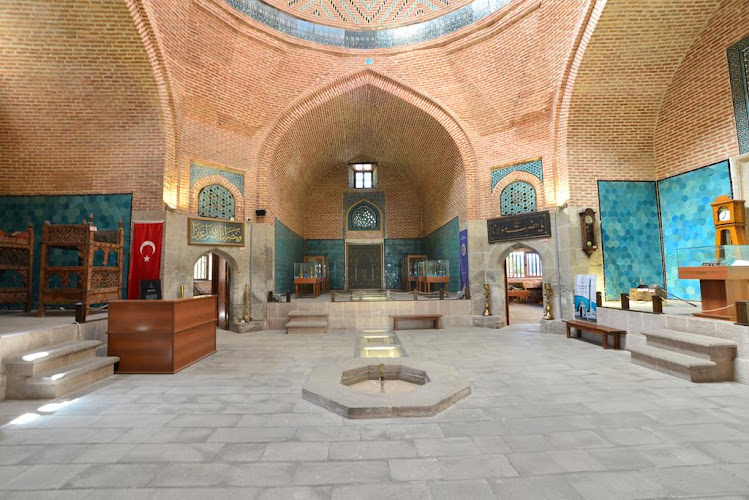
The Sahip Ata Museum in Sahibiata, Meram/Konya, Türkiye is one of those places that sneaks up on you. From the outside it reads like a quiet complex of old stone and carved wood, but once inside the scale and care of the site start to reveal themselves. It is a combined museum and mosque complex that traces back to the Seljuk era, and it’s famous for its architecture, tilework, and the atmosphere that only centuries-old religious and educational sites seem to hold. If you like history served with a side of calm — and who doesn’t sometime? — this spot will quietly insist you slow down and look.
Visitors usually come thinking they’ll stay forty-five minutes and end up lingering for over two hours. That happened to me on a drizzly afternoon when the rain made the courtyard smell like wet stone and lemon trees. I remember standing beneath a loggia, watching droplets fall and thinking about the craftsmen who set those tiles and carved the muqarnas ceilings. So yeah, the place rewards patience. It rewards curiosity more.
Sahip Ata was historically an educational and religious center — a complex that included a mosque, madrasa (religious school), tomb, and various ancillary rooms. Today it functions as a museum while still preserving the sacred core, so you’ll see artifacts and exhibits alongside functional spaces used for prayer and reflection. The museum side highlights Seljuk-era objects, ceramics, wooden panels with intricate calligraphy, and some surprisingly well-preserved textiles. The architectural elements themselves are exhibits: carved stone portals, stalactite-like ceiling decorations, and decorative tile panels that show the geometric and floral finesse of Anatolian artisanship.
One detail many guidebooks skim over is how the lighting and acoustic profile inside the mosque and the domed rooms shape the visitor experience. Walk slowly and clap your hands once to hear the echo — it’s a tiny, playful test of the space that tells you about the engineers who designed these rooms for sermons and recitations. And a little secret: some of the carved wooden doors and mashrabiyas still smell faintly of the old cedar used by the carpenters. It’s subtle, but those sensory things stick with you, like a scent that later conjures a whole afternoon back home.
For travelers who prioritize photography, the cobbled courtyard framed by arcades is golden hour candy. But be respectful — certain corners are still used for prayer or quiet study, and signage will indicate restricted areas where photography is discouraged. If you need a tip from experience: bring a lens hood or a small reflector if you really want balanced shots, because shadows inside the domes can be dramatic and contrasty.
Compared with larger, busier museums in big cities, Sahip Ata’s charm is its intimacy. It’s not a massive chronological display; rather, it’s curated to emphasize particular themes: religious education in the Seljuk period, funerary architecture, and the material culture of the region. That makes it a great stop within a half-day itinerary around Konya. Some travelers will breeze past, others will deliberately plan a slow morning among its rooms. Both approaches work, though the slow option usually leaves you with more memories and fewer regrets.
Accessibility is decent by local standards: pathways in the main courtyard are level, but some older thresholds and rooms have low steps. If mobility is a concern, ask at the entrance or the ticket desk — staff are generally helpful and can suggest alternative routes. Facilities are simple: a small ticket office, a cloak area, and restrooms nearby, but don’t expect a huge visitor center or café onsite. Treat it as a cultural stop rather than a full-service attraction. And bring water, because Turkish summer sun—especially in Konya—can be unforgiving.
The museum’s storytelling approach deserves a callout. Exhibits are often labeled in Turkish and English and oriented around objects that speak to daily life and spirituality in medieval Anatolia. You’ll find Quranic manuscripts, gravestone inscriptions, and educational tools that show how knowledge moved through the madrasa system. There’s also a quiet collection of pottery shards and tiles, and in one of my favorite corners, a cabinet of small carved mihrabs and fragments that reveal how motifs were repeated and adapted across the region. For anyone who loves pattern recognition or design history, that section is pure gold.
It’s worth noting the atmosphere subtleties: weekend mornings can be moderately busy with local families and school groups, while weekday afternoons see fewer tourists and more contemplative visitors. If you prefer to avoid crowds, early morning or late afternoon are safer bets. There are occasional cultural events and scholarly talks hosted at the complex — they’re low-key but illuminating, often led by local historians who sprinkle their remarks with stories you won’t find in guidebooks. If a talk is on during your visit, go. You’ll learn something specific and leave with a new favorite anecdote about the place.
Practicalities that matter but people forget to ask: there’s modest signage about the site’s conservation efforts. Some parts show visible restoration work; that’s normal and it's being done with care to keep the original character intact. You may notice scaffolding or restricted access to certain rooms; remember that preservation is ongoing, and the awkward noises of drills mean preservationists are hard at work making sure the place lasts for another century. It’s a small trade-off for keeping those tiles from losing their colors to weathering.
On the topic of colors: the blues and turquoise in the tile panels are more muted than the picture-perfect hues sometimes portrayed online, because sunlight and centuries have softened them. That said, the remaining tones are richer in person than on a camera sensor — which sounds funny, but cameras sometimes crush the subtlety. Your eyes will reward you. Sit on a bench, cup your hands around a cup of tea from a nearby street vendor, and look. The details of border patterns and the tiny variations in glazing are meditative if you let them be.
One thing many visitors miss is the interplay between the museum and the surrounding neighborhood. Sahibiata and the Meram district are not museum zones that exist in a bubble; they’re living places. After a visit, walking just a few streets away leads to local tea houses, bakeries, and markets where you can continue the historical thread into contemporary life. Try a simit and a tea, talk with a shopkeeper about the carpets in Konya, and you’ll see how history and everyday life weave together here.
Finally, for the practical planner who likes a tidy checklist: allocate 60–90 minutes for a focused visit, longer if you enjoy reading labels and wandering the courtyard. Weekdays are calmer, mornings are cooler in summer, and autumn brings more pleasant weather. Because the site works as both mosque and museum, dress modestly and modestly behaves — shoulders covered, voices lowered in prayer areas. Staff are approachable and often happy to answer questions; speaking a few words of Turkish like merhaba or tesekkür ederim will get a smile and sometimes an extra story.
All in all, the Sahip Ata Museum in Sahibiata, Meram/Konya, Türkiye is a place for people who like their travel with a side of thoughtfulness. It’s not flashy. But it is honest, layered, and quietly generous. If you’re passing through Konya, set aside time. If you’re a little obsessive about details — the kind who notices a carved date or a pattern repeated across centuries — you’ll appreciate what this museum offers. And if nothing else, it’s a peaceful stop that reminds you why architecture and objects matter: they hold memory, and they ask us to pay attention.
Key Features
Sahip Ata Museum
You Might Also Like

*BDT BELEK DOGA TOUR | Daily Tours, Day Trips and Excursions in Antalya*
1464. Sk. No:55
2006. Sk. No:2
Tours & Activities
GetYourGuide provides this tour inventory. We may earn a commission if you book through it; verify current availability, prices, and terms with the provider.
Visitor Reviews
There are no reviews yet. Be the first one to write one.
Share Your Experience
Have you visited Sahip Ata Museum? Help other travelers by leaving a review.