
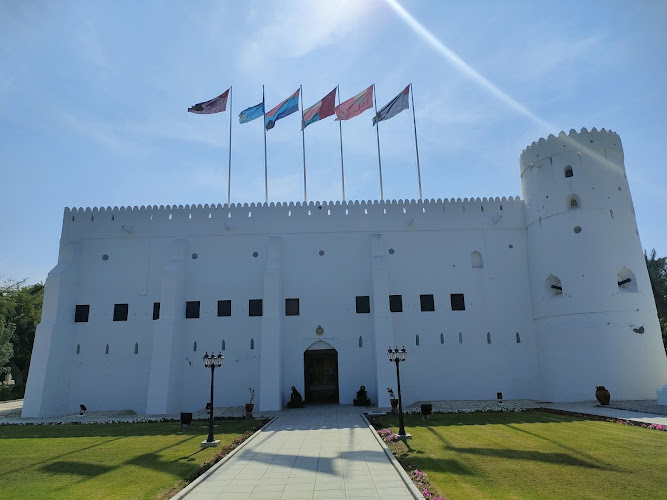
Sultan’s Armed Forces Museum
About Sultan’s Armed Forces Museum
Description
The Sultan's Armed Forces Museum in Muscat, Oman, offers visitors an unexpectedly intimate and thorough look at the nation's military history across the ages. Housed in a historic bait—an Omani-style house that itself feels like an exhibit—the museum blends traditional architecture with display cases full of weapons, uniforms, medals, vehicles and stories that chart the evolution of Oman from coastal stronghold to modern sultanate. The setting is quietly evocative: you step from narrow courtyard light into galleries where polished rifles sit beside lacquered ceremonial daggers, and that contrast tells a story before a placard ever does.
Visitors who come for hardware will find much to admire. The collection includes tactical and ceremonial weapons, aircraft models and full-sized vehicles arranged to illustrate the changing tools and tactics of Omani armed forces. But the museum does more than display hardware. It situates these objects within human stories—commanders, maritime traders turned warriors, tribal levies, and the leadership decisions that shaped the modern Omani armed forces. The narrative moves from ancient skirmishes and coastal defense to the diplomacy and modernization periods associated with recent sultans, detailing how external pressures and internal politics reshaped military priorities.
One unusual strength is how the museum merges cultural context with military artifacts. Nearby exhibits show traditional Omani life, emphasizing how geography—desert, mountains, and coast—affected strategy and equipment. There are displays of falaj irrigation maps and references to regional forts that help explain why certain weapons were prized and how communities mobilized. In short, it doesn’t feel like a cold weapons depot; instead, it reads like a curated story of a nation learning to protect and present itself.
For travelers who appreciate museum design, the layout is calm and deliberately paced. Lighting emphasizes details on blades and uniform embellishments, while larger items such as vehicles are placed so that visitors can walk around and examine them from several angles. Interpretive panels are mostly in English and Arabic; the language is straightforward, sometimes a bit bureaucratic, but generally helpful for non-specialists. The museum’s tone keeps a respectful, national-historical perspective without being triumphalist—which, if one asks this writer, is preferable to sugar-coated propaganda. The museum trusts visitors to draw conclusions.
Accessibility is a practical plus. Wheelchair-accessible entrances, parking, and restrooms make the museum possible for visitors with limited mobility, and that’s something not all cultural sites in the region can claim. Families will appreciate that the site is flagged as good for kids; there are tactile displays and visually striking objects that keep younger attention. There’s a lack of an on-site restaurant, so plan breaks accordingly—there are restrooms and bench spaces to pause, but snacks and meals need to be arranged outside the museum grounds.
The curators have included sections dedicated to uniforms and medals, which often reveal as much about identity and ceremony as the weapons themselves. Close study of dress and insignia offers a visual timeline: styles change, ranks shift, and the adoption of new materials or influences from abroad becomes obvious. For anyone curious about how a small sultanate engaged with global military trends, these displays are surprisingly revealing. They show how Oman balanced tradition with modernization—sometimes awkwardly, sometimes elegantly.
Many travelers go in expecting a dry, technical museum and leave surprised at the emotional pull of certain exhibits. A display of personal letters, photographs and small artifacts—things soldiers carried in pockets—can be unexpectedly moving. This is where the museum excels: connecting metal, fabric and glass to the lives of individuals. It’s less about battles as spectacle and more about the human cost and commitment behind the uniforms. This approach makes the museum accessible to people who aren’t military buffs but who do like history told through objects.
Practical visitors should know that the museum is at once compact and dense. One could breeze through the highlights in 45 minutes, but a proper visit—reading most panels and lingering over key displays—usually takes between 1.5 and 2 hours. Those who like to photograph artifacts will find plenty of photo opportunities, though flash rules and object protection precautions apply in some rooms. If this sounds like a long time, that’s only because the museum rewards curiosity: small plaques often reference specific events, forts and leaders that prompt follow-up exploration in Old Muscat or at other heritage sites.
Among the less-publicized features are the outdoor displays and the way the museum situates some vehicles and larger equipment in a lightly landscaped perimeter. These outside exhibits give a sense of scale that indoor cases cannot—engine blocks, suspension systems and aircraft silhouettes suddenly feel tangible rather than diagrammatic. It’s a tiny museum design trick, but effective. And while the museum does not have a commercial restaurant, the surrounding neighborhood offers cafes where visitors can compare notes and decode some of the more intricate exhibits over cardamom tea.
There are interpretive twists that seasoned museum-goers may enjoy. For example, the museum occasionally juxtaposes ancient weaponry with modern counterparts to highlight technological and tactical transitions. A dagger displayed beside a modern ceremonial sword might seem an odd pair, but the curatorial intent is clear: continuity of symbolism even as function changes. Those small curatorial choices reveal a thoughtful approach to storytelling, and they invite visitors to read beyond the labels.
For the history-minded traveler, the museum provides insight into Oman’s regional role—how the sultanate navigated relationships with neighboring powers, colonial interests, and maritime trade networks. There’s an emphasis on diplomacy as part of military history: treaties, naval patrols, and the logistics of securing trade routes. These are important contexts that often go missing in strictly battle-focused museums. The museum’s displays are a reminder that military forces protect more than borders; they protect commerce, ceremony and national identity.
It’s worth noting that the museum does not over-explain everything. At times a visitor will wish for more background or translations; some panels assume a baseline of knowledge about local history. But that, in a way, is a feature. It nudges curious people to ask questions, visit nearby historical sites, and bring back fresh perspectives. One could say it’s a good starting point for a longer historical pilgrimage around Muscat.
When planning, travelers should be aware of the museum’s measured tone. It celebrates service and dedication without lapsing into uncritical adulation. That balance keeps exhibits credible. The author of this guide—speaking as a careful observer, not an official historian—found it refreshing that the museum presents modernization and continuity as an ongoing process rather than a finished story. That nuance means repeat visits or complementary stops (like Old Muscat forts and maritime museums) significantly deepen the experience.
Finally, the museum’s position in Muscat makes it a pragmatic addition to a traveler’s itinerary. It pairs well with cultural walks, markets and heritage architecture. Visitors can easily integrate a visit into a half-day of exploring; the museum serves as a compact, informative anchor to broader stories about Oman—its people, its leadership, and the forces that shaped its present. Travelers who leave with a clearer sense of how Oman’s geography, trade, and politics shaped its armed forces are likely to return to the city’s streets with a keener eye—spotting architectural clues or historical references they would have otherwise missed.
In short, the Sultan's Armed Forces Museum is a smart, accessible place for anyone interested in Oman, military history, or the quieter human stories behind national defense. It’s not high-tech and it doesn’t lecture; instead, it invites slow looking and encourages questions. For travelers who like to mix artifacts with narrative—who enjoy seeing a ceremonial sword and then reading about the life behind it—this museum is a small but rewarding stop that deepens understanding of Muscat and the wider sultanate.
Key Features
Sultan’s Armed Forces Museum
Tours & Activities
GetYourGuide provides this tour inventory. We may earn a commission if you book through it; verify current availability, prices, and terms with the provider.
Visitor Reviews
There are no reviews yet. Be the first one to write one.
Share Your Experience
Have you visited Sultan’s Armed Forces Museum? Help other travelers by leaving a review.