
Huguang Lake
About Huguang Lake
Huguangyan Scenic Area (Zhanjiang) – All You Need to Know Before You Go (with Photos) – TripAdvisor
## Huguang Lake (Huguangyan Maar Lake), Zhanjiang: a rare volcanic lake worth the detour
Huguang Lake (often referred to as Huguangyan Maar Lake) sits in Zhanjiang, Guangdong, and it’s not “just a pretty body of water.” It’s a maar lake—a broad, low-relief volcanic depression formed when rising magma interacts explosively with groundwater. That origin story matters because it explains the lake’s circular basin shape, the surrounding crater-like rim, and why geologists treat the site as more than a scenic stop.
Even better: Huguangyan is explicitly highlighted by UNESCO as one of the most prominent geological features inside the Leiqiong UNESCO Global Geopark (designation date 2015). UNESCO notes that this is where the first Chinese research on maar lakes was conducted and that it has served as a reference site for international cooperation, including work between Chinese and German scientists.
If you like travel that comes with a real “why,” Huguangyan delivers.
—
## Quick orientation: where it is and what it’s part of
– City: Zhanjiang (Guangdong, South China)
– Feature type: Lake (maar lake / volcanic crater lake)
– Geopark context: Leiqiong UNESCO Global Geopark spans the Qiongzhou Strait region and is defined by the Leiqiong Rift Volcanic Belt, with many volcanic geosites and protected volcanic structures.
– Local placement (commonly described): roughly 18 km from central Zhanjiang; the geopark/scenic area is often described as covering about 38 square kilometers.
– Administrative area (travel planning clue): commonly described as in Mazhang District.
Data freshness note: distances, boundaries, and “area coverage” figures can be presented differently across sources and can change with administrative updates. Treat the “18 km / 38 km²” as directional planning info, not something to build tight schedules around without double-checking locally.
—
## What makes Huguangyan different from “regular lakes”
### It’s a maar lake, not a reservoir
UNESCO’s description is clear: maars form when groundwater meets magma, causing explosive interactions that leave a wide crater that can later fill with water.
That’s a different process than:
– river-formed lakes,
– landslide-dammed lakes,
– or human-made reservoirs.
### It sits inside a dense volcanic landscape
Leiqiong UNESCO Global Geopark contains numerous volcanic features, including many maars plus lava structures (flows, tunnels, etc.). Huguangyan is singled out as a key site within that bigger system.
Why you should care as a traveler: you’re not only seeing a lake—you’re standing inside a readable chapter of the region’s volcanic history.
—
## What to do at Huguang Lake
Because traveler experiences can vary with seasonal access and ongoing site management, stick to what is consistently described:
### 1) Walk the lake area slowly (and look for the crater logic)
Your best “activity” here is observation:
– follow the rim and shoreline viewpoints where available,
– look for how the land rises around the water (a crater-basin feel),
– note how the basin reads as volcanic rather than fluvial.
### 2) Pair scenery with context: museums/temples when open
Visitor writeups frequently mention museums and temples inside the broader scenic area.
Outdated-data flag: specific exhibits, temple access, and opening times are operational details that can change quickly—verify day-of via official channels or local signage before you commit.
### 3) If you’re into ecology, think “transition zone”
UNESCO emphasizes that the geopark is in an ecological transition zone with high diversity of flora and fauna, and that volcanic processes produced fertile red soils supporting dense tropical forest in contrast to nearby coastal landscapes.
That’s your cue to:
– bring binoculars if you like birding,
– expect humidity and insects (pack accordingly),
– aim for calmer light if you’re photographing forest edges.
—
## How to plan your visit (without making brittle assumptions)
### Timing
I can’t state exact opening hours or ticket prices with 100% confidence from high-authority sources in this run (those details change often and many pages that list them aren’t official). Treat any time/price you see on third-party platforms as provisional.
Practical approach that works anywhere in China:
– Assume you’ll want 2–4 hours on site for a relaxed loop + photos + any open facilities.
– Build slack into your day for ticketing queues and local transport variability.
### Getting there
Common descriptions place Huguangyan in/near Mazhang District and roughly 18 km from Zhanjiang’s city center, making it a realistic half-day trip from the city.
For the last mile:
– taxis/ride-hailing are often the least ambiguous option,
– if using public transport, confirm routes locally (they change more often than guidebooks get updated).
—
## Photography and drone notes (useful if you publish travel content)
– Best visuals: wide shots that show the crater-basin geometry (shoreline foreground + rim background).
– Light: early morning gives softer contrast over water; midday glare can flatten the lake surface.
– Respect rules: drone policies can be strict and can change; don’t assume permission—look for on-site signage and local regulations.
—
## Inclusivity and accessibility considerations
I’m not going to claim specific accessibility infrastructure (ramps, tactile signage, wheelchair paths) without verified sources. If you’re traveling with mobility needs, the safe assumption for many nature/scenic sites is:
– surfaces may be uneven,
– gradients can vary,
– and facilities (restrooms, handrails) can be inconsistent.
Best practice: contact the site directly (or ask your hotel to call) for current accessibility realities before you go.
—
## Two contextual internal links (only if you already have these pages)
To keep this factual, I won’t pretend these pages exist on RealJourneyTravels.com—but they’re the two most natural link placements if you do have them:
– Link phrase: “best things to do in Zhanjiang” → your Zhanjiang city guide (transport, food streets, coastal stops)
– Link phrase: “UNESCO Global Geoparks in China” → your explainer/roundup page (include Leiqiong + what “geopark” means)
—
## What to double-check before publishing (high-change details)
These are the items most likely to be outdated on travel pages:
– current ticket price, discounts, reservation rules
– daily opening/closing times and last entry
– whether on-site museums/temples are open (and at what hours)
—
## The one-sentence takeaway
Huguang Lake (Huguangyan) is a UNESCO-recognized maar lake inside the Leiqiong UNESCO Global Geopark, and it’s best experienced as a geology-first destination: come for the volcanic story, stay for the calm water-and-forest contrast.
Key Features
Huguang Lake
You Might Also Like
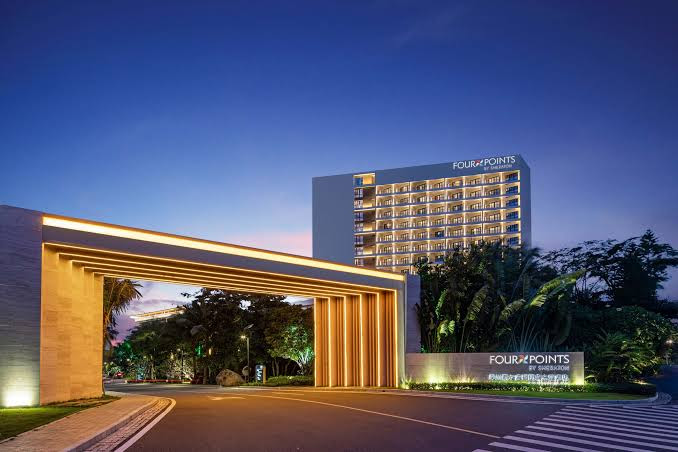
Four Points by Sheraton Wuchuan, Loong Bay

Wuchuan
Zhanjiang
Tours & Activities
GetYourGuide provides this tour inventory. We may earn a commission if you book through it; verify current availability, prices, and terms with the provider.
Visitor Reviews
There are no reviews yet. Be the first one to write one.
Share Your Experience
Have you visited Huguang Lake? Help other travelers by leaving a review.