
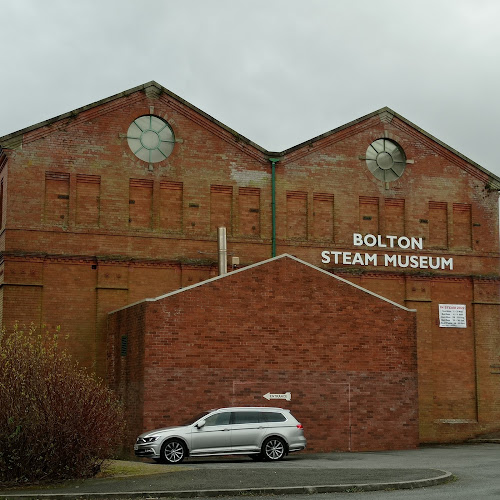
Bolton Steam Museum
About Bolton Steam Museum
Description
The Bolton Steam Museum presents a hands-on, honest look at the industrial heart that once powered northern England. The museum focuses on stationary steam engines and mill machinery rescued from cotton mills and factories, and it preserves a collection that tells the story of steam power, textile processing, and local engineering skill. It is run largely by volunteers with deep, often generational ties to the region—people who can name the maker of a valve at a glance and will happily spend ten minutes explaining why a particular beam engine is a small miracle of Victorian engineering. That volunteer energy gives the place a warmth that no glossy corporate attraction can fake.
Set inside a robust engine house-type building, the museum displays an array of vertical and horizontal engines, twin-beam pieces, and a few rare machines that are not commonly seen elsewhere. Several engines are maintained in working order and are periodically steamed up for demonstrations; hearing the pistons thump and watching belts and pulleys strike into life is the sort of theatrical, tactile history lesson that can surprise adults and bowl-over children. Visitors who come thinking they will see a few rusty relics often leave impressed by how loud, oily and alive the machinery still is. And yes, it smells faintly of oil and steam sometimes—authenticity, not eau de museum.
What makes this museum stand out is the combination of preserved machinery, knowledgeable volunteers, and an attitude of practical conservation. The collection reads like a who's-who of industrial power: engines that once drove spinning frames, line shafts and belt systems rescued from mills, and supporting tools and paraphernalia that place the engines in context. For anyone curious about how cotton mills and small factories were powered before electrification, this is a concentrated primer. The exhibits include examples of mill engines that powered textile production across Lancashire, as well as smaller workshop and pumping engines. There are interpretive labels, but much of the real interpretation happens in conversation—staffed days and open events feature guided chats where the emphasis is on stories as much as specifications.
The museum’s personality is shaped by volunteers who are both craftsmen and storytellers. They restore components by hand, rebuild castings when needed, and often tailor a demonstration to the audience: a child might get to press a safe control button, while an engineering student might be walked through valve timing and governor action. That mix makes the museum particularly rewarding for families and for people who love the mechanical details. It’s also educational—local school groups use the museum to reinforce lessons in history, physics and technology. The hands-on vibe reassures visitors that this is not a white-glove, do-not-touch place; it is a working celebration of how things once got done.
Accessibility is straightforward: the museum provides wheelchair accessible entrances, parking, and restrooms, making it possible for many visitors with mobility needs to enjoy the displays. Practical touches—clear signage, accessible facilities, and volunteers who will happily fetch a closer look or help a wheelchair user position for a better view—are commonplace here, not afterthoughts. At the same time, the historic fabric of the building does mean some areas have lower headroom or uneven flooring; volunteers will usually flag those spots and suggest the best route.
Families will find the museum especially accommodating. There are simple, engaging explanations aimed at younger visitors, plus enough noisy spectacle to keep energetic kids interested. The museum does not have an on-site restaurant, so visitors should pack snacks or plan to eat elsewhere afterward. Restrooms are available on-site, which is a small but appreciated detail for families and seniors. Overall the site is designed to be good for kids, educational without being preachy or dull.
Visitors should also know that Bolton Steam Museum is not a high-ticket, commercial exhibition. Operating hours are modest; the site depends on open days, volunteer-run demonstrations, and scheduled events to show engines under steam. But that is part of its charm: when the museum does put engines on show, the experience feels curated by people who care deeply about the machines. Expect authenticity over polish, depth over spectacle. People who love industrial heritage will find it a gem; casual visitors often end up fascinated, sometimes surprised at how compelling the subject can be.
There are a handful of quieter, lesser-known highlights that regulars cherish. Small, preserved workshops display original tools and gauges in situ; restored governors and governors’ gearings are shown so visitors can see the mechanical logic that regulated engine speed; and occasional rarities—such as a 19th-century vertical compound or an unusual beam engine—appear on the rotation. Many items have interesting provenance: salvaged from mills that closed in the mid-20th century, parts traded between preservation groups, or donated by families of mill workers. Those provenance notes are the kinds of stories volunteers like to share, and they add human texture to the mechanical spectacle.
It would be remiss not to mention the social history embedded in the collection. Bolton’s industrial past is visible in the machines—cotton mill engines and the gearwork that transmitted power across floors. Displays touch on how steam power changed working life: shift patterns, maintenance routines, and the craftspeople whose skills kept machines running. The museum does a good job of connecting technical detail to human impact. That combination of engineering and social history makes visits resonant: one moment visitors might be admiring a finely polished crosshead, and the next they will be absorbing a tale of a worker who kept that very part turning for decades.
In terms of visitor flow and crowding, the museum is generally easygoing. It is popular on open days and special steam days, when attendance spikes and the noise level rises in an energizing way. On quieter days, the layout invites calm exploration and conversation. Because demonstrations are scheduled, the timing of a visit matters if a visitor’s priority is to see engines running—plan around advertised steaming times where possible. And for photographers: the brass, cast-iron textures and dramatic shafting make compelling subjects, though some restrictions on flash or close access may apply for safety and conservation reasons.
Safety and conservation are taken seriously. When engines are run, volunteers follow carefully laid-out procedures: safety briefings, cordons around moving parts, and limited access to control points. That means visitors get to enjoy working machinery without undue risk. There is also an educational payoff—the safe, controlled demonstrations help people understand how the mechanisms worked and why maintenance mattered. In short, demonstrations are as much about instruction as they are about spectacle.
One small but often overlooked advantage is the museum’s community ethos. Because it is volunteer-led and ordinarily small-scale, repeat visitors can observe conservation in action—projects in progress, components awaiting restoration, and the slow but steady work of preservation. That transparency is oddly satisfying; it creates an ongoing narrative that can draw enthusiasts back multiple times to catch a project at different stages. For those who love the behind-the-scenes process, the museum functions almost like a living workshop.
There are, naturally, some practical caveats. The museum’s limited operating hours and volunteer-dependent programming mean that engine demonstrations might not be available on every visit. And because there is no café, visitors who expect a full-day, all-amenities experience might need to plan accordingly. But for the curious traveler who values authentic, locally rooted experiences—especially one interested in steam, mills, and industrial heritage—the trade-offs are worth it. The museum is compact, affordable, and dense with content; it rewards thoughtful visitors who take time to listen to the volunteers and read the displays.
Finally, the Bolton Steam Museum often acts as a gateway. For people exploring the industrial story of Greater Manchester and Lancashire, a visit here provides context and appetite—one might leave wanting to visit old mill sites, other engine houses, or local archives. The museum doesn’t present an exhaustive national narrative, but it excels at making Bolton’s industrial chapter vivid and accessible. In that way, it’s a smart stop on any itinerary that seeks to understand how steam shaped the landscape, the economy, and everyday life in the north of England.
Key Features
More Details
Updated August 29, 2025
Table of Contents
Description
The Bolton Steam Museum presents a hands-on, honest look at the industrial heart that once powered northern England. The museum focuses on stationary steam engines and mill machinery rescued from cotton mills and factories, and it preserves a collection that tells the story of steam power, textile processing, and local engineering skill. It is run largely by volunteers with deep, often generational ties to the region—people who can name the maker of a valve at a glance and will happily spend ten minutes explaining why a particular beam engine is a small miracle of Victorian engineering. That volunteer energy gives the place a warmth that no glossy corporate attraction can fake.
Set inside a robust engine house-type building, the museum displays an array of vertical and horizontal engines, twin-beam pieces, and a few rare machines that are not commonly seen elsewhere. Several engines are maintained in working order and are periodically steamed up for demonstrations; hearing the pistons thump and watching belts and pulleys strike into life is the sort of theatrical, tactile history lesson that can surprise adults and bowl-over children. Visitors who come thinking they will see a few rusty relics often leave impressed by how loud, oily and alive the machinery still is. And yes, it smells faintly of oil and steam sometimes—authenticity, not eau de museum.
What makes this museum stand out is the combination of preserved machinery, knowledgeable volunteers, and an attitude of practical conservation. The collection reads like a who’s-who of industrial power: engines that once drove spinning frames, line shafts and belt systems rescued from mills, and supporting tools and paraphernalia that place the engines in context. For anyone curious about how cotton mills and small factories were powered before electrification, this is a concentrated primer. The exhibits include examples of mill engines that powered textile production across Lancashire, as well as smaller workshop and pumping engines. There are interpretive labels, but much of the real interpretation happens in conversation—staffed days and open events feature guided chats where the emphasis is on stories as much as specifications.
The museum’s personality is shaped by volunteers who are both craftsmen and storytellers. They restore components by hand, rebuild castings when needed, and often tailor a demonstration to the audience: a child might get to press a safe control button, while an engineering student might be walked through valve timing and governor action. That mix makes the museum particularly rewarding for families and for people who love the mechanical details. It’s also educational—local school groups use the museum to reinforce lessons in history, physics and technology. The hands-on vibe reassures visitors that this is not a white-glove, do-not-touch place; it is a working celebration of how things once got done.
Accessibility is straightforward: the museum provides wheelchair accessible entrances, parking, and restrooms, making it possible for many visitors with mobility needs to enjoy the displays. Practical touches—clear signage, accessible facilities, and volunteers who will happily fetch a closer look or help a wheelchair user position for a better view—are commonplace here, not afterthoughts. At the same time, the historic fabric of the building does mean some areas have lower headroom or uneven flooring; volunteers will usually flag those spots and suggest the best route.
Families will find the museum especially accommodating. There are simple, engaging explanations aimed at younger visitors, plus enough noisy spectacle to keep energetic kids interested. The museum does not have an on-site restaurant, so visitors should pack snacks or plan to eat elsewhere afterward. Restrooms are available on-site, which is a small but appreciated detail for families and seniors. Overall the site is designed to be good for kids, educational without being preachy or dull.
Visitors should also know that Bolton Steam Museum is not a high-ticket, commercial exhibition. Operating hours are modest; the site depends on open days, volunteer-run demonstrations, and scheduled events to show engines under steam. But that is part of its charm: when the museum does put engines on show, the experience feels curated by people who care deeply about the machines. Expect authenticity over polish, depth over spectacle. People who love industrial heritage will find it a gem; casual visitors often end up fascinated, sometimes surprised at how compelling the subject can be.
There are a handful of quieter, lesser-known highlights that regulars cherish. Small, preserved workshops display original tools and gauges in situ; restored governors and governors’ gearings are shown so visitors can see the mechanical logic that regulated engine speed; and occasional rarities—such as a 19th-century vertical compound or an unusual beam engine—appear on the rotation. Many items have interesting provenance: salvaged from mills that closed in the mid-20th century, parts traded between preservation groups, or donated by families of mill workers. Those provenance notes are the kinds of stories volunteers like to share, and they add human texture to the mechanical spectacle.
It would be remiss not to mention the social history embedded in the collection. Bolton’s industrial past is visible in the machines—cotton mill engines and the gearwork that transmitted power across floors. Displays touch on how steam power changed working life: shift patterns, maintenance routines, and the craftspeople whose skills kept machines running. The museum does a good job of connecting technical detail to human impact. That combination of engineering and social history makes visits resonant: one moment visitors might be admiring a finely polished crosshead, and the next they will be absorbing a tale of a worker who kept that very part turning for decades.
In terms of visitor flow and crowding, the museum is generally easygoing. It is popular on open days and special steam days, when attendance spikes and the noise level rises in an energizing way. On quieter days, the layout invites calm exploration and conversation. Because demonstrations are scheduled, the timing of a visit matters if a visitor’s priority is to see engines running—plan around advertised steaming times where possible. And for photographers: the brass, cast-iron textures and dramatic shafting make compelling subjects, though some restrictions on flash or close access may apply for safety and conservation reasons.
Safety and conservation are taken seriously. When engines are run, volunteers follow carefully laid-out procedures: safety briefings, cordons around moving parts, and limited access to control points. That means visitors get to enjoy working machinery without undue risk. There is also an educational payoff—the safe, controlled demonstrations help people understand how the mechanisms worked and why maintenance mattered. In short, demonstrations are as much about instruction as they are about spectacle.
One small but often overlooked advantage is the museum’s community ethos. Because it is volunteer-led and ordinarily small-scale, repeat visitors can observe conservation in action—projects in progress, components awaiting restoration, and the slow but steady work of preservation. That transparency is oddly satisfying; it creates an ongoing narrative that can draw enthusiasts back multiple times to catch a project at different stages. For those who love the behind-the-scenes process, the museum functions almost like a living workshop.
There are, naturally, some practical caveats. The museum’s limited operating hours and volunteer-dependent programming mean that engine demonstrations might not be available on every visit. And because there is no café, visitors who expect a full-day, all-amenities experience might need to plan accordingly. But for the curious traveler who values authentic, locally rooted experiences—especially one interested in steam, mills, and industrial heritage—the trade-offs are worth it. The museum is compact, affordable, and dense with content; it rewards thoughtful visitors who take time to listen to the volunteers and read the displays.
Finally, the Bolton Steam Museum often acts as a gateway. For people exploring the industrial story of Greater Manchester and Lancashire, a visit here provides context and appetite—one might leave wanting to visit old mill sites, other engine houses, or local archives. The museum doesn’t present an exhaustive national narrative, but it excels at making Bolton’s industrial chapter vivid and accessible. In that way, it’s a smart stop on any itinerary that seeks to understand how steam shaped the landscape, the economy, and everyday life in the north of England.
Key Highlights
Bolton Steam Museum
Location
Places to Stay Near Bolton Steam Museum
Find and Book a Tour
Explore More Travel Guides
No reviews found! Be the first to review!
Traveler Reviews for Bolton Steam Museum
There are no reviews yet. Be the first one to write one.
Have you visited Bolton Steam Museum? Help other travelers by sharing your review.
You Might Also Like

Jump Xtreme Trampoline Park & That Fun Place Bolton
Fred Dibnah Statue
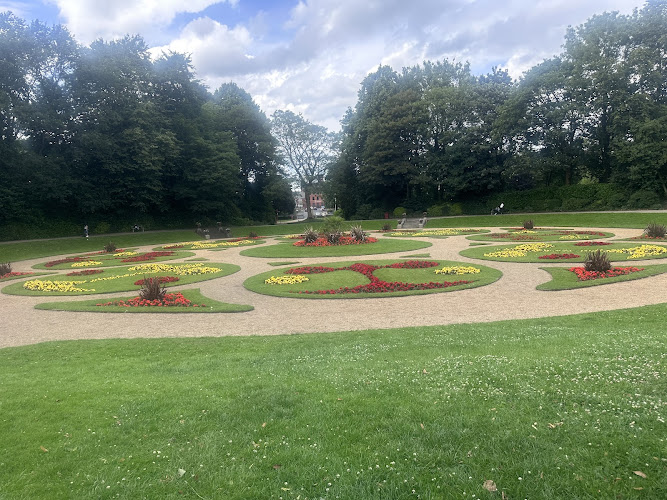
Queen's Park
Find Accommodations Nearby
Recommended Tours & Activities
Visitor Reviews
There are no reviews yet. Be the first one to write one.
Share Your Experience
Have you visited Bolton Steam Museum? Help other travelers by leaving a review.