
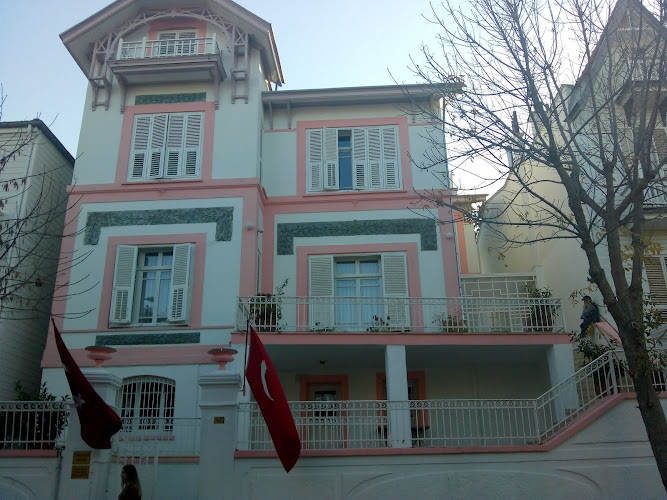
Inonu House Museum
About Inonu House Museum
The Inonu House Museum on Heybeliada is a compact, quietly powerful museum dedicated to İsmet Inonu, the second president of the Republic of Turkey, and to a slice of Turkish republican history that often sits just behind the more headline-grabbing stories about the early republic. It sits within the island atmosphere of the Princes Islands, and while it does not shout for attention, it rewards anyone who takes the slow ferry ride and the leisurely walk to its door. The museum is housed in the family home that belonged to Inonu, converted into a museum to preserve his personal items, letters, photographs, and the domestic furnishings that give visitors a surprisingly intimate view of the life of a major statesman when he was off duty. For travelers seeking a quieter historical experience in Istanbul, it stands out because it focuses on life, not just politics: the routines, the library, the daily objects, the garden chairs where conversations once drifted into the evening air.
The collection is not huge, and that is precisely its strength. Instead of a cavernous, impersonal display of state artifacts, the house museum presents several rooms laid out as they might have been when Inonu lived there. A visitor moves from a modest sitting room into a study lined with books, then into a bedroom, each room containing personal effects such as clothing, glasses, writing implements, and framed photographs. There are letters and documents that hint at the political pressures and the quieter moments of correspondence between family and colleagues. Text panels give context but never overwhelm; curatorial choices favor clarity and human detail. The effect is not to lionize but to humanize: Inonu appears as a decision-maker who also had domestic rhythms, personal habits, and a circle of family and friends whose presence is still faintly felt in the rooms.
Architecturally, the house is an example of late Ottoman and early Republican residential styles adapted to the island environment. Wooden floors, painted woodwork, high ceilings, and simple decorative touches create a sense of lived-in dignity. The building itself tells a story about transitions in Turkish architecture and domestic life from late Ottoman times into the republican era. Small things — a particular doorknob, a window that looks out toward the sea, a stair worn by decades of footsteps — often catch the eye of visitors before they notice the framed portrait of a statesman. These physical details make the museum particularly suited to visitors who enjoy history that is tactile and atmospheric rather than encyclopedic.
It should be said up front that this museum is not a wheelchair-accessible attraction. The entrance and interior arrangement reflect the original house layout, with steps and narrow passages that have not been significantly altered to accommodate wheelchairs. That matters for trip planning: those traveling with mobility limitations will want to plan carefully or seek alternative sites that are easier to navigate. The museum also does not feature an on-site restaurant, so expecting to linger over coffee inside is unrealistic; instead people tend to pair a visit with a stroll around the island or a café stop nearby. Families, however, often find the museum suitable for children — exhibits are approachable, the rooms are small enough to keep attention, and the island environment means that children can follow a visit with outdoor time exploring parks and waterfront paths.
Visitors who enjoy contextual history will appreciate the way the museum situates Inonu within the broader currents of Turkish history. Without delving into exhaustive political minutiae, the exhibition explains his role in the early republic, his contributions to government, and his interactions with other founding figures. Photographs show state ceremonies and informal gatherings; documents reveal personal notes and official correspondence. For the non-specialist traveler who wants to understand the human dimension of national leadership, this balance between the personal and the civic is ideal. It is possible to leave the house with both a clearer sense of Inonu as a person and a more textured understanding of the early republican era.
Local guides and docent-led remarks — when available — add color. Many visitors comment afterward that a short anecdote delivered in situ suddenly made a photograph or a document resonate. The museum team tends to favor storytelling that links objects to moments: the pipe left on a side table, the scarf draped over a chair, a particular hat hung on a peg. Those small objects act like anchors for narrative, and that narrative is what turns a simple house visit into a memorable learning experience. Travelers who favor museums where objects lead to stories will find themselves pleasantly engaged.
Practical considerations shape the visitor experience too. The museum’s scale means a typical visit lasts between 30 and 60 minutes, depending on how much time someone spends reading panels and lingering in the rooms. It is therefore perfectly suited to be combined with other island activities: dining at a nearby café, visiting a small church, or renting a bike for a coastal ride. Because Heybeliada itself is a small and calm place, the Inonu House Museum often becomes a quietly reflective stop rather than the centerpiece of a busy itinerary. That suits many travelers just fine; in fact, the museum rewards those who want a breather from larger, more crowded museums in central Istanbul.
There are also moments of unexpected warmth. On a sunlit afternoon the windows throw patterns of light across the study table, and visitors can imagine the daily rhythms that once animated the rooms. In this way the museum functions less like a sterile memorial and more like a preserved residence where human life left traces. For photographers and those who appreciate subtler visual textures in museums, the house offers good opportunities for detail shots: old book spines, patterned textiles, and the interplay of light and shadow in wooden interior spaces. Do note that flash photography and large tripods are generally discouraged to protect the objects and to respect fellow visitors.
Scholars and students sometimes use the museum as a starting point for more in-depth research. The collection contains references and documented materials that hint at broader archival holdings elsewhere, so for someone curious about primary sources or the personal networks of early Republican elites, the museum provides leads rather than exhaustive materials. In this respect it functions as both public exhibition and a gateway to further study. Visitors who leave with questions often find that the staff can point them toward additional resources or suggest other local museums and sites that connect to related themes.
When it comes to visitor sentiment, the museum tends to provoke a warm and respectful response. Many appreciate the intimacy and the care put into preserving the living spaces, though some long for more interpretive depth or interactive elements that modern museums offer. That balance — intimate authenticity versus modern museum amenities — is something every visitor weighs for themself. Some will cherish the lack of commercial trappings; others will wish for audio guides or more multilingual panels. Still, the core experience — a walk through an important statesman’s everyday world — remains rare and meaningful.
For international travelers thinking in practical terms, the Inonu House Museum is easily integrated into a day trip to the Princes Islands. It does not demand a huge time commitment, but it does reward those who arrive with a little curiosity and a readiness to notice small details. The atmosphere of the island—slow-paced, sea-scented air, the gentle rhythm of ferries—combines with the museum’s domestic scale to make a visit feel like stepping into a historical vignette rather than an exhibition hall. For many travelers, this combination is the highlight: a short, digestible museum stop that adds emotional texture and historical perspective to an island outing.
In short, the Inonu House Museum is a modest but carefully kept house museum that brings the life of a major Turkish leader into human scale. It is best suited to travelers who appreciate personal stories within political history, to families looking for a kid-friendly museum stop, and to visitors who want a contemplative museum experience without the museum crowds of central Istanbul. It may not satisfy those seeking full accessibility or restaurant facilities on-site, but for many it offers precisely the kind of small-scale, intimate encounter with history that lingers in memory long after the ferry ride back to the city.
Key Features
Inonu House Museum
You Might Also Like

*BDT BELEK DOGA TOUR | Daily Tours, Day Trips and Excursions in Antalya*
1464. Sk. No:55
2006. Sk. No:2
Tours & Activities
GetYourGuide provides this tour inventory. We may earn a commission if you book through it; verify current availability, prices, and terms with the provider.
Visitor Reviews
There are no reviews yet. Be the first one to write one.
Share Your Experience
Have you visited Inonu House Museum? Help other travelers by leaving a review.