
Denton Hall Turret – Hadrian’s Wall
About Denton Hall Turret – Hadrian’s Wall
Description
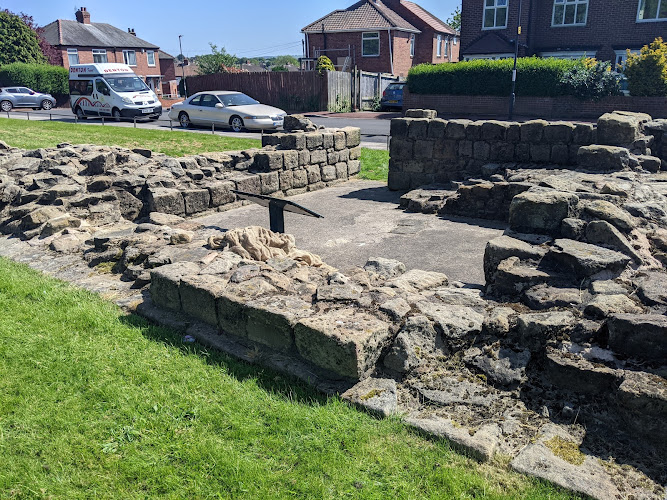
There’s something quietly powerful about standing before the Denton Hall Turret, one of the many sentinels that once guarded the mighty Hadrian’s Wall. It’s not the largest or most famous ruin in Britain, but it’s got that certain charm that draws you in. Maybe it’s the idea that nearly two thousand years ago, Roman soldiers stood right there, peering north into what they considered the edge of the known world. Denton Hall Turret, also known as Turret 7B, was built around AD 122 when Emperor Hadrian decided to mark the northern boundary of the Roman Empire with stone, discipline, and a fair bit of ambition. The turret was part of a network—two turrets for every Roman mile—where soldiers would keep watch, rest, and probably complain about the cold.
Today, the turret stands quietly in a suburban corner of Newcastle upon Tyne, a surprising slice of ancient history tucked between modern life. The stonework that remains rises about six courses high, and though time has worn it down, you can still trace the outline of its small interior and imagine the bustle of Roman boots, the flicker of a fire, and the murmur of Latin voices. It’s a place that rewards those who slow down and really look. Some visitors come expecting grandeur and find instead a humble, evocative ruin that whispers its history rather than shouting it. And honestly, that’s part of its magic.
Archaeologists believe the turret was used in three distinct periods—first from AD 122 to 196, then again from 205 to 295, and finally from 300 to 367. That’s nearly two and a half centuries of occupation, abandonment, and reuse. If those stones could talk, they’d have quite the tale to tell. The section of wall beside it, known as the “broad wall,” stretches about 65 meters and gives a real sense of the scale the Romans were working with. It’s one thing to read about Hadrian’s Wall in a book, but another entirely to stand beside it, realizing it once stretched 117 kilometers across northern England, from the River Tyne to the Solway Firth.
For travelers who love history but also appreciate a bit of peace and quiet, Denton Hall Turret is the kind of place that sneaks up on you. It’s not crowded, there’s no ticket booth or long queue—just a small, well-kept site where you can take your time and let your imagination do the work. You might even catch a local walking their dog past it, barely glancing up, while you’re there feeling the weight of centuries pressing down in the best possible way.
Key Features
- Authentic Roman ruins: Denton Hall Turret (Turret 7B) is a genuine section of Hadrian’s Wall, built around AD 122.
- Three phases of occupation: Used intermittently from the 2nd to 4th centuries, showing its long military significance.
- Broad Wall section: A 65-meter stretch of the original “broad wall” remains beside the turret, offering a tangible sense of Roman engineering.
- Accessible location: Situated within Newcastle, it’s one of the most easily reached parts of Hadrian’s Wall for urban visitors.
- Quiet atmosphere: Unlike busier heritage sites, this turret offers a more personal, reflective experience.
- Free entry: Open access allows visitors to explore at their own pace without crowds or cost.
Best Time to Visit
Honestly, there’s no bad time to visit Denton Hall Turret, but each season gives it a slightly different personality. Spring brings a freshness to the surrounding grass and hedges, and if you’re lucky, you’ll catch the sunlight hitting the sandstone just right, making it glow a warm honey color. Summer tends to be the most popular time, especially for those exploring Hadrian’s Wall end-to-end. The long daylight hours mean you can linger, maybe with a coffee in hand, and just take in the quiet hum of history.
Autumn is my personal favorite—the air turns crisp, the leaves start to fall, and there’s something poetic about seeing the turret framed by gold and amber tones. It feels more ancient somehow, more reflective. Winter, on the other hand, can be chilly and damp, but if you’re the type who doesn’t mind bundling up, you’ll likely have the place entirely to yourself. There’s something hauntingly beautiful about the frost settling on those old stones, a reminder that the soldiers who once stood there faced far worse weather without the benefit of thermal gloves.
How to Get There
Reaching Denton Hall Turret is surprisingly straightforward, which makes it a great stop even on a short trip through Newcastle. If you’re coming from the city center, it’s just a short drive west along West Road. There’s usually space to park nearby, though it’s worth being considerate of local residents. Public transport is also an easy option—several bus routes run along that main road, dropping you within a short walk of the site.
For those exploring Hadrian’s Wall more broadly, Denton Hall Turret makes a convenient starting or stopping point. It’s one of the few places where the Wall runs right through a modern urban area, so you get this odd but fascinating contrast between ancient and contemporary life. You can practically grab a sandwich or coffee nearby and then step straight into Roman history. If you’re walking or cycling the Hadrian’s Wall Path, it’s a pleasant detour that doesn’t add much distance but adds a lot of perspective.
Tips for Visiting
First off, wear comfortable shoes. The ground around the turret can be uneven, especially after rain, and you’ll want to wander a bit to take in different angles. Even though the site is small, it’s worth slowing down—walk the perimeter, look closely at the stonework, and try to picture the full height of the wall rising above you. Bring a camera or your phone, of course, but don’t just snap and go. The beauty of this place is in its stillness.
If you’re into photography, early morning or late afternoon light works wonders here. The shadows deepen the texture of the stones, and the soft glow gives your shots that timeless quality you just can’t fake. I once visited after a light drizzle, and the wet sandstone looked almost bronze—it was stunning.
There are no facilities on-site, so plan accordingly. Bring water, maybe a snack, and definitely your curiosity. If you’re traveling with kids, it’s a good spot to introduce them to Roman history without overwhelming them with crowds or long museum tours. You can even make a little game of imagining what life might have been like for the soldiers stationed there—what they ate, how they kept warm, what they thought of the endless northern sky.
And here’s a small tip that’s more emotional than practical: take a moment to just stand still. Listen. Even though you’ll hear cars in the distance and maybe a dog barking, there’s a strange sense of continuity here. The Romans are long gone, but their mark remains, quietly defying time. It’s humbling, really.
So whether you’re a history buff, a casual traveler, or just someone who loves discovering places that feel slightly off the beaten path, Denton Hall Turret is worth your time. It’s not flashy, but it’s real—one of those rare places where you can feel the centuries layered beneath your feet. And that, in my book, makes it one of the small but mighty treasures of Hadrian’s Wall.
Key Features
- Key Features
- Best Time to Visit
- How to Get There
- Tips for Visiting
More Details
Updated November 9, 2025
Table of Contents
- Description
- Key Features
- Best Time to Visit
- How to Get There
- Tips for Visiting
- Key Highlights
- Location
- Places to Stay Near Denton Hall Turret - Hadrian's Wall
- Find and Book a Tour
- Explore More Travel Guides
- Nearby Places You Might Like
- Traveler Reviews for Denton Hall Turret – Hadrian’s Wall
- Share Your Experience
Description
There’s something quietly powerful about standing before the Denton Hall Turret, one of the many sentinels that once guarded the mighty Hadrian’s Wall. It’s not the largest or most famous ruin in Britain, but it’s got that certain charm that draws you in. Maybe it’s the idea that nearly two thousand years ago, Roman soldiers stood right there, peering north into what they considered the edge of the known world. Denton Hall Turret, also known as Turret 7B, was built around AD 122 when Emperor Hadrian decided to mark the northern boundary of the Roman Empire with stone, discipline, and a fair bit of ambition. The turret was part of a network—two turrets for every Roman mile—where soldiers would keep watch, rest, and probably complain about the cold.
Today, the turret stands quietly in a suburban corner of Newcastle upon Tyne, a surprising slice of ancient history tucked between modern life. The stonework that remains rises about six courses high, and though time has worn it down, you can still trace the outline of its small interior and imagine the bustle of Roman boots, the flicker of a fire, and the murmur of Latin voices. It’s a place that rewards those who slow down and really look. Some visitors come expecting grandeur and find instead a humble, evocative ruin that whispers its history rather than shouting it. And honestly, that’s part of its magic.
Archaeologists believe the turret was used in three distinct periods—first from AD 122 to 196, then again from 205 to 295, and finally from 300 to 367. That’s nearly two and a half centuries of occupation, abandonment, and reuse. If those stones could talk, they’d have quite the tale to tell. The section of wall beside it, known as the “broad wall,” stretches about 65 meters and gives a real sense of the scale the Romans were working with. It’s one thing to read about Hadrian’s Wall in a book, but another entirely to stand beside it, realizing it once stretched 117 kilometers across northern England, from the River Tyne to the Solway Firth.
For travelers who love history but also appreciate a bit of peace and quiet, Denton Hall Turret is the kind of place that sneaks up on you. It’s not crowded, there’s no ticket booth or long queue—just a small, well-kept site where you can take your time and let your imagination do the work. You might even catch a local walking their dog past it, barely glancing up, while you’re there feeling the weight of centuries pressing down in the best possible way.
Key Features
- Authentic Roman ruins: Denton Hall Turret (Turret 7B) is a genuine section of Hadrian’s Wall, built around AD 122.
- Three phases of occupation: Used intermittently from the 2nd to 4th centuries, showing its long military significance.
- Broad Wall section: A 65-meter stretch of the original “broad wall” remains beside the turret, offering a tangible sense of Roman engineering.
- Accessible location: Situated within Newcastle, it’s one of the most easily reached parts of Hadrian’s Wall for urban visitors.
- Quiet atmosphere: Unlike busier heritage sites, this turret offers a more personal, reflective experience.
- Free entry: Open access allows visitors to explore at their own pace without crowds or cost.
Best Time to Visit
Honestly, there’s no bad time to visit Denton Hall Turret, but each season gives it a slightly different personality. Spring brings a freshness to the surrounding grass and hedges, and if you’re lucky, you’ll catch the sunlight hitting the sandstone just right, making it glow a warm honey color. Summer tends to be the most popular time, especially for those exploring Hadrian’s Wall end-to-end. The long daylight hours mean you can linger, maybe with a coffee in hand, and just take in the quiet hum of history.
Autumn is my personal favorite—the air turns crisp, the leaves start to fall, and there’s something poetic about seeing the turret framed by gold and amber tones. It feels more ancient somehow, more reflective. Winter, on the other hand, can be chilly and damp, but if you’re the type who doesn’t mind bundling up, you’ll likely have the place entirely to yourself. There’s something hauntingly beautiful about the frost settling on those old stones, a reminder that the soldiers who once stood there faced far worse weather without the benefit of thermal gloves.
How to Get There
Reaching Denton Hall Turret is surprisingly straightforward, which makes it a great stop even on a short trip through Newcastle. If you’re coming from the city center, it’s just a short drive west along West Road. There’s usually space to park nearby, though it’s worth being considerate of local residents. Public transport is also an easy option—several bus routes run along that main road, dropping you within a short walk of the site.
For those exploring Hadrian’s Wall more broadly, Denton Hall Turret makes a convenient starting or stopping point. It’s one of the few places where the Wall runs right through a modern urban area, so you get this odd but fascinating contrast between ancient and contemporary life. You can practically grab a sandwich or coffee nearby and then step straight into Roman history. If you’re walking or cycling the Hadrian’s Wall Path, it’s a pleasant detour that doesn’t add much distance but adds a lot of perspective.
Tips for Visiting
First off, wear comfortable shoes. The ground around the turret can be uneven, especially after rain, and you’ll want to wander a bit to take in different angles. Even though the site is small, it’s worth slowing down—walk the perimeter, look closely at the stonework, and try to picture the full height of the wall rising above you. Bring a camera or your phone, of course, but don’t just snap and go. The beauty of this place is in its stillness.
If you’re into photography, early morning or late afternoon light works wonders here. The shadows deepen the texture of the stones, and the soft glow gives your shots that timeless quality you just can’t fake. I once visited after a light drizzle, and the wet sandstone looked almost bronze—it was stunning.
There are no facilities on-site, so plan accordingly. Bring water, maybe a snack, and definitely your curiosity. If you’re traveling with kids, it’s a good spot to introduce them to Roman history without overwhelming them with crowds or long museum tours. You can even make a little game of imagining what life might have been like for the soldiers stationed there—what they ate, how they kept warm, what they thought of the endless northern sky.
And here’s a small tip that’s more emotional than practical: take a moment to just stand still. Listen. Even though you’ll hear cars in the distance and maybe a dog barking, there’s a strange sense of continuity here. The Romans are long gone, but their mark remains, quietly defying time. It’s humbling, really.
So whether you’re a history buff, a casual traveler, or just someone who loves discovering places that feel slightly off the beaten path, Denton Hall Turret is worth your time. It’s not flashy, but it’s real—one of those rare places where you can feel the centuries layered beneath your feet. And that, in my book, makes it one of the small but mighty treasures of Hadrian’s Wall.
Key Highlights
- Key Features
- Best Time to Visit
- How to Get There
- Tips for Visiting
Location
Places to Stay Near Denton Hall Turret - Hadrian's Wall
Find and Book a Tour
Explore More Travel Guides
No reviews found! Be the first to review!
Traveler Reviews for Denton Hall Turret – Hadrian’s Wall
There are no reviews yet. Be the first one to write one.
Have you visited Denton Hall Turret – Hadrian’s Wall? Help other travelers by sharing your review.
You Might Also Like
Life Science Centre

Exhibition Park
Paddy Freeman's Park
Find Accommodations Nearby
Recommended Tours & Activities
Visitor Reviews
There are no reviews yet. Be the first one to write one.
Share Your Experience
Have you visited Denton Hall Turret – Hadrian’s Wall? Help other travelers by leaving a review.