About Gonokpara Mor, Fazlul Haque Road

Description

Gonokpara Mor on Fazlul Haque Road represents one of those places that doesn't scream for attention but quietly holds its own significance in the urban fabric of the area. This historical landmark has witnessed decades of change, serving as more than just a simple intersection or gathering point. The name itself - "Gonokpara Mor" - carries weight in local parlance, functioning as a reference point that residents and travelers alike have used for generations to navigate the surrounding neighborhoods. What makes this location particularly interesting is how it embodies the everyday history that often gets overlooked in favor of grander monuments and tourist attractions. I've always believed that the real character of a place reveals itself in these kinds of spots - the ones where ordinary life unfolds against a backdrop of historical continuity. And Gonokpara Mor certainly fits that description. The landmark sits at a junction that connects various parts of the locality, making it a natural hub of activity throughout the day. You'll find it's one of those spots where the past and present coexist rather comfortably. The area around Fazlul Haque Road has evolved considerably over the years, but certain elements remain constant, giving visitors a glimpse into how communities maintain their identity even as urban development marches forward. For travelers interested in authentic urban experiences rather than polished tourist attractions, this location offers something genuinely different. It's not going to give you the Instagram-perfect moments you might find at more famous landmarks, but it will give you insight into how people actually live, move, and interact in this part of the world. The accessibility features make it welcoming for all visitors, which is honestly refreshing to see at a historical site that clearly takes its responsibility to the public seriously.

Key Features

The characteristics that define Gonokpara Mor make it worth considering as part of your travel itinerary, particularly if you're the type of person who appreciates the texture of daily life in different cultures:
  • Full wheelchair accessibility including both entrance areas and parking facilities, demonstrating modern adaptations to historical spaces
  • Family-friendly environment suitable for children, allowing multi-generational groups to explore together
  • Strategic location at a junction point that provides easy access to surrounding neighborhoods and local businesses
  • Onsite services available for visitor convenience and support
  • Active community presence throughout different times of day, offering authentic glimpses into local life
  • Historical significance that extends beyond formal monuments to encompass lived experience and community memory
  • Integration with the surrounding urban landscape that shows how historical landmarks function within contemporary settings
  • Parking availability that makes it practical for those traveling by personal or rented vehicles
  • Connection to Fazlul Haque Road, itself a route with its own historical and practical importance
  • Gathering space characteristics that reveal social patterns and community interactions

Best Time to Visit

Timing your visit to Gonokpara Mor requires thinking a bit differently than you would for a traditional tourist attraction. Because this is fundamentally a functioning part of the urban landscape rather than a preserved museum piece, the "best" time really depends on what you're hoping to experience. Early mornings, say between 6 and 9 AM, offer something special if you're an early riser. That's when you'll see the area come to life - shopkeepers opening up, commuters heading to work, and that particular energy that characterizes the start of a day in a busy locality. I've found that these morning hours often reveal the most authentic side of any place, before tourist rhythms take over. Though honestly, Gonokpara Mor doesn't really have "tourist rhythms" in the conventional sense, which is part of its appeal. Mid-morning through early afternoon can get quite busy, especially on weekdays. The junction sees considerable activity as it serves its practical function as a meeting point and navigation reference. If you want to observe the landmark in its most active state, this is your window. But if crowds aren't your thing, you might find it a bit overwhelming. Late afternoons between 4 and 6 PM present another interesting option. There's often a shift in the type of activity - people finishing their work days, students heading home, vendors setting up for evening business. The light changes too, which can make the area photograph quite differently than during the harsh midday sun. Evenings have their own character, though you'll want to be mindful of local safety conditions and visibility. The area takes on a different personality as day transitions to night. Seasonally speaking, the cooler months tend to be more comfortable for walking around and spending time exploring the vicinity. Extreme heat or monsoon conditions can make outdoor exploration less pleasant, though they also show you how the community adapts to different weather patterns. Weekends versus weekdays offer distinct experiences too. Weekdays show you the landmark in its working context, while weekends might reveal more leisure activities and family outings.

How to Get There

Getting to Gonokpara Mor on Fazlul Haque Road is actually one of the more straightforward aspects of visiting this landmark, which makes sense given its function as a reference point for navigation. Local transportation options work well for reaching this destination. Buses that serve the area frequently include stops near Fazlul Haque Road, and asking for Gonokpara Mor by name will generally get you pointed in the right direction. Locals know this landmark well, so don't hesitate to ask for guidance from fellow passengers or bus conductors. Auto-rickshaws and similar local transport provide a more direct option. Most drivers will recognize the name immediately - it's one of those places that doesn't require detailed explanation or GPS coordinates because it's embedded in the mental maps that local drivers carry. Just saying "Gonokpara Mor" should suffice, though having the road name (Fazlul Haque Road) as backup doesn't hurt. For those using ride-sharing apps that operate in the area, you can typically search for Gonokpara Mor directly. The parking facilities mean you won't need to worry about where to stop if you're driving yourself or being dropped off. If you're staying in the surrounding neighborhoods, walking is entirely feasible and actually recommended if you want to get a feel for the area. The approach on foot gives you context that you miss when you're just dropped at the exact spot. Coming from farther away, you'll want to first get to the general district or locality, then use local transport for the final leg. Ask at your accommodation for the best route from your specific starting point - locals often know shortcuts and preferences that don't show up on maps. The wheelchair accessible entrance and parking mean that those with mobility considerations can plan their visit without the anxiety that often accompanies accessible travel in older urban areas.

Tips for Visiting

Making the most of your time at Gonokpara Mor involves some practical considerations that you won't find in your typical guidebook, mainly because this isn't your typical tourist destination. First off, adjust your expectations accordingly. This isn't going to be a place where you spend hours taking in carefully curated exhibits or following marked tourist paths. Instead, think of it as an opportunity to observe and participate in authentic urban life. Your visit might be relatively brief - 20 minutes to an hour depending on what you're interested in - but the insights can be valuable. Dress practically and respect local norms. While this is a public space, you're also in a community setting where modest, practical clothing makes sense. Comfortable walking shoes are essential since you'll likely want to explore the surrounding streets a bit. Bring some local currency in small denominations. The area around the landmark likely has small vendors or shops where having exact change makes transactions smoother. And honestly, trying some local snacks or drinks from nearby establishments adds to the experience. Photography is generally fine in public spaces, but be respectful about capturing images of people without permission. I've learned that asking first - even with a smile and gesture if there's a language barrier - goes a long way toward positive interactions. Safety awareness matters like it does anywhere. Keep your belongings secure, stay aware of your surroundings, and trust your instincts. The fact that this is a well-known landmark means there's usually good foot traffic, which generally contributes to safety, but use common sense. If you're traveling with children, the family-friendly designation is reassuring, but remember that this is an active junction area. Keep kids close and be mindful of traffic and crowds. Consider hiring a local guide or connecting with a resident who can provide context and stories about the landmark that you wouldn't discover on your own. The historical significance becomes much richer when you understand the personal and community narratives attached to the place. Visit during different times if your schedule allows. The character of Gonokpara Mor shifts throughout the day, and seeing it in multiple contexts gives you a more complete picture. Don't rush. One of the biggest mistakes travelers make is treating every destination like a checkbox to tick off. Spend some time just sitting or standing nearby, watching how people interact with the space. Those observations often become the most memorable parts of travel. Learn a few basic phrases in the local language. Even simple greetings and thank-yous create better interactions and show respect for the community you're visiting. Finally, approach Gonokpara Mor with curiosity rather than expectations. Its value lies not in spectacular views or dramatic architecture but in its role as a living piece of urban history. That's a different kind of travel experience, but one that can be equally rewarding if you're open to it.

Key Features

  • Historic urban intersection with local storytelling importance
  • Cluster of traditional shopfronts and small-scale commerce
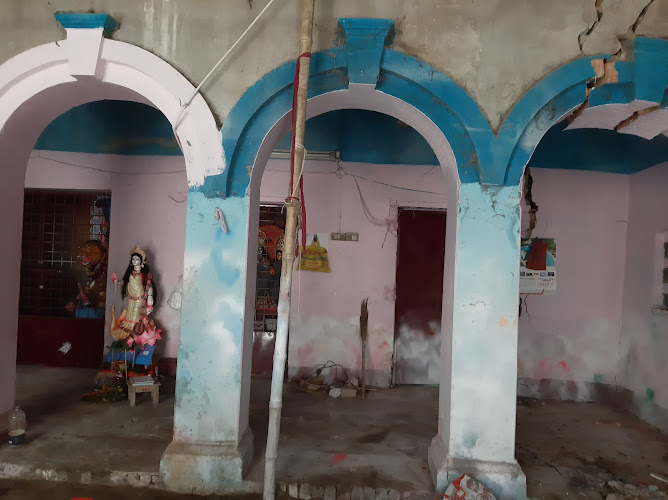
  • Presence of older architectural details and shaded verandas
  • Active everyday community life and street vending
  • Good spot for street photography and informal cultural observation

More Details

Updated January 18, 2026

Description

Gonokpara Mor on Fazlul Haque Road represents one of those places that doesn’t scream for attention but quietly holds its own significance in the urban fabric of the area. This historical landmark has witnessed decades of change, serving as more than just a simple intersection or gathering point. The name itself – “Gonokpara Mor” – carries weight in local parlance, functioning as a reference point that residents and travelers alike have used for generations to navigate the surrounding neighborhoods.

What makes this location particularly interesting is how it embodies the everyday history that often gets overlooked in favor of grander monuments and tourist attractions. I’ve always believed that the real character of a place reveals itself in these kinds of spots – the ones where ordinary life unfolds against a backdrop of historical continuity. And Gonokpara Mor certainly fits that description.

The landmark sits at a junction that connects various parts of the locality, making it a natural hub of activity throughout the day. You’ll find it’s one of those spots where the past and present coexist rather comfortably. The area around Fazlul Haque Road has evolved considerably over the years, but certain elements remain constant, giving visitors a glimpse into how communities maintain their identity even as urban development marches forward.

For travelers interested in authentic urban experiences rather than polished tourist attractions, this location offers something genuinely different. It’s not going to give you the Instagram-perfect moments you might find at more famous landmarks, but it will give you insight into how people actually live, move, and interact in this part of the world. The accessibility features make it welcoming for all visitors, which is honestly refreshing to see at a historical site that clearly takes its responsibility to the public seriously.

Key Features

The characteristics that define Gonokpara Mor make it worth considering as part of your travel itinerary, particularly if you’re the type of person who appreciates the texture of daily life in different cultures:

  • Full wheelchair accessibility including both entrance areas and parking facilities, demonstrating modern adaptations to historical spaces
  • Family-friendly environment suitable for children, allowing multi-generational groups to explore together
  • Strategic location at a junction point that provides easy access to surrounding neighborhoods and local businesses
  • Onsite services available for visitor convenience and support
  • Active community presence throughout different times of day, offering authentic glimpses into local life
  • Historical significance that extends beyond formal monuments to encompass lived experience and community memory
  • Integration with the surrounding urban landscape that shows how historical landmarks function within contemporary settings
  • Parking availability that makes it practical for those traveling by personal or rented vehicles
  • Connection to Fazlul Haque Road, itself a route with its own historical and practical importance
  • Gathering space characteristics that reveal social patterns and community interactions

Best Time to Visit

Timing your visit to Gonokpara Mor requires thinking a bit differently than you would for a traditional tourist attraction. Because this is fundamentally a functioning part of the urban landscape rather than a preserved museum piece, the “best” time really depends on what you’re hoping to experience.

Early mornings, say between 6 and 9 AM, offer something special if you’re an early riser. That’s when you’ll see the area come to life – shopkeepers opening up, commuters heading to work, and that particular energy that characterizes the start of a day in a busy locality. I’ve found that these morning hours often reveal the most authentic side of any place, before tourist rhythms take over. Though honestly, Gonokpara Mor doesn’t really have “tourist rhythms” in the conventional sense, which is part of its appeal.

Mid-morning through early afternoon can get quite busy, especially on weekdays. The junction sees considerable activity as it serves its practical function as a meeting point and navigation reference. If you want to observe the landmark in its most active state, this is your window. But if crowds aren’t your thing, you might find it a bit overwhelming.

Late afternoons between 4 and 6 PM present another interesting option. There’s often a shift in the type of activity – people finishing their work days, students heading home, vendors setting up for evening business. The light changes too, which can make the area photograph quite differently than during the harsh midday sun.

Evenings have their own character, though you’ll want to be mindful of local safety conditions and visibility. The area takes on a different personality as day transitions to night.

Seasonally speaking, the cooler months tend to be more comfortable for walking around and spending time exploring the vicinity. Extreme heat or monsoon conditions can make outdoor exploration less pleasant, though they also show you how the community adapts to different weather patterns.

Weekends versus weekdays offer distinct experiences too. Weekdays show you the landmark in its working context, while weekends might reveal more leisure activities and family outings.

How to Get There

Getting to Gonokpara Mor on Fazlul Haque Road is actually one of the more straightforward aspects of visiting this landmark, which makes sense given its function as a reference point for navigation.

Local transportation options work well for reaching this destination. Buses that serve the area frequently include stops near Fazlul Haque Road, and asking for Gonokpara Mor by name will generally get you pointed in the right direction. Locals know this landmark well, so don’t hesitate to ask for guidance from fellow passengers or bus conductors.

Auto-rickshaws and similar local transport provide a more direct option. Most drivers will recognize the name immediately – it’s one of those places that doesn’t require detailed explanation or GPS coordinates because it’s embedded in the mental maps that local drivers carry. Just saying “Gonokpara Mor” should suffice, though having the road name (Fazlul Haque Road) as backup doesn’t hurt.

For those using ride-sharing apps that operate in the area, you can typically search for Gonokpara Mor directly. The parking facilities mean you won’t need to worry about where to stop if you’re driving yourself or being dropped off.

If you’re staying in the surrounding neighborhoods, walking is entirely feasible and actually recommended if you want to get a feel for the area. The approach on foot gives you context that you miss when you’re just dropped at the exact spot.

Coming from farther away, you’ll want to first get to the general district or locality, then use local transport for the final leg. Ask at your accommodation for the best route from your specific starting point – locals often know shortcuts and preferences that don’t show up on maps.

The wheelchair accessible entrance and parking mean that those with mobility considerations can plan their visit without the anxiety that often accompanies accessible travel in older urban areas.

Tips for Visiting

Making the most of your time at Gonokpara Mor involves some practical considerations that you won’t find in your typical guidebook, mainly because this isn’t your typical tourist destination.

First off, adjust your expectations accordingly. This isn’t going to be a place where you spend hours taking in carefully curated exhibits or following marked tourist paths. Instead, think of it as an opportunity to observe and participate in authentic urban life. Your visit might be relatively brief – 20 minutes to an hour depending on what you’re interested in – but the insights can be valuable.

Dress practically and respect local norms. While this is a public space, you’re also in a community setting where modest, practical clothing makes sense. Comfortable walking shoes are essential since you’ll likely want to explore the surrounding streets a bit.

Bring some local currency in small denominations. The area around the landmark likely has small vendors or shops where having exact change makes transactions smoother. And honestly, trying some local snacks or drinks from nearby establishments adds to the experience.

Photography is generally fine in public spaces, but be respectful about capturing images of people without permission. I’ve learned that asking first – even with a smile and gesture if there’s a language barrier – goes a long way toward positive interactions.

Safety awareness matters like it does anywhere. Keep your belongings secure, stay aware of your surroundings, and trust your instincts. The fact that this is a well-known landmark means there’s usually good foot traffic, which generally contributes to safety, but use common sense.

If you’re traveling with children, the family-friendly designation is reassuring, but remember that this is an active junction area. Keep kids close and be mindful of traffic and crowds.

Consider hiring a local guide or connecting with a resident who can provide context and stories about the landmark that you wouldn’t discover on your own. The historical significance becomes much richer when you understand the personal and community narratives attached to the place.

Visit during different times if your schedule allows. The character of Gonokpara Mor shifts throughout the day, and seeing it in multiple contexts gives you a more complete picture.

Don’t rush. One of the biggest mistakes travelers make is treating every destination like a checkbox to tick off. Spend some time just sitting or standing nearby, watching how people interact with the space. Those observations often become the most memorable parts of travel.

Learn a few basic phrases in the local language. Even simple greetings and thank-yous create better interactions and show respect for the community you’re visiting.

Finally, approach Gonokpara Mor with curiosity rather than expectations. Its value lies not in spectacular views or dramatic architecture but in its role as a living piece of urban history. That’s a different kind of travel experience, but one that can be equally rewarding if you’re open to it.

Key Highlights

  • Historic urban intersection with local storytelling importance
  • Cluster of traditional shopfronts and small-scale commerce
  • Presence of older architectural details and shaded verandas
  • Active everyday community life and street vending
  • Good spot for street photography and informal cultural observation

Location

Places to Stay Near Gonokpara Mor, Fazlul Haque Road

Find and Book a Tour

Explore More Travel Guides

No reviews found! Be the first to review!

Traveler Reviews for Gonokpara Mor, Fazlul Haque Road

There are no reviews yet. Be the first one to write one.

Share Your Experience

Have you visited Gonokpara Mor, Fazlul Haque Road? Help other travelers by sharing your review.

Nearby Attractions

Varendra Research Museum Puthia Temple Complex Padma River and riverfront area

Find Accommodations Nearby

Recommended Tours & Activities

Visitor Reviews

There are no reviews yet. Be the first one to write one.

Share Your Experience

Have you visited Gonokpara Mor, Fazlul Haque Road? Help other travelers by leaving a review.