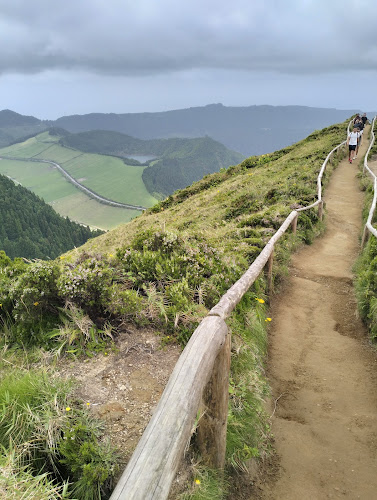
If there’s a place on São Miguel island that’ll tug hard on your wanderer’s heartstrings, the Miradouro Grota do Inferno up in the Sete Cidades crater area is it. This viewpoint isn’t just about snapping that Instagram-famous photo (although you’ll definitely want to)—it’s about drinking in miles of volcanic drama, emerald lagoons, wild azores sky, and feeling just a little bit tiny in the best way possible. It’s raw, open, windswept terrain that always seems to surprise visitors, even ones who hike a lot, since it wraps you up in the sensation of standing right at the edge of something ancient and ridiculously, gloriously beautiful.
The Grota do Inferno viewpoint sits on the rim of the massive Sete Cidades volcanic caldera, staring down over four separate crater lakes: the famed Lagoa Azul (Blue Lake), Lagoa Verde (Green Lake), Lagoa Rasa, and Lagoa de Santiago. Sometimes I think the scene looks like a living watercolor, especially when those crazy Azorean clouds whip across the deep blue and impossible green waters. The way those colors split and blend is almost dreamlike, and you might even catch the lakes reflecting the wild Atlantic sky or the sheep that seem to graze unfazed along the trail.
Unlike some viewpoints filled with noise and queues for a fence selfie, the Miradouro Grota do Inferno (sometimes called Boca do Inferno) keeps its secrets just a bit. Sure, it’s grown in popularity, but come on a weekday or early in the day and there’s a magic intimacy. Most years, you can walk the short but crunchy volcanic path in relative peace, the wind in your hair and volcanic ridges curling all around. And if you’re lucky with the weather (let’s not kid ourselves, São Miguel is famous for mist), the view explodes open to reveal layer after layer of caldera, blue and green lake lagoons, and waves of green forested slopes that seem to melt right into the ocean. Seriously, photos just can’t cut it.
It’s not just a “photo spot”—this is an experience, one you’ll carry home lodged in your memory alongside the sound of the wind and that slight twang in your legs from the short trek up. The fact that the viewpoint is a highlight for regular hikers and occasional strollers alike says a lot. And while some travelers get sidetracked by bigger-name points on São Miguel, those in the know will tell you, this is one of the Azores’ ultimate must-sees.
The Miradouro Grota do Inferno doesn’t just offer a view—it gives you a deep, tactile, almost goosebumps-inducing immersion in the volcanic legacy of Sao Miguel. Honestly, it isn’t just a location. It’s a moment.
Key Features
- Sensational 360° Panoramic Vistas: The viewpoint offers a true 360-degree sweep of the Sete Cidades caldera, with deeply blue and green crater lakes visible from a single vantage point. It’s like watching a nature documentary in real life, minus the dramatic narration.
- Lagoa Azul and Lagoa Verde: See both the Blue Lake and Green Lake from right up top, with their legendary colors often brilliantly split down the middle—if the sun is out and the weather’s in your favor, you’ll swear it’s a trick of the light.
- Easy-Access Hiking Path: The route up from the nearby car park is under 1 km and generally takes less than 15 minutes at a normal pace. Kids, casual strollers, and seasoned hikers alike can make it.
- Wild Volcanic Scenery: You’re walking right along the rim of an ancient crater in the Azores, with lush green hills, thick stands of cryptomeria forest, and the wild open Atlantic often visible in the distance. It’s a reminder that Portugal’s islands are a world unto themselves.
- Multiple Lakes in View: From Grota do Inferno, you aren’t limited to the famous pair—the more secluded Lagoa Rasa and Lagoa de Santiago also make appearances, especially if you take the time to explore a little off the main spot.
- Photo Obsessed? This Is The Spot: The “top of the world” feel makes every angle here unique—sunrise, sunset, or even moody weather clouds make for unreal images, almost every time. On my first trip, I blew through a whole phone battery with just photos and short videos.
- Accessibility for All: The viewpoint is reachable by a well-maintained dirt path from the Lagoa do Canário parking area—no technical hiking gear required. Just bring a jacket and shoes that don’t slip when it gets a little muddy.
- Legend-Tinged History: This part of the caldera is steeped in Azorean myths—lace those up with your physical journey and you really start to feel the centuries layered beneath your feet.
- Unique Cloud and Weather Play: The area is famous (or notorious, depending on your luck!) for fast-changing weather, which can mean wild, cinematic movement between clouds and lakes, and sometimes even a full show of rain and sunbows within an hour.
Best Time to Visit
Picking the best time to visit Miradouro Grota do Inferno is a bit of a skill—the Azores, and São Miguel in particular, are known for their unpredictable weather patterns. I’ve been up there in the same week and gone from blazing sun to misty blanket to thunder and back again. But that’s a big part of its charm!
High Season (May–September): You’ll generally have clearer days, with July and August showing off longer sunny stretches. The lakes look amazing, but keep in mind, you will see more people. Early morning or late afternoon is your best bet to capture the magic without the crowd. Nothing like sipping your flask of coffee as the caldera wakes up, honestly.
Shoulder Season (April, October): Expect fewer crowds, mild temperatures, and a huge chance of the landscape shifting between moody mist and sunlight every few hours. Great for photographers and solitude seekers, just bring your raincoat—half the fun is watching the view transform!
Low Season (November–March): The view is often shrouded in fog or rain, but honestly, I’ve seen winter days explode into blue sky with no warning. If you’re game for unpredictable weather, bring layers and give yourself flexibility. Sometimes you can have the whole viewpoint almost to yourself—if you’re after drama and atmosphere, this is your window.
Pro tip: Check the weather live—it can change on a dime, and a little patience (and snack waiting in your pack) often pays off with show-stopping views even on “cloudy” days.
How to Get There
The Miradouro Grota do Inferno viewpoint is located in the Sete Cidades area in the west of São Miguel island, Azores. Most visitors reach it by car, though there are possible (longer) hiking options for the energetic among us.
By Car: The quickest and most flexible option. From Ponta Delgada, it takes around 35-40 minutes driving along well-signed roads towards Sete Cidades. Near Lagoa do Canário, there’s a small dirt road with marked parking areas—follow the signs for Lagoa do Canário, then drive until you see a clearly marked parking lot beside a forestry gate.
From the parking area, you’ll walk about 15-20 minutes on a decent dirt track. Even if you’re hauling a camera bag (as I tend to—never trust an Azorean sky not to clear up), it’s a breeze for most fitness levels. Note: in high summer, this parking fills up fast. Go early for peace of mind.
By Hiking: For the dedicated explorers, you can use the interconnected trails—like the Serra Devassa or PR4SMI tracks—that connect with the crater rim. This is hands-down my favorite way when I have a whole day to explore. It’s longer (count on 2–5 hours round trip from Sete Cidades or Vista do Rei), but you get to experience the forests, shepherd’s pastures, and different caldera angles.
By Tour/Taxi: If you’re skipping a rental, there are day tours and taxis from Ponta Delgada. It’s popular enough now that most local guides know it intimately—just ask for Grota do Inferno or Boca do Inferno and they’ll light up.
Two warnings here: Don’t try the dirt road in a low car after heavy rain (potholes get gnarly), and don’t rely on GPS alone—watch for signs once you’re near Lagoa do Canário, as satellite signal gets sketchy around the forest tracks.
Tips for Visiting
-
Weather = Wildcard. Don’t be discouraged if you roll up and see clouds. Wait 10, 20, even 30 minutes, and often the fog will suddenly part. I’ve met plenty of folks who nearly left too soon—you’ve come this far, give the weather a chance to work its magic.
-
Footwear Matters. The path is short and not technical, but it can get muddy and slippery—especially after rain, which is, let’s face it, most weeks of the year. A pair of trainers or light hiking shoes is perfect. Flip-flops are a big nope!
-
Go Early or Late. Sunrise or sunset are, in my book, the absolute best times for drama and solitude. Midday is still beautiful, but groups can show up, and that first/last light does wild things to the caldera and lakes. If you want “front row” photo angles without weaving through people, get there before 9am or after 6pm.
-
Parking: The area has a small parking lot near Lagoa do Canário. It can fill up fast, so either go outside peak hours or be prepared to walk a little further if you end up on the shoulder.
-
Layer Up. São Miguel weather can flip from T-shirt to jacket weather in minutes, especially up at the crater rim. Pack a windbreaker and hat—you’ll thank me when the Atlantic breeze picks up!
-
Pack Snacks and Water. No facilities at the viewpoint, so bring your own support crew (water, snacks, maybe even a treat for a picnic spot along the rim). Leave no trash—part of what keeps this spot spectacular is low-impact visits by people like you.
-
Photo Op Etiquette: Even if it’s busy, don’t stress—everyone gets a chance. Folks are usually good-natured, taking turns for “that” photo, and half the fun is swapping stories or weather updates while you wait.
-
Keep an Eye on Safety: The caldera rim is exposed with steep drops and wind, so be extra careful on wet days—especially with restless kids or if you’re mesmerized by the view (I get it, seriously!). Stay behind the low rail where there is one.
-
Detour Worth Taking: Do a quick, quiet loop to Lagoa do Canário itself or branch out to other short trails in the area (like the one to Lagoa de Santiago). You’ll find yourself surrounded by cinematic landscapes—and way fewer people.
-
Legend and Stories: If you’re a lover of myths, read up on the story of the “Seven Cities Princess and Shepherd” before you come. It makes standing in the crater, looking over the twin lakes, feel like stepping into a fairytale.
Bottom line? Miradouro Grota do Inferno is an experience, not a checklist “stop.” Give yourself time here, watch the weather shift, and let the wild beauty of the Sete Cidades crater soak in. Chances are good you’ll leave plotting your return—you won’t be the first!
 Real Journey Travels