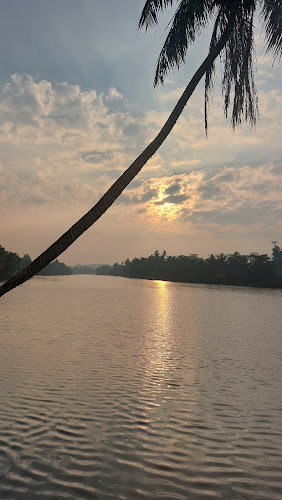
The Nilwala River is one of southern Sri Lanka’s defining waterways, running through the Matara area before reaching the Indian Ocean. Its character is less that of a single, fenced attraction than a living river landscape: broad water, green banks, bridges, cultivated land and everyday activity unfolding along its course. Visitors come for a quieter view of the region, where the river offers a pause from the busier beachfront and town-centre rhythms.
The river rises in the Rakwana hills and travels through rural communities whose fields and livelihoods remain closely tied to its water. Around Matara, the most rewarding experience is often simply observing the changing scene from a safe public vantage point: fishing activity, birds above the banks, palms and vegetation reflected in calmer stretches, and the contrast between inland greenery and the coastal end of the river. Conditions, water level and visibility can change with weather, so treat the Nilwala as a landscape to watch attentively rather than a fixed sightseeing stop.
Standout Highlights & Experience
Nilwala River rewards unhurried looking. It is especially appealing for travelers interested in local landscapes, photography and the relationship between a river, agriculture and settlement. The experience varies by where you encounter it, but these are the details that give it a distinct sense of place.
- River-to-ocean setting: Follow the idea of the river’s journey through southern Sri Lanka to its meeting with the Indian Ocean at Matara.
- Rural river scenery: Look for lush vegetation, lowland fields and village-edge views that show how closely the surrounding landscape depends on the waterway.
- Bridge perspectives: Public crossings can provide broad views of the river channel, banks and changing light without needing to enter the water.
- Birdlife and aquatic habitat: Scan patiently from a respectful distance for birds and other signs of life around the water and vegetation.
- Everyday river culture: The Nilwala remains important to local communities, so ordinary working scenes can be as revealing as the scenery itself.
- Atmospheric photography: Soft early or late light can bring out reflections, silhouettes, cloud movement and the layered greens of the riverbanks.
Practical Visitor Strategy
| Factor | What to Know |
|---|
| Best Time to Go | Choose a dry spell or a clear part of the day for easier viewing and photography. Early morning and late afternoon can be more comfortable than the strongest midday sun. |
| Suggested Duration | Allow 30 to 60 minutes for a scenic stop, longer if combining several viewpoints, a walk through Matara or time along the coast. |
| Crowd & Entry Tips | This is a river landscape rather than a conventional ticketed attraction. Use public, safe viewpoints and avoid assuming that every bank, path or private property is open for access. |
| Getting Oriented | Start with a bridge or established public roadside viewpoint in the Matara area, then decide whether the scene is best enjoyed inland or nearer the river mouth. |
Bring drinking water, sun protection and footwear suitable for uneven or occasionally muddy ground. Do not rely on an informal riverbank as a swimming or wading area: currents, depth, soft edges and weather-related changes can be difficult to judge. The river is also known as habitat for wildlife, including crocodiles, so keep well back from the water’s edge, never feed animals and supervise children closely. A local driver or guide can be useful when seeking suitable viewpoints beyond the most obvious crossings.
Honest Fit: Who Will Love It (and Trade-Offs)
The Nilwala River is a strong fit for photographers, birdwatchers, slow travelers and visitors who enjoy seeing a working Sri Lankan landscape rather than ticking off a heavily programmed attraction. It also suits anyone wanting a calm complement to Matara’s urban and coastal sights. Travelers expecting a formal riverside promenade, guaranteed wildlife encounters, water sports infrastructure or a single signature viewpoint may find it understated. Accessibility depends on the chosen viewing point: bridges and roadside stops can be easier, while informal banks may be uneven, slippery after rain and unsuitable for wheelchairs or those with limited mobility. Pair a river stop with time in Matara town, a coastal walk near the Indian Ocean, or a wider drive through the greener inland side of the district for a fuller sense of how the river shapes this part of southern Sri Lanka.
 Real Journey Travels